Rupee Drops Most In Six Years On Mix Of Global, Domestic Triggers
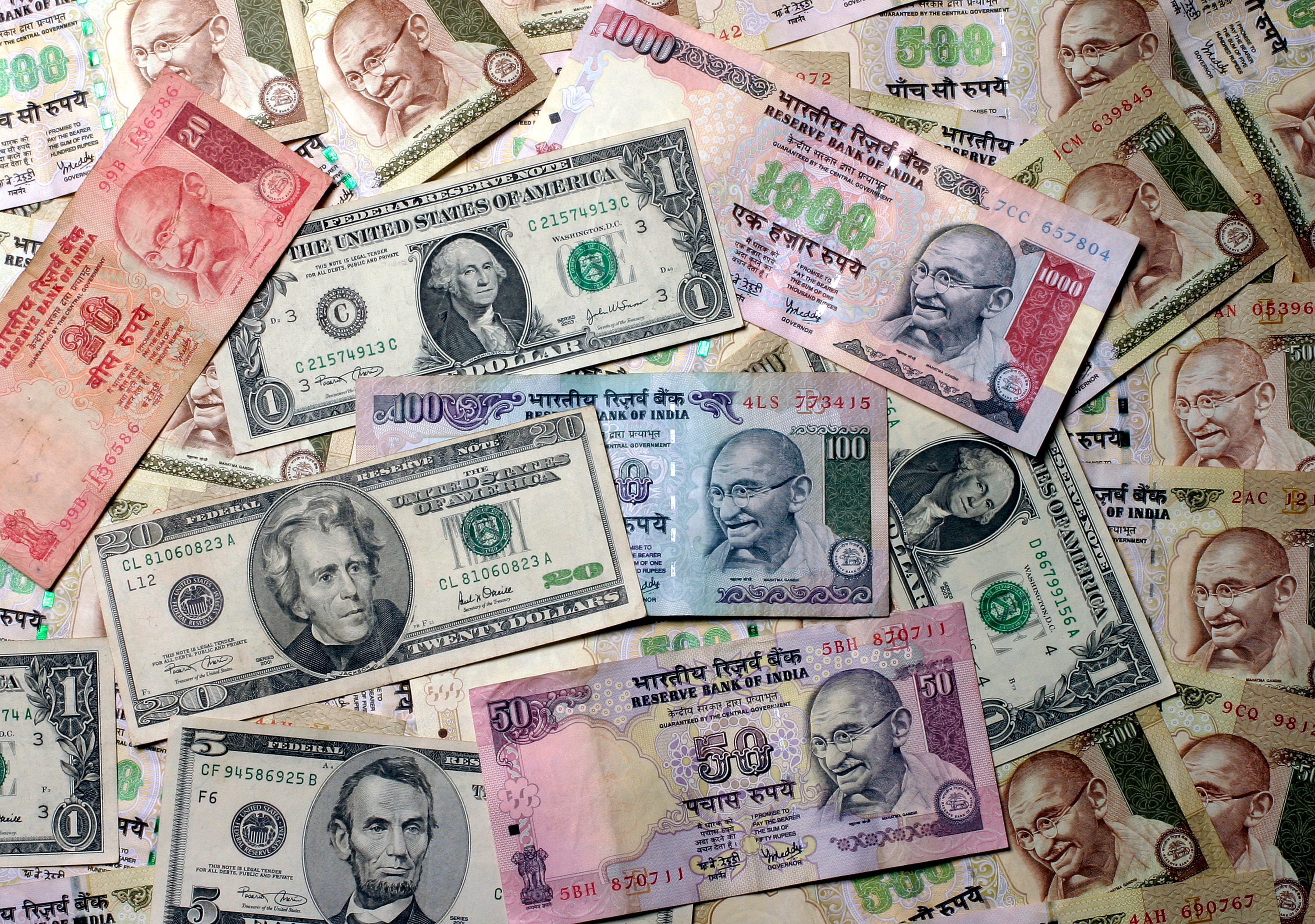
The Indian rupee weakened to an over five-month low on Monday, as the Chinese Yuan traded below 7 against the U.S. dollar for the first time since 2008 and tensions over Kashmir added to nervousness in the market.
The rupee opened at 70.28 to the dollar and weakened through the trading session. It closed 1.6 percent weaker at 70.73 to the dollar.
A pick-up in trade tensions between U.S. and China could mean weakness for emerging market currencies, said K. Harihar, treasurer at First Rand Bank. The rupee could trade between 70-71/$, he said.

The Indian rupee was the worst performer in Asia but most regional currencies depreciated in trade. The offshore Chinese Renminbi fell 1.49 percent, while the Korean Won fell 1.4 percent.
The move by the People's Bank of China to set the yuan fixing weaker than 6.9 a dollar for the first time suggests policy makers may be willing to use the Yuan as a weapon in the trade war, Bloomberg News reported quoting market analysts.

In addition to global factors, a continued foreign outflow from the Indian equity markets has also led to some weakness in the rupee.
Foreign investors have sold nearly Rs 15,000 crore in domestic equities between July and August. While the debt markets saw inflows between May-July, some selling has picked up in the first few days of August. The Indian government's decision to Article 370 which governs the Jammu and Kashmir region added concerns of geo-political tensions to already existing fears of a slowdown in the Indian economy.
The rupee is facing the wrath of domestic and international markets, said Madhavi Arora, economist at Edelweiss. On the domestic front, geopolitican tensions and foreign outflows have led to the fall in the rupee, Arora said. In times of global risk aversion, markets tend to be wary towards emerging economies, she added.

-
A New Samvat Wishlist: Inclusive Prosperity And Human Development

India has strengthened its economic foundations through infrastructure, digital access and enterprise. Its next growth chapter must deepen productivity, create better livelihoods and widen participation in prosperity.
-
Love, Sex Aur Dhokha: The Audacious Plot To Spy On Jensen Huang
A Taipei dinner, a Singapore chip buyer and a suspected Chinese asset: inside the alleged spy operation that got close to NVIDIA's Jensen Huang.
-
Ten Things I Learnt This Samvat
Patience can be a trap. Cheap stocks can stay cheap. Leverage can wipe you out. What did Samvat 2082 teach us? Niraj Shah writes on 10 lessons from the year gone by.
-
Talking Points This Week: Tech Nerves, FII Buying, And A Faraway Banking Shock
The global markets are not shining this Diwali. The exception in the large markets is, India.
-
Midterm Rally Lasted A Day. The Hard Reality Of A Divided US May Last Two Years | Opinion
Between a contested AI boom, a debt ceiling that arrives in 2027 and a president with every incentive to act alone, the next two years may prove more volatile than the first day's rally suggests.
-
Blue Wave Will Derail the AI Trade but Won't Dismantle the AI Era | Unhedged Position
The Democrats' sweep of the US Congress will see politics collide with economic forces both over the long and short term.
-
It's Time To Take The GST Council's Bet On Trust Global
Payment records can prove India's services exports, and clear, proportionate rules can bring foreign digital sellers into the tax net.
-
Opinion | India at 38: From Innovation Overperformer to Innovation Powerhouse
India now has 453 VC-backed deep science startups, 18 of them late-stage, after 117 percent growth since 2020. Laurus Labs, at USD 9.3 billion, is the most valuable deep science company in any middle-income economy outside China.
-
Navigating Energy Crossroads: S Jaishankar's Call For Diversified Supply Chains At G20 Ministerial Meeting
As geopolitical fault lines continue to test maritime trade routes and commodity flows, Jaishankar's message remains pertinent: true economic resilience requires open markets, protected transit lines, and a genuine commitment to multilateral cooperation rather than coercion.









