Quant Manager of $6 Billion Backs Stocks Hidden From Front Pages
(Bloomberg) -- No news is good news.
At least for investors seeking stable returns, it's better to buy companies that aren't in the spotlight. To exploit a so-called low-volatility anomaly, the head of quantitative equity management at BNP Paribas SA invests in stocks that seldom get any attention in the media.
“People are attracted by companies where they get a lot of information,” Laurent Lagarde said in an interview in Oslo. “They tend to prefer more volatile stocks for this reason. If you have a lot news on a company it means there are events and there's volatility”
Smart beta, or factor-based, and low volatility stock funds have gained popularity as investors hunt for yield in an era of low interest rates. Low volatility stocks should have a higher risk-adjusted return than high volatility stocks because of behavioral biases, according to Lagarde, who oversees 5.5 billion euros ($6.2 billion).
“The mechanism is very simple,” he said. “Investors prefer more volatile stocks and that will reduce the expected future returns. By investing in low vol stocks you would expect more return.”
The BNP Paribas Flexi I Equity World Pure Low Volatility fund held companies such as Starhub Ltd., American Water Works Co. and telecom operator Telus Corp. as of March 31. It returned 12 percent a year on average over the past three years and beat 82 percent of its peers, according to data compiled by Bloomberg.
Lagarde, who manages about 40 funds and mandates with his team of four, also uses factors such as value and quality when investing in his other funds. But his team stays away from trying to time the market.
“It's very complex to introduce factor timing,” he said. “It's a bit risky because you can be late to the exposure of a factor.”
To contact the reporter on this story: Jonas Cho Walsgard in Oslo at jchowalsgard@bloomberg.net.
To contact the editors responsible for this story: Veronica Ek at vek@bloomberg.net, Stephen Treloar, Jonas Bergman

-
Navigating Energy Crossroads: S Jaishankar's Call For Diversified Supply Chains At G20 Ministerial Meeting

As geopolitical fault lines continue to test maritime trade routes and commodity flows, Jaishankar's message remains pertinent: true economic resilience requires open markets, protected transit lines, and a genuine commitment to multilateral cooperation rather than coercion.
-
Why Prashant Jain's 3P Investment Managers Bought 2.5% Stake In This Healthcare Firm
After slowing acquisitions, Entero now has the opportunity to extract greater value from the network. The key, however, will be execution.
-
Taxing A Promise: The Unsettled Story Of GST On Corporate Guarantees
These concerns are particularly relevant for businesses in the infrastructure, real estate, power and EPC sectors, where guarantees run for several years over the duration of the project and involve substantial amounts.
-
Who Will Care When Women Work? That Is The Wrong Question
The debate on women and work becomes strangely patronising when even our most enlightened elites assume that care is a woman's natural duty.
-
AI Disruption Is Exponential, Businesses Need A Margin Of Safety: HDFC AMC's Navneet Munot
According to Munot, one of the biggest challenges in assessing AI's impact is that the pace of change is exponential rather than linear.
-
The AI Race Is Bigger Than AI Models | The Week In Whys
The AI race and the humanoid race may look like two different technology stories. But underneath, they are increasingly about the same thing: who controls the ecosystem needed to build the technology.
-
FCNR Deposits Beat Estimates, RBI To Pull Out Rs 6-7 Lakh Crore: Pranjul Bhandari
HSBC's chief India economist says the central bank must drain up to Rs 7 lakh crore of surplus liquidity within a fortnight, either through a cash reserve ratio hike or dollar sales, as Foreign Currency Non-Resident (Bank) deposits far outpace expectations
-
Joining The Dots | CAS Turmoil, The Large-Cap Debate And Zee's Almost Rs 22,000-Crore Haircut
Time bends on Dalal Street, Dylan's lyrics haunt the large-cap debate, and Zee's promoter picks up the bargain of the year.
-
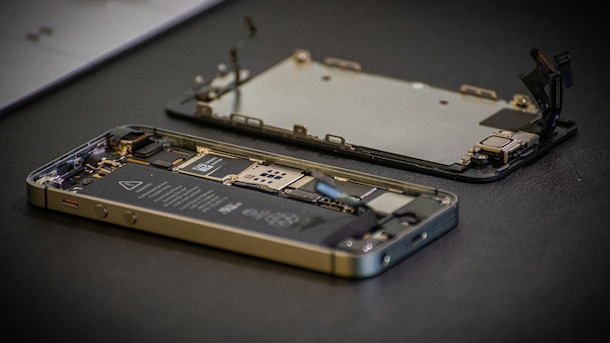
India Wants To Be Vietnam; Vietnam Wants To Be China | The Reason Why
India may become a global hub for smartphones. It could also make more camera modules, batteries and semiconductor packaging over the years.