Q4 Results: Bharti Airtel’s India Revenue Growth At A Three-Year High
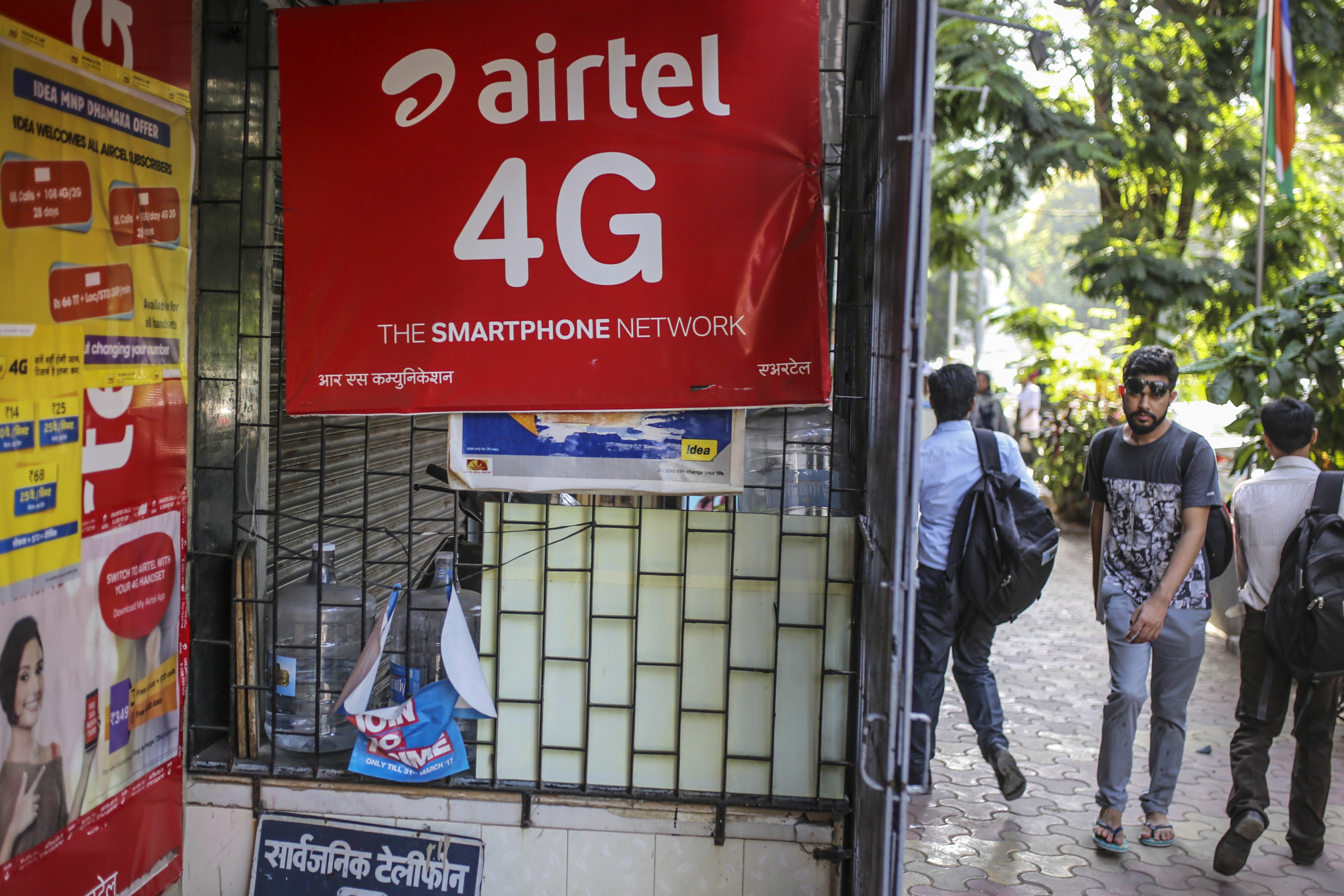
Bharti Airtel Ltd.'s revenue from its Indian mobile business grew at its fastest pace in three years and margin improved in a quarter when the telecom operator changed strategy to turn around its fortunes.
Net profit of India's second largest telecom operator rose 24 percent sequentially to Rs 107 crore in the January-March period, according to its stock exchange filing. The analysts tracked by Bloomberg had estimated a net loss of Rs 1,028 crore. The surprise profit was due to a one-time exceptional gain of Rs 2,022 crore.
- Revenue rose 1.8 percent quarter-on-quarter to Rs 20,602 crore.
- India mobile revenue grew 4 percent—a 12-quarter high—to Rs 10,632 crore.
- Operating profit was up 6.6 percent to Rs 6,632 crore.
- Margin expanded by 150 basis points to 32.2 percent.
Bharti Airtel has been one of the worst-hit telecom operators since the launch of Mukesh Ambani's Reliance Jio Infocomm Ltd. The Sunil Bharti Mittal-led company has seen its average revenue per user fall by half since then. And Jio's pricing aggression to capture more market share shows no signs of slowing. But Bharti Airtel is hoping that the bleed will stop this year and it will be able to turn its fortunes around by 2020.
Airtel has already shifted its strategy to focus on high-paying data-hungry customers. The firm has started shedding flab by deactivating low revenue generating customers and raised prices of its lowest tariff plans. The India mobile business has been able to report strong revenue growth mostly on the back of rising share of 4G users. All these have aided better margins in this quarter.
The company's net debt also rose 6 percent over the previous quarter to Rs 1.12 lakh crore. Higher debt led to a 30 percent increase in finance costs to Rs 2,532 crore. The telecom operators is currently raising Rs 25,000 crore through a rights issue, the proceeds of which will be used to cut debt. The fundraise could reduce debt by about 30.5 percent, according to BloombergQuint's calculations. Its leverage ratio is expected to fall to 2.9.
This is Bharti Airtel's fourth attempt to pare debt: in the past two years, the company made nearly Rs 23,000 crore by selling stakes in its tower arm, direct-to-home business and Africa business.
Bharti Airtel's stock closed 0.69 percent ahead of the results announcement, while the benchmark S&P BSE Sensex fell 0.93 percent.

-
Talking Points This Week: Tech Nerves, FII Buying, And A Faraway Banking Shock

The global markets are not shining this Diwali. The exception in the large markets is, India.
-
Midterm Rally Lasted A Day. The Hard Reality Of A Divided US May Last Two Years | Opinion
Between a contested AI boom, a debt ceiling that arrives in 2027 and a president with every incentive to act alone, the next two years may prove more volatile than the first day's rally suggests.
-
Blue Wave Will Derail the AI Trade but Won't Dismantle the AI Era | Unhedged Position
The Democrats' sweep of the US Congress will see politics collide with economic forces both over the long and short term.
-
It's Time To Take The GST Council's Bet On Trust Global
Payment records can prove India's services exports, and clear, proportionate rules can bring foreign digital sellers into the tax net.
-
Opinion | India at 38: From Innovation Overperformer to Innovation Powerhouse
India now has 453 VC-backed deep science startups, 18 of them late-stage, after 117 percent growth since 2020. Laurus Labs, at USD 9.3 billion, is the most valuable deep science company in any middle-income economy outside China.
-
Navigating Energy Crossroads: S Jaishankar's Call For Diversified Supply Chains At G20 Ministerial Meeting
As geopolitical fault lines continue to test maritime trade routes and commodity flows, Jaishankar's message remains pertinent: true economic resilience requires open markets, protected transit lines, and a genuine commitment to multilateral cooperation rather than coercion.
-
Indians Are Travelling, But Not Every Journey Is A Holiday | The Week In Whys
Pilgrims, patients and working women are the real travellers, and the system hasn't quite caught up with them.
-
Getting To Work Costs Women More | The Reason Why
It is not just about women paying more than men. It is about women paying much more in cities than in villages.
-
AI Bias In Investing Cannot Be Eliminated, But It Can Be Governed
Framing is a particularly important example as identical financial information presented in terms of gains rather than losses can lead an LLM to reach a different assessment.









