Private Credit Mania Shrugs Off Mounting Risks In Junk-Bond Market

(Bloomberg) -- Private loans are most likely to perform best in credit as other categories of risky corporate debt face more defaults, according to the latest Bloomberg Markets Live Pulse survey.
More than 40% of 387 survey respondents said private credit will outperform over the next 12 months. And that's despite a majority also predicting weaker returns and lower quality in direct loans, as competition between lenders intensifies.
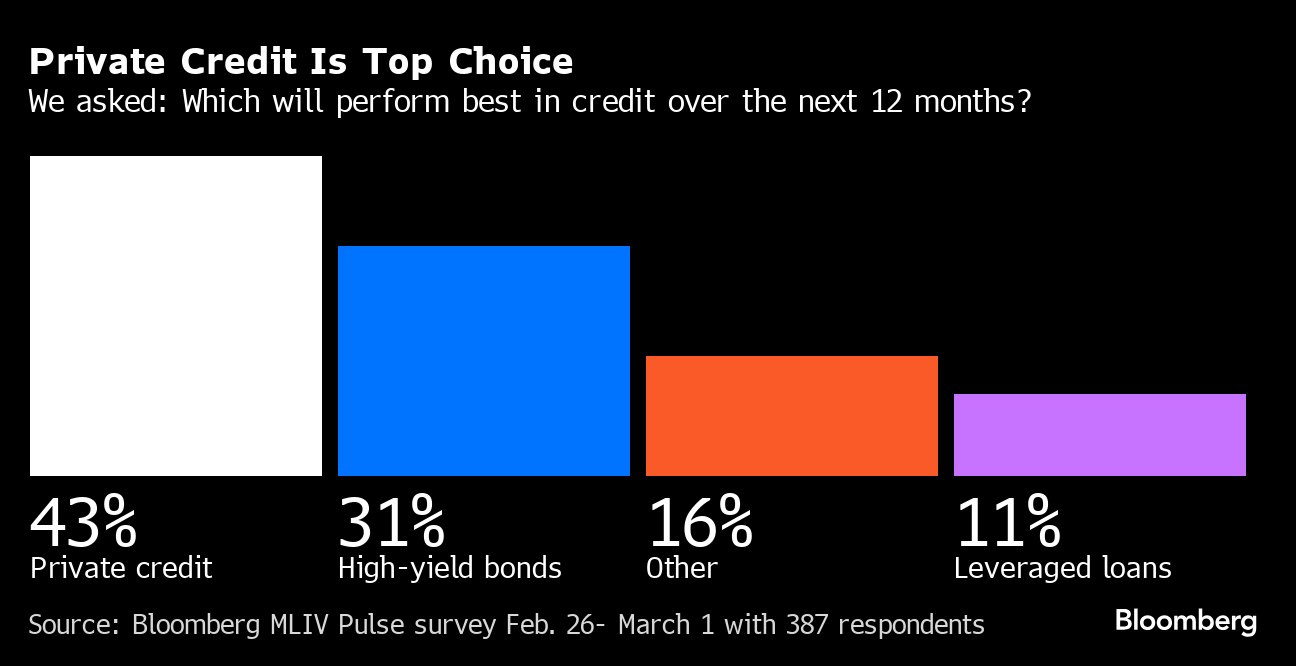
Private credit generally involves lending directly to companies at higher rates than publicly-syndicated bond and loan markets offer. Those making such loans say that they can glean more information about a borrower by going direct, and secure better claims on assets if it struggles to pay back.
Because the debt is usually offered at a floating rate, investors benefit when underlying interest rates stay high. It also doesn't trade very much — if at all — making the loans hard to value, but also less volatile in investors' portfolios when global markets get choppy.
US junk bonds and leveraged loans have returned about 11% over the last 12 months, compared with a 30% gain in the S&P 500. Private debt investors expect to generate returns in the high teens without the volatility typically seen in publicly-traded debt and equity markets.
The $1.7 trillion private credit boom is drawing criticism — and the attention of regulators — for its lack of transparency and perceived mispricing of risk. But the preferences highlighted by the survey show investors positioning for a protracted period of elevated base rates and volatility in other asset classes.
The worry for some investors is that it's hard to see when borrowers fail to pay on time because lenders can negotiate ways to keep them afloat. That's a particular concern when high-risk companies face bigger debt payments, slumping earnings and a looming maturity wall. Some fear it's a bubble that could burst, inflicting pain elsewhere.
On that note, most survey respondents predict that private credit margins and covenant quality will decline over the next 12 months as public markets compete more fiercely for business. High-yield bond and leveraged loan issuance has picked up this year, with demand from yield-chasing investors helping to make those markets more attractive to US corporate buyers.
Even with all these potential pitfalls, private credit is a safer bet than junk bonds if the US economy stumbles, a majority of survey respondents said.
In addition, the survey highlights a bearish outlook for high-yield bonds, with spreads on the debt predicted to widen to about 450 basis points over Treasuries in 12 months. That compares with just above 310 bps currently and would mark a selloff to levels last seen in the middle of last year, around the time of the 2023 regional banking crisis.
That risk-off move in more public debt markets reflects survey respondents' expectations of a rise in missed debt payments by cash-strapped companies. About 90% of survey participants predict a default rate will keep rising, after it surged to about 4.7% in US junk bonds, according to S&P Global Ratings. Still, most don't expect that to impact financial markets more broadly.
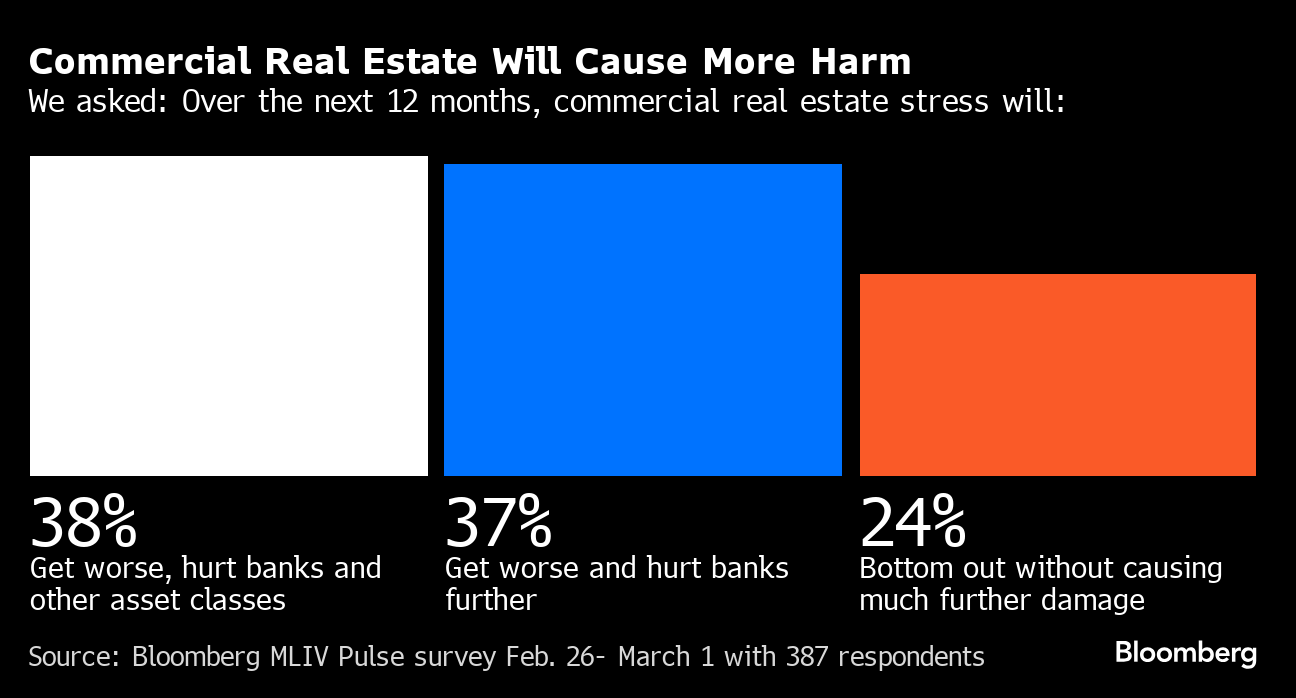
The other lurking danger for credit investors, commercial real estate, is only expected to escalate. Asked whether CRE stress will deteriorate over the next 12 months, roughly three quarters of respondents said yes. Of those expressing concern, about half think it will only hurt banks, while the rest also expect it to rip through other asset classes. Only about a quarter of survey participants expect it to bottom out over the next year.
More stories like this are available on bloomberg.com
©2024 Bloomberg L.P.

-
Love, Sex Aur Dhokha: The Audacious Plot To Spy On Jensen Huang

A Taipei dinner, a Singapore chip buyer and a suspected Chinese asset: inside the alleged spy operation that got close to NVIDIA's Jensen Huang.
-
Ten Things I Learnt This Samvat
Patience can be a trap. Cheap stocks can stay cheap. Leverage can wipe you out. What did Samvat 2082 teach us? Niraj Shah writes on 10 lessons from the year gone by.
-
Talking Points This Week: Tech Nerves, FII Buying, And A Faraway Banking Shock
The global markets are not shining this Diwali. The exception in the large markets is, India.
-
Midterm Rally Lasted A Day. The Hard Reality Of A Divided US May Last Two Years | Opinion
Between a contested AI boom, a debt ceiling that arrives in 2027 and a president with every incentive to act alone, the next two years may prove more volatile than the first day's rally suggests.
-
Blue Wave Will Derail the AI Trade but Won't Dismantle the AI Era | Unhedged Position
The Democrats' sweep of the US Congress will see politics collide with economic forces both over the long and short term.
-
It's Time To Take The GST Council's Bet On Trust Global
Payment records can prove India's services exports, and clear, proportionate rules can bring foreign digital sellers into the tax net.
-
Opinion | India at 38: From Innovation Overperformer to Innovation Powerhouse
India now has 453 VC-backed deep science startups, 18 of them late-stage, after 117 percent growth since 2020. Laurus Labs, at USD 9.3 billion, is the most valuable deep science company in any middle-income economy outside China.
-
Navigating Energy Crossroads: S Jaishankar's Call For Diversified Supply Chains At G20 Ministerial Meeting
As geopolitical fault lines continue to test maritime trade routes and commodity flows, Jaishankar's message remains pertinent: true economic resilience requires open markets, protected transit lines, and a genuine commitment to multilateral cooperation rather than coercion.
-
Indians Are Travelling, But Not Every Journey Is A Holiday | The Week In Whys
Pilgrims, patients and working women are the real travellers, and the system hasn't quite caught up with them.









