Prefer NTPC Over Power Grid? Kotak Says Investors May Be Ignoring One Key Factor
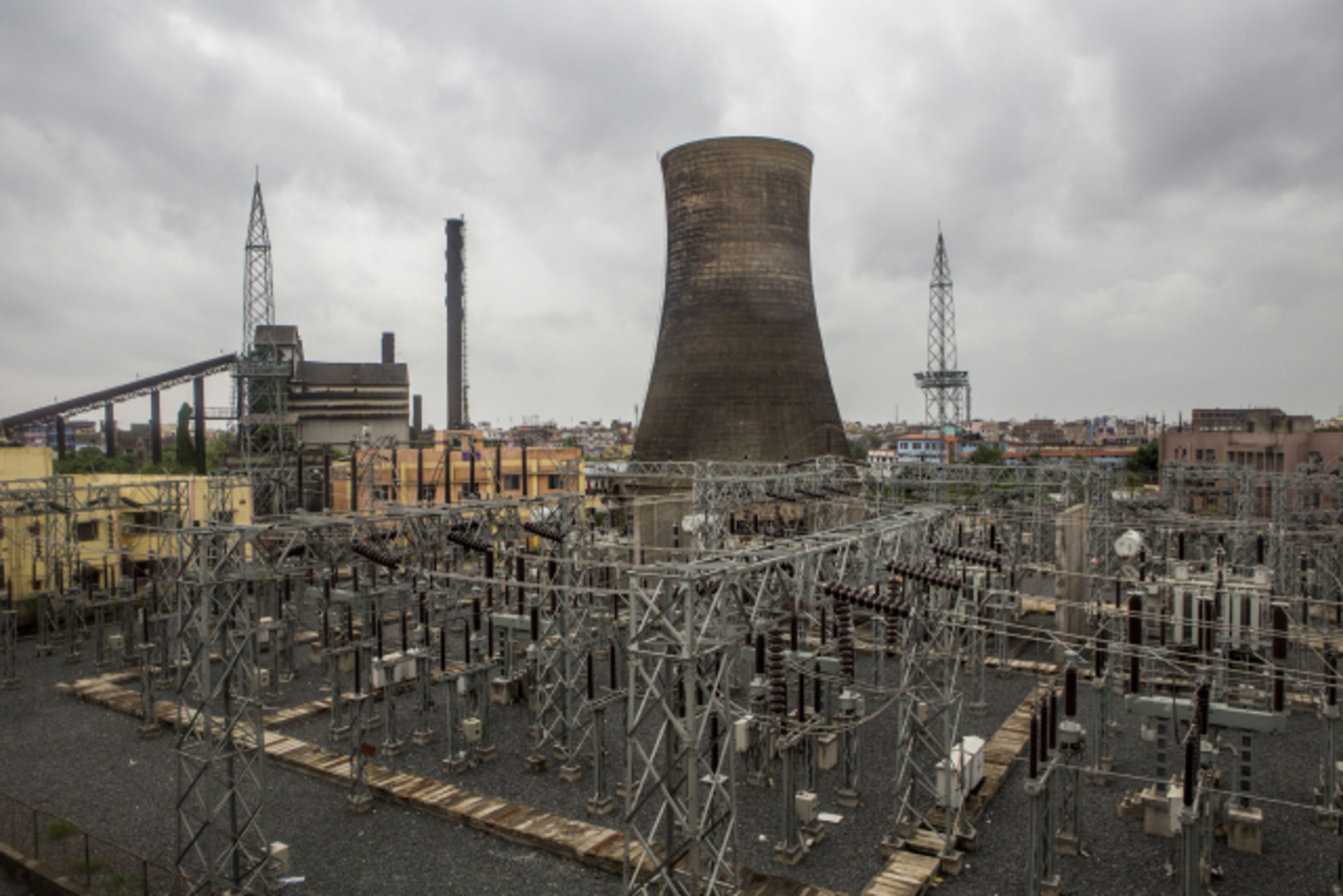
Domestic investors prefer NTPC Ltd. over Power Grid Corp. in the power sector, perhaps because of its cheaper valuation, according to Kotak Institutional Equities. But the long-term prospects of the two are “vastly different”.
Domestic institutional investors' faith in NTPC remains firm, the brokerage said in a Nov. 30 report. That's when it has underperformed compared to Power Grid in the past few years. And NTPC is likely to face "significant disruption risks" from transition to clean energy even as Power Grid may benefit, Kotak said.

NTPC's Pain…
India's accelerated transition to clean energy will result in a meaningful negative shift in NTPC's return and risk profile, the report said. That's because:
Low free cash flow generation: NTPC will have to invest cash flows from extant coal plants into new solar capacity for it to stay relevant and protect its terminal value. The brokerage estimates a total investment of Rs 6.08 lakh crore required to convert NTPC's entire thermal power capacity to solar.
Limited growth in generation capacity as new solar capacities incrementally substitute extant thermal capacities over a period of time; solar tariffs are already cheaper than thermal.
Higher risks to cash flows of solar assets given free-market tariffs versus extant guaranteed regulated returns of thermal assets.
Solar plants generate high-single digit IRR (internal rate of return, or a metric to estimate the profitability of potential investments) under current tariffs, which are significantly lower than the guaranteed return on equity of 15.5% (of regulated equity) for NTPC's thermal assets.
…Power Grid's Gain
The shift towards clean energy, according to Kotak, will offer new growth opportunities for Power Grid after a slowdown in the pace of capacity addition in recent years.
Its core electricity transmission business will likely thrive as the nation makes large investments in new transmission capacity to modernise its national grid and connect to new solar electricity sources.
The company faces lower financial risks as it operates in a largely regulated industry with 96% of its asset base being regulated as of September 2021.
Ownership
NTPC and Power Grid have similar market capitalisations. Domestic investors favour NTPC, while their overseas counterparts are betting on Power Grid.
Domestic mutual funds own 18.4% of NTPC and only 8.2% of Power Grid as of September.
Of the 18.4% in NTPC, CPSE ETF, HDFC Balanced Advantage Fund and ICICI Prudential Value Discovery Fund account for 13.78%. On the other hand, Nippon India Arbitrage Fund and SBI-ETF Sensex each own more than 2.5% in Power Grid.
NTPC's weight in domestic investors' portfolio was twice as much as Power Grid's between 2018 and 2022.
Foreign institutional investors, however, are more inclined towards Power Grid.
Valuation
Power Grid's stock has traded at a premium to NTPC over the past 18 months, unlike in the past when their valuations were very similar, the report said.
“Power Grid's relative premium to NTPC is justified, as NTPC's return profile has deteriorated significantly compared to Power Grid in the past few years and it faces meaningful long-term disruption risks.”
NTPC's return on equity, according to the report, declined from 23.4% in 2016 to 12.8% in 2021. Its return on capital employed fell from 14% in 2016 to 5.7% in 2021.

-
Opinion | India at 38: From Innovation Overperformer to Innovation Powerhouse

India now has 453 VC-backed deep science startups, 18 of them late-stage, after 117 percent growth since 2020. Laurus Labs, at USD 9.3 billion, is the most valuable deep science company in any middle-income economy outside China.
-
Navigating Energy Crossroads: S Jaishankar's Call For Diversified Supply Chains At G20 Ministerial Meeting
As geopolitical fault lines continue to test maritime trade routes and commodity flows, Jaishankar's message remains pertinent: true economic resilience requires open markets, protected transit lines, and a genuine commitment to multilateral cooperation rather than coercion.
-
Indians Are Travelling, But Not Every Journey Is A Holiday | The Week In Whys
Pilgrims, patients and working women are the real travellers, and the system hasn't quite caught up with them.
-
Getting To Work Costs Women More | The Reason Why
It is not just about women paying more than men. It is about women paying much more in cities than in villages.
-
AI Bias In Investing Cannot Be Eliminated, But It Can Be Governed
Framing is a particularly important example as identical financial information presented in terms of gains rather than losses can lead an LLM to reach a different assessment.
-
Joining The Dots | Dark Skies, Steady Diya: Why Hope Holds This Diwali
With war, a weak rupee and foreign outflows weighing on sentiment, policymakers at the NDTV World Summit and market veterans at NDTV Profit Ignite: Diwali Edition offered the same advice: stay invested and filter out the noise.
-
The Curious Case of Equitas Small Finance Bank And A CEO Who Quit For Stock
PN Vasudevan believes persistent investor concerns over a perceived conflict of interest had become a governance overhang on Equitas Small Finance Bank's stock, even as the lender improved profitability and asset quality.
-
Talking Points This Week: AI Cash Burn, A Tiger Comeback And An India That Still Finds Its Own Path
India is not immune to higher oil or tighter global liquidity, yet its earnings base is broader, its domestic policy levers are still available.
-
Foreign Investors Own Half Of HDFC Bank and ICICI Bank. An LTCG Cut Could Matter Most Here
Foreign portfolio investors have US$115 billion parked in HDFC Bank, ICICI Bank. If the government cuts long-term capital gains tax, Jefferies says returning foreign money could land here first.










