Midterm Rally Lasted A Day. The Hard Reality Of A Divided US May Last Two Years | Opinion
Between a contested AI boom, a debt ceiling that arrives in 2027 and a president with every incentive to act alone, the next two years may prove more volatile than the first day's rally suggests.
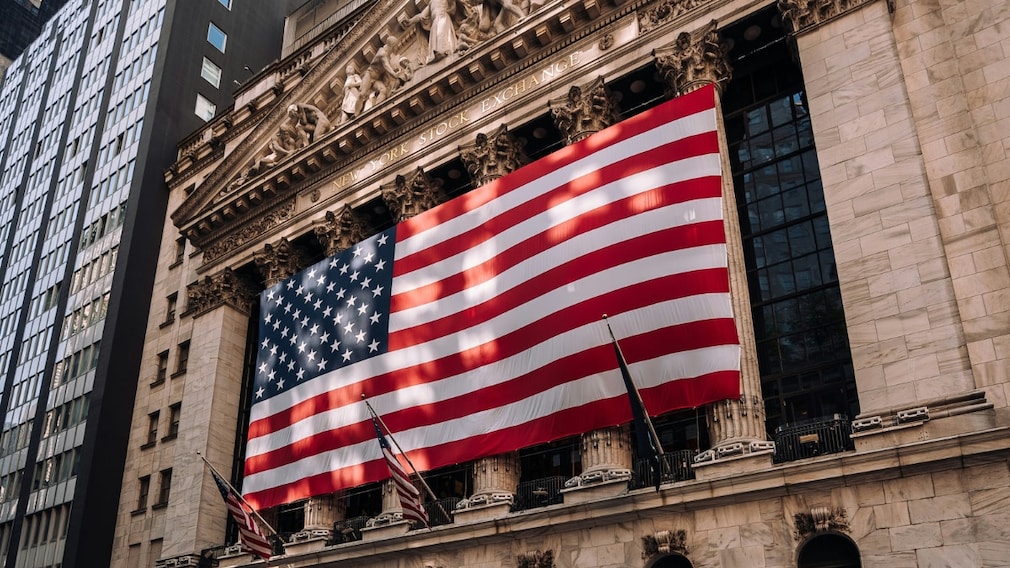
The 2026 US midterm elections have resulted in Democrats winning both chambers of Congress, with Senate victories even in unlikely states such as Texas, Ohio and Kansas. More importantly, from a legislative perspective, the Democratic party's has secured its largest House majority in nearly two decades. That leaves the US president Donald Trump with lesser control over the purse for the final two years of his term, including loose controls over the committees and the confirmations. While it is a political flutter for the world, markets have so far read this as a relief. Changes to the nature of the global economy, especially in its outsized spending in AI, with presidential support from the White House, had swung the market in one direction. Just before the midterms, that trend began to correct itself. As such, what a divided Congress could mean for the artificial intelligence boom could in itself rebalance the markets in at least two ways: a looming debt-ceiling deadline and for a world economy that still runs substantively on American borrowing.
The first reaction after the midterm results signalled the market's dilemma, with Nasdaq-100 futures falling as much as 2.4 percent, largely on fears of more scrutiny of tech companies. However, optimism soon returned and the Dow Jones Industrial Average rose about 2.3 per cent in early trade and gaining close to 1,500 points later. Similar boyant mood was seen in the S&P 500 and the Nasdaq Composite. Treasuries rallied as well, pulling the ten-year yield back to around 4.95 per cent, the dollar weakened and oil fell largely on expectations that Congress would constrain the war with Iran.
Investors around the world appreciate predictability and return of the houses with Democrats' control largely signalled that. Moreover, traditionally a divided congress has made large fiscal expansions harder to pass. An interesting component of the market behaviour was the data-centre and defence stocks which fell, even as the broader market rose. Data centres have been at the heart of the vicious political campaign that preceded the midterms, with even the red states, especially in rural areas, opposing data centres near their locality. As such, the market sentiment rode on the possibility of curtailing the scale and a vote for the Congress to potentially investigate, tax and appropriate.
That relief proved short-lived. By Thursday afternoon in New York, Wall Street had handed back much of Wednesday's rally, with the Nasdaq Composite down about 4 per cent, the S&P 500 nearly 3 per cent lower and the Dow off more than 1,100 points. The selling was led by chipmakers and data-centre stocks, the very sectors that had lagged a day earlier, putting the Nasdaq on course for a correction.
Elon Musk's Tesla and SpaceX slid about 9 per cent each. Treasury yields eased further, but the VIX volatility index jumped nearly 40 per cent, a sign that investors are now pricing in the cost of a Congress wary of the AI buildout, not just the comfort of predictability.
ALSO READ: Three Reasons Why US Stock Market Crashed After Super Rally: Nasdaq Sheds 5%, S&P 500 Cracks 3%
The AI wave, which found president Trump's support, may turn out to be casualty of the shift in power, even as investments in the sector could shrink. Before the vote, market strategists had pointed to a Democratic win as the outcome which would pose a risk to the AI buildout.
The Democrats, while embracing the AI need, have cautioned against unplanned construction of data-centre and shaping big AI companies in a way so as to benefit a specific coterie of people around Trump. A democratic scrutiny in these matters could range from hearings to investigations into AI and its infrastructure. Democrats have already introduced around half a dozen bills to roll back tax breaks for data centres or to tax AI usage and excess profits, and House leaders have reportedly considered a dedicated AI select committee with subpoena power.
Although, this may be early days, even with a Congress sweep, there is enough doubt that a bill significantly impeding data-centre expansion would become law for two reasons. First because will continue to have the veto power over congressional proposals and second because democrats themselves wonder about ceding grounds to China, should the AI momentum experience any slack in the US. Yet, the US may have entered the era of a market already warier of AI valuations.
Beneath the political relief lies a fiscal problem for the Democrats and the Republicans alike. America's gross national debt crossed US$40 trillion in August 2026. In other words, the debt held by the public now exceeds the size of the US economy and the government spends more on interest than on defence. Furthermore, the average interest rate on marketable debt has risen to about 3.44 per cent, pushing annual interest costs towards US$1 trillion. That is a stark political pitch for the Republicans in 2029.
The debt ceiling turns this slow-burning problem into a deadline. The limit was raised by US$5 trillion to US$41.1 trillion in July 2025, but by August 2026 less than US$1.4 trillion of headroom remained. The National Taxpayers Union projects that the limit will most likely be reached by May 2027, with Treasury's extraordinary measures pushing the true default date to around February 2028. A Democratic Congress with a lame-duck president gives both sides leverage and both sides incentives to use it. Republicans have floated the idea of raising the limit in the lame-duck session before the new Congress is seated, precisely to avoid that negotiation. If they fail, markets should expect a standoff in 2027 reminiscent of 2011 and 2023, with risks extending to borrowing costs and America's credit standing.
A Lame-Duck President Turns Outward
It will be a mistake to read a weakened Trump as a passive one. Facing a combative Congress at home, Trump is likely to recourse to instruments that relies more on executive power such as tariffs, executive orders and foreign policy. The war with Iran, which had cost the Pentagon US$37.5 billion by July, evinces the limits of excessive reliance on executive power its impact on fiscal strategy. A scaled-back supplemental request of US$87.6 billion was already struggling before polling day. A Democratic Congress will make further war funding conditional on oversight and clearer objectives, including on Ukraine and Israel. Funds for Ukraine that Congress has appropriated but the administration has withheld will come under sharper scrutiny. The mood suggests that even long-standing commitments are being reworked by the Trump administration. Trump's decision to stop funding to Israel may have been a result of the growing pressure in the Congress and a sign of things to come. Negotiations on Israel's next aid agreement are moving towards replacing grants with defence trade - a clear shift from the past.
For markets, a lame duck who governs by decree is more unpredictable than one who governs through Congress. Policy will be less legislated and more improvised, and therefore more reversible.
The Global Economy
For the rest of the world, the result is double-edged. Foreign investors hold about US$9.3 trillion of Treasuries, roughly a quarter of federal debt, though China's holdings fell more than 13 per cent in a year and India's by 18 per cent. If the Congress restricts borrowing, it would ease the pressure that high US yields and a strong dollar have exerted on emerging economies, and as such lower oil prices would help large importers such as India. But a debt-ceiling crisis would export American dysfunction directly into global bond markets, and if Trump turns to tariffs and unilateral action abroad, it is likely to keep trade policy volatile.
Washington is well positioned to enter a political and even economic gridlock which can act as a hedge against fiscal excess. For the Democrats, the situation may not be a substitute for a fiscal plan. Between a contested AI boom, a debt ceiling that arrives in 2027 and a president with every incentive to act alone, the next two years may prove more volatile than the first day's rally suggests.
ALSO READ | US Stock Market Today: Dow Crashes 1,200 Points As Midterm Cheer Fizzles; Nasdaq Down 5% As AI Stocks Bleed
-
Blue Wave Will Derail the AI Trade but Won't Dismantle the AI Era | Unhedged Position

The Democrats' sweep of the US Congress will see politics collide with economic forces both over the long and short term.
-
It's Time To Take The GST Council's Bet On Trust Global
Payment records can prove India's services exports, and clear, proportionate rules can bring foreign digital sellers into the tax net.
-
Opinion | India at 38: From Innovation Overperformer to Innovation Powerhouse
India now has 453 VC-backed deep science startups, 18 of them late-stage, after 117 percent growth since 2020. Laurus Labs, at USD 9.3 billion, is the most valuable deep science company in any middle-income economy outside China.
-
Navigating Energy Crossroads: S Jaishankar's Call For Diversified Supply Chains At G20 Ministerial Meeting
As geopolitical fault lines continue to test maritime trade routes and commodity flows, Jaishankar's message remains pertinent: true economic resilience requires open markets, protected transit lines, and a genuine commitment to multilateral cooperation rather than coercion.
-
Indians Are Travelling, But Not Every Journey Is A Holiday | The Week In Whys
Pilgrims, patients and working women are the real travellers, and the system hasn't quite caught up with them.
-
Getting To Work Costs Women More | The Reason Why
It is not just about women paying more than men. It is about women paying much more in cities than in villages.
-
AI Bias In Investing Cannot Be Eliminated, But It Can Be Governed
Framing is a particularly important example as identical financial information presented in terms of gains rather than losses can lead an LLM to reach a different assessment.
-
Joining The Dots | Dark Skies, Steady Diya: Why Hope Holds This Diwali
With war, a weak rupee and foreign outflows weighing on sentiment, policymakers at the NDTV World Summit and market veterans at NDTV Profit Ignite: Diwali Edition offered the same advice: stay invested and filter out the noise.
-
The Curious Case of Equitas Small Finance Bank And A CEO Who Quit For Stock
PN Vasudevan believes persistent investor concerns over a perceived conflict of interest had become a governance overhang on Equitas Small Finance Bank's stock, even as the lender improved profitability and asset quality.









