Planning To Build A Rural-Focused Portfolio? You May Want To Wait
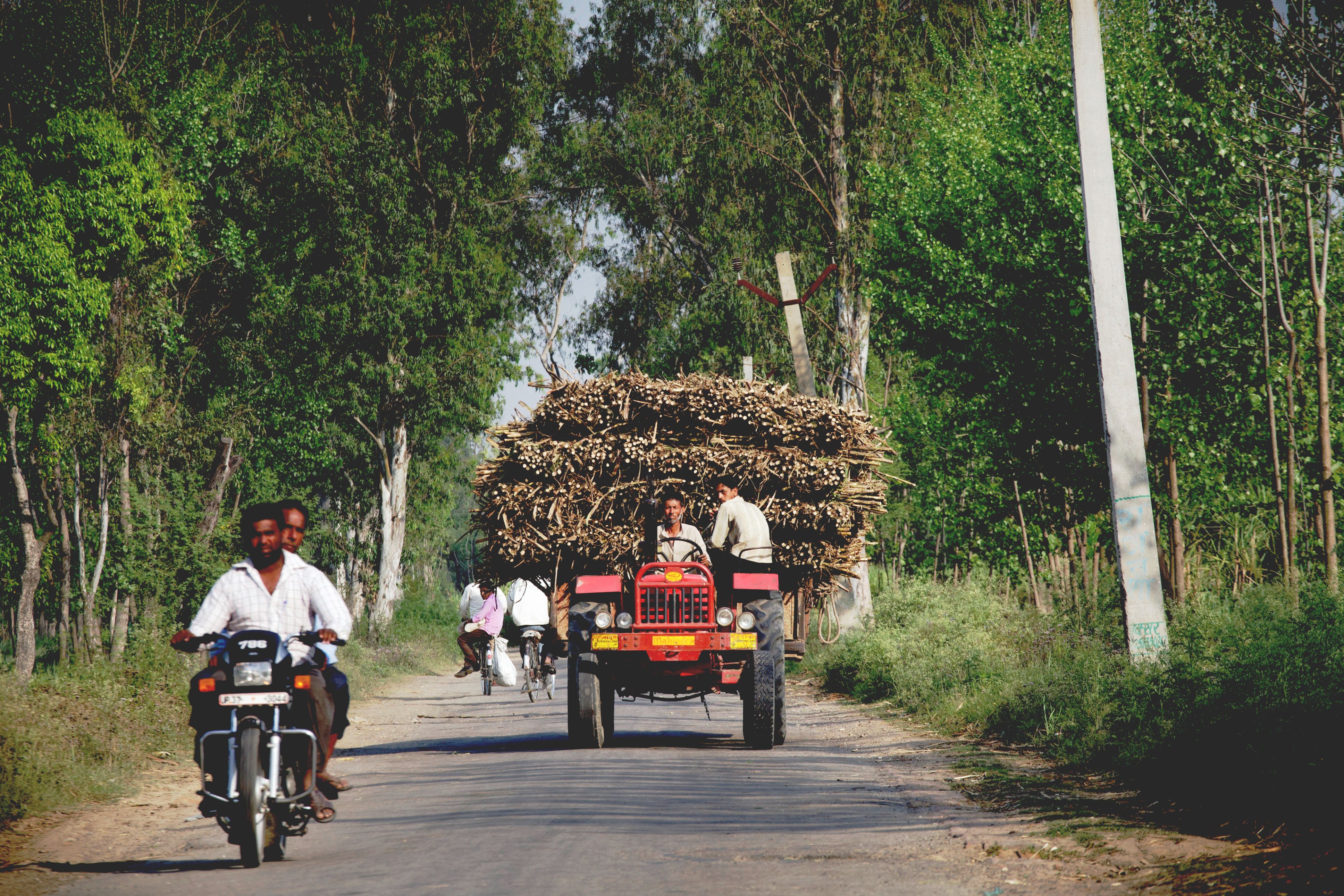
India's farm distress is holding back rural growth. And now recent weakness in the non-farm sector suggests that the rural recovery may take longer than expected.
“Non-farm income has been supportive earlier but we could clearly observe a weakening of economic activity across regions,” according to JM Financial's Rural Safari report. “While there were issues of lower farm prices in some regions, we believe multiple reasons have been at play causing the soft trajectory of non-farm income.”
The team at JM Financial Research travelled to rural areas across 13 states for their bi-annual Rural Safari. Their key takeaway: rural consumption growth may see a temporary spurt after general elections, but a sustained recovery will be more gradual than anticipated.
Non-farm sources like dairy, wage-based work, sand mining, tractor rental and small businesses contribute about 40 percent of the total agri-household income, according to JM Financial.
“There are four factors that have led to a slowdown in demand: slowdown in the informal sector, lower crop prices, impact of lower financing on small enterprises and pre-election postponement of demand,” Suhas Hariharan, managing director at JM Financial, told BloombergQuint. “What we are expecting is that there will be burst of growth for a month or two. But after that it will depend on how fast the financing for the informal sector and the broader informal activity revives.”
I would think it is impact of the non-farm income which is playing a bigger spoilsport on demand at this time.Suhas Hariharan, Managing Director, JM Financial

The liquidity crunch among India's lenders, Hariharan said, played a key role in putting non-farm income on a weak trajectory. “These things have been happening for the last two years. What probably acted as a catalyst is the slowdown in financing to the SME sector since September or October,” he said. “Maybe these businesses were being held up by the financing coming from NBFCs (non-bank financial companies) and others. But now that has been pulled out. So there's a loss of income.”
But not all was gloomy in JM Financial's road trip.
One of the success stories in Indian agriculture, it said, was the resilience of crop yields. “It has increased all these years despite poor monsoon season,” Hariharan said.
But crop prices are lower because procurement hasn't been adequate, he said. “There was an expectation that procurement would be very good on the ground. But that has faltered to deceive. Procurement is still quite lacking.”
That's why JM Financial said now may not be the right time to build a rural portfolio.
In our view, a ‘pure' rural portfolio could underperform in FY20.JM Financial Research
Here Are Sectoral Findings From JM Financial's Road Trip:
Consumer Goods
Patchy monsoon and lower crop realisation have hit consumer demand in the rural economy. “That apart, an extended winter also meant that demand for products that picks up with rising heat took a beating,” JM Financial said.
While we expect the deceleration in consumer demand to have a negative impact on earnings across our universe, on a relative basis, we prefer staples over discretionary as they have better visibility on growth.JM Financial Research
Automobiles
For auto sales there were no issues with the availability of finance, JM Financial said. “The message we are getting is that it is over-funded,” Hariharan said.
Dealers in Uttar Pradesh are expecting a recovery in the upcoming festive period, while those in southern India expect a gradual recovery after the elections.
With broader slowdown across the auto industry and limited visibility of a quick recovery within the next quarter, we remain cautious on the volume growth in the months to follow. Some players, however, stand out even in the challenging environment, driven by aggressive sales/promotion strategy and new model launches.JM Financial Research
Financials
Disbursement growth has picked up since November 2018 after the industry's liquidity crisis. Non-bank lenders have tightened yields and stepped up collection efforts, JM Financial said, adding these moves have translated in to stable-to-improving trends in asset quality.
We expect healthy growth trend to continue for strong promoter-backed, highly-rated NBFCs with credit costs improving by 30 basis points over FY19-21 estimates for rural/vehicle financiers and 20 basis points for diversified NBFCs.JM Financial Research
Agri-Inputs
There was a wide disparity in brand awareness and decision-making among farmers with regard to pesticide purchases, JM Financial said. “The use of spurious pesticides (based on dealers' recommendations) is still high in many states and this has impacted quality of agricultural produce to a large extent.”
We believe there is a significant potential lying ahead in the sector, driven by rising number of farmers realising the need to use high-quality agri-inputs. So, over the medium-term increase in regional penetration by organised players, the Indian agrochemicals sector is capable of accelerating annual growth to double digits.JM Financial Research
Watch the full interview

-
High US Salaries, No Green Card Certainty: The Financial Calculation Facing Indian H-1B Families

The suspension of PERM processing at eight technology employers does not cancel existing H-1B visas. What it does is force a question many Indian families have been avoiding: is the US salary worth tying your career and family plans to one employer?
-
Swiggy vs Eternal: Food Delivery's Two Rivals Are No Longer In The Same Race
Eternal is building a private AI assistant, dark.ai. Swiggy is still working out how to make Instamart pay, with an operating loss of Rs 895 crore in the July-September quarter while Blinkit stayed profitable.
-
Where You Live Shapes How You Get To Work | The Reason Why
Two-wheelers are the most popular way to get to work in India, accounting for nearly 43% of workplace commutes.
-
Unhedged Position: Can India See An Indonesia-Style Time Correction?
The Nifty is trading below levels it first clocked in 2024. Is there, then, as I have suggested in the headline, potential that the current time correction drags on painfully for the next three-five, even ten years?
-
Navigating Friction And Energy Realities: An Analysis Of Marco Rubio's October Visit To India
Occurring at a critical juncture marked by stalled trade negotiations and escalating geopolitical pressures over global energy supplies, the visit offers a profound window into modern US-India relations.
-
India Exports Capital. Why Not Export Trusteeship?
The big question, then, is whether India can build an institution that global borrowers, investors, banks, and lawyers can trust, even without an Indian connection.
-
France's Economy & Politics Are In Crisis | The Reason Why
Let's look at how the French economy and politics evolved under Nicolas Sarkozy, Franois Hollande and Emmanuel Macron.
-
You May Inherit The Business. You Must Earn Its Credibility.
Succession tests the founder's ability to share authority as much as it tests the next generation's readiness to assume it.
-
Signing Deals Is One Thing; Making Them Work Is Another | The Week In Whys
Sometimes, things don't turn out as planned. Indian companies have lost some bids to rivals, some projects won't produce until 2030.
-
FOMC Wall, PERM Suspension, Hospital Stocks | Talking Points This Week
A PERM suspension would directly affect green-card sponsorship rather than H-1B visas, so the near-term earnings impact could remain relatively limited. The key question is whether this marks a new phase in US scrutiny of Indian IT.









