Once India’s Largest Broker, ICICI Securities, Loses Half Of Its Market Capitalisation
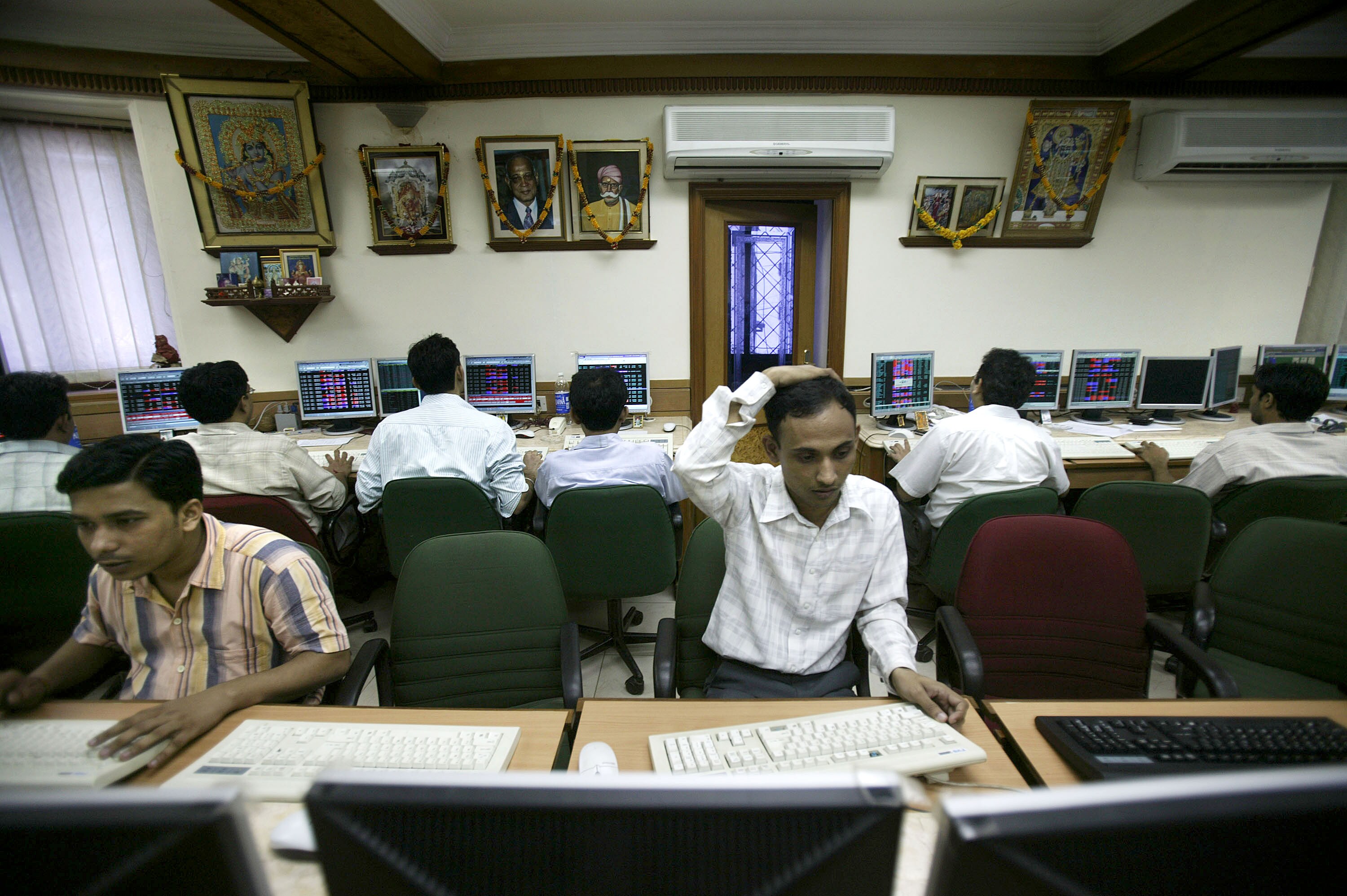
ICICI Securities Ltd., edged out as India's largest broker by Zerodha, lost nearly half of its market value since it went public in April last year as volatile equity market, pricing pressure and lower mutual fund fees hurt its business.
Muted primary market, expensive valuations and concerns about an affiliated company's investment in ICICI Securities Ltd. only added to its woes. Concerns have lingered since the brokerage arm of India's second-largest private lender by assets went public last year. It's initial public offer remained under-subscribed, and even the reduced offer size failed to enthuse wealthy investors. It now trades at Rs 279 apiece compared with its issue price of Rs 520.
Shares of ICICI Securities fell as much as 8.8 percent, the most since listing, after the company reported a drop of 18 percent and 33 percent in its revenue and net profit, respectively, in the three months ended December.

Here are the reasons that still loom over India's second-largest broker:
Volatile Equity Market
ICICI Securities' revenue from brokerage income remained flat in the first nine months of the ongoing financial year at a time markets remained choppy. This resulted into muted retail participation. ICICI Securities derives more than half of its revenue from broking. Equity markets, however, are expected to remain volatile at least till the upcoming general election.
Also, competition from online brokers led to a decline in active client additions that weighed on its brokerage yields. ICICI Securities has as many as 8.44 lakh active clients—one who has bought a firm's products or used its services at least once in the last 12 months—compared with discount broking firm Zerodha's 8.47 lakh as of December.

Regulatory Pullback
A twin blow by the market regulator—barring mutual funds from paying fees to distributors from their books and lowering expenses paid by investors of equity schemes—will weigh on ICICI Securities at a time it was expecting its mutual fund distribution business to aid growth.
The company's income from mutual fund distribution, which contributes close to 17 percent to its total revenue, dropped 22 percent in the quarter ended December due to changes in the commission structure.
“Restricting upfront commission on new sales made post Oct. 22 will impact the second-half earnings, but over long term the same would be balanced over trail commission,” said Madhukar Ladha, analyst at HDFC Securities Ltd. “However, coming FY20, that will also be lower as distributors will have to share some of the burden of cut in total expense ratio announced by SEBI”.
Muted Primary Markets
ICICI Securities' income from investment banking declined as companies turned cautious towards the primary market amid volatility.
So far this financial year, only 10 companies raised close to Rs 12,400 crore from the primary market—the lowest in four years.
Revenue from investment banking is also expected to fall as no initial public offering has been launched in the last four months and none is slated to launch in the rest of the ongoing financial year.
ICICI Securities is trading at 16 times its earnings compared to nearly 50 times when its public offer was launched. However, with no near-term re-rating possibility, this may remain under pressure.

-
Navigating Energy Crossroads: S Jaishankar's Call For Diversified Supply Chains At G20 Ministerial Meeting

As geopolitical fault lines continue to test maritime trade routes and commodity flows, Jaishankar's message remains pertinent: true economic resilience requires open markets, protected transit lines, and a genuine commitment to multilateral cooperation rather than coercion.
-
Indians Are Travelling, But Not Every Journey Is A Holiday | The Week In Whys
Pilgrims, patients and working women are the real travellers, and the system hasn't quite caught up with them.
-
Getting To Work Costs Women More | The Reason Why
It is not just about women paying more than men. It is about women paying much more in cities than in villages.
-
AI Bias In Investing Cannot Be Eliminated, But It Can Be Governed
Framing is a particularly important example as identical financial information presented in terms of gains rather than losses can lead an LLM to reach a different assessment.
-
Joining The Dots | Dark Skies, Steady Diya: Why Hope Holds This Diwali
With war, a weak rupee and foreign outflows weighing on sentiment, policymakers at the NDTV World Summit and market veterans at NDTV Profit Ignite: Diwali Edition offered the same advice: stay invested and filter out the noise.
-
The Curious Case of Equitas Small Finance Bank And A CEO Who Quit For Stock
PN Vasudevan believes persistent investor concerns over a perceived conflict of interest had become a governance overhang on Equitas Small Finance Bank's stock, even as the lender improved profitability and asset quality.
-
Talking Points This Week: AI Cash Burn, A Tiger Comeback And An India That Still Finds Its Own Path
India is not immune to higher oil or tighter global liquidity, yet its earnings base is broader, its domestic policy levers are still available.
-
Foreign Investors Own Half Of HDFC Bank and ICICI Bank. An LTCG Cut Could Matter Most Here
Foreign portfolio investors have US$115 billion parked in HDFC Bank, ICICI Bank. If the government cuts long-term capital gains tax, Jefferies says returning foreign money could land here first.
-
'Never Seen This Level Of Negativity': Sandeep Tandon Says The Next Rally May Be Closer Than You Think
Veteran investor Sandeep Tandon says foreign selling is easing, large-caps are due a comeback and mid-caps are crowded, while he turns positive on gold, power and pharma this Diwali.










