Oil Turns Lower With Iran-Israel Attacks Sparing Flows So Far
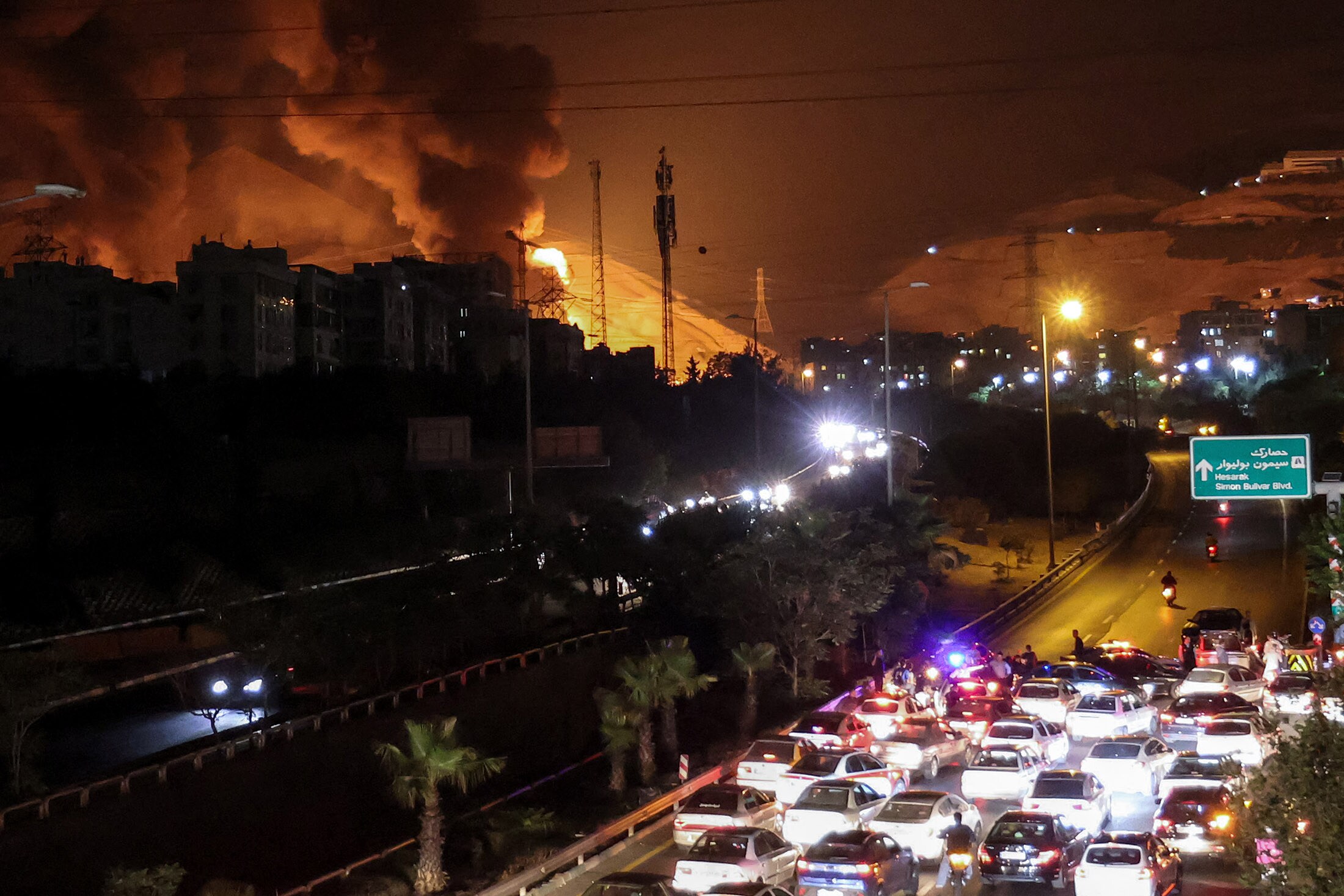
Oil fell, wiping out an earlier spike, as traders monitor continued attacks between Iran and Israel that for now have spared critical export infrastructure.
Brent traded down as much as 1.3% after leaping higher at the open. It was a second frenetic day of trading since airstrikes began on Friday, when crude gained more than 7% and record volumes of futures and options changed hands.
Oil markets remain on edge after Israel launched an attack on the South Pars gas field, forcing the halt of a production platform, following strikes on Iran's nuclear sites and military leadership last week. However, so far critical crude oil-exporting infrastructure has been spared and there's been no blockage of the vital Strait of Hormuz.
While an attack on Iran's gas production is a concern, the biggest fear for the oil market centers on Hormuz. Middle East producers ship about a fifth of the world's daily output through the narrow waterway, and prices could soar further if Tehran attempts to disrupt shipments through the route.
“A potential blockage of the Strait of Hormuz by Iran remains the most important market-moving event to watch for, which could tip oil markets into unprecedented territory,” Rystad Energy AS Analyst Mukesh Sahdev said in a note. “There are no signs yet that such a scenario is on the cards.”
Despite cooling their gains on Monday, oil prices remain significantly higher than where they were before the attacks began. Wall Street analysts have been quick to highlight the risks the conflict could pose.
RBC Capital Markets said the fact both sides have targeted energy infrastructure shows a clear cause for concern, with the key export hub of Kharg Island and oilfields in Iraq potentially exposed. Morgan Stanley hiked its crude price forecasts by $10, citing the increased risk from the conflict.
For now, the majority of the impacts have been confined to the shipping market. Navigation signals in the Strait of Hormuz and Persian Gulf are facing increasing interference at a level and intensity that is having a significant impact on positional reporting, the UK Navy said.
Some shipowners are reluctant to accept bookings in the region, citing safety concerns. Benchmark supertanker rates from the Middle East to China soared more than 20% on Friday.
Much of the oil-trading activity has also been focused on the options market. Record volumes of bullish calls changed hands on Friday, and there was elevated activity early on Monday as traders rushed to buy contracts that protect against the risk of further price spikes.
Absent any supply disruptions, the potential market impact of the attacks so far has been on the demand side. Egypt is rushing to find alternative fuel supplies to avoid power blackouts after the conflict disrupted gas flow from Israel.
The price of fuels that could be used in power generation leaped Monday. High-sulfur fuel oil in Europe was close to a rare premium to crude, while diesel was the strongest since February.
US President Donal Trump said he believed it's possible Israel and Iran could reach a deal to end the conflict, but may need to continue fighting before coming to an agreement. “Sometimes they have to fight it out, but we're going to see what happens,” he told reporters at the White House on Sunday.
“We would expect prices to have a lot more downside pressure rather than upside if it were somehow possible to look through the geopolitical uncertainty and assume no significant disruptions to the overall oil balances,” Societe Generale analysts including Mike Haigh wrote in a note.
Prices:
Brent fell 1% to $73.41 a barrel at 1:26 p.m. in London after closing 7% higher on Friday.
WTI dropped 1% to $72.13 a barrel.

-
Navigating Energy Crossroads: S Jaishankar's Call For Diversified Supply Chains At G20 Ministerial Meeting

As geopolitical fault lines continue to test maritime trade routes and commodity flows, Jaishankar's message remains pertinent: true economic resilience requires open markets, protected transit lines, and a genuine commitment to multilateral cooperation rather than coercion.
-
Indians Are Travelling, But Not Every Journey Is A Holiday | The Week In Whys
Pilgrims, patients and working women are the real travellers, and the system hasn't quite caught up with them.
-
Getting To Work Costs Women More | The Reason Why
It is not just about women paying more than men. It is about women paying much more in cities than in villages.
-
AI Bias In Investing Cannot Be Eliminated, But It Can Be Governed
Framing is a particularly important example as identical financial information presented in terms of gains rather than losses can lead an LLM to reach a different assessment.
-
Joining The Dots | Dark Skies, Steady Diya: Why Hope Holds This Diwali
With war, a weak rupee and foreign outflows weighing on sentiment, policymakers at the NDTV World Summit and market veterans at NDTV Profit Ignite: Diwali Edition offered the same advice: stay invested and filter out the noise.
-
The Curious Case of Equitas Small Finance Bank And A CEO Who Quit For Stock
PN Vasudevan believes persistent investor concerns over a perceived conflict of interest had become a governance overhang on Equitas Small Finance Bank's stock, even as the lender improved profitability and asset quality.
-
Talking Points This Week: AI Cash Burn, A Tiger Comeback And An India That Still Finds Its Own Path
India is not immune to higher oil or tighter global liquidity, yet its earnings base is broader, its domestic policy levers are still available.
-
Foreign Investors Own Half Of HDFC Bank and ICICI Bank. An LTCG Cut Could Matter Most Here
Foreign portfolio investors have US$115 billion parked in HDFC Bank, ICICI Bank. If the government cuts long-term capital gains tax, Jefferies says returning foreign money could land here first.
-
'Never Seen This Level Of Negativity': Sandeep Tandon Says The Next Rally May Be Closer Than You Think
Veteran investor Sandeep Tandon says foreign selling is easing, large-caps are due a comeback and mid-caps are crowded, while he turns positive on gold, power and pharma this Diwali.
-
Indians Stay With Family, Not In Hotels | The Reason Why
India still lacks enough clean, reliable and affordable hotels for budget-conscious travellers.










