Oil Advances As US Ramps Up Sanctions Against Iranian Crude
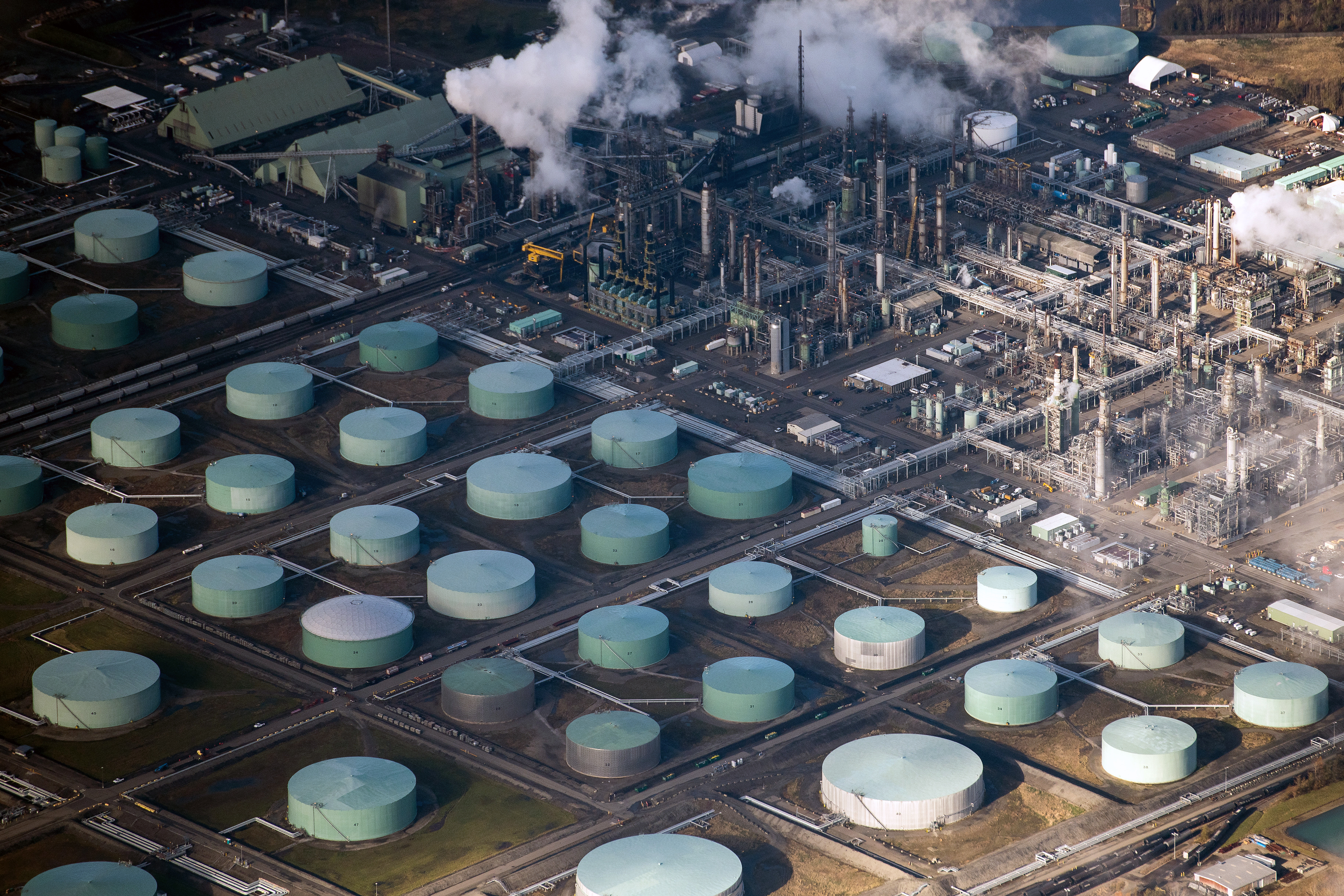
Oil advanced after the US ramped up measures to hobble Iran's crude exports, increasing pressure on Tehran amid a push for a new nuclear accord.
West Texas Intermediate rose as much as 2% to top $68 a barrel, while global benchmark Brent climbed to near $72. The US Treasury Department sanctioned a Chinese oil refinery and its chief executive officer for allegedly buying Iranian oil as well as multiple vessels allegedly linked to a “shadow fleet” of ships that carry the OPEC member's crude.
The moves herald a return to the so-called maximum pressure campaign against Iran that squeezed the nation's crude exports during US President Donald Trump's first term. Trump told Iran's Supreme Leader Ali Khamenei in a recently delivered letter that his country has a two-month deadline to reach a new nuclear deal.
“Trump is positioning to significantly impact Iranian exports if negotiations fail,” said Rebecca Babin, a senior energy trader at CIBC Private Wealth Group. “A modest price move higher makes sense, but I'd be surprised if this drives more than a $1 to $2 increase,” given the two-month deadline, she said.

A maximum-pressure campaign could remove as much as 1.5 million barrels of daily Iranian exports from global markets, according to Jorge Leon, head of geopolitical analysis at Rystad Energy A/S.
The sanctions injected a jolt of bullishness into a session that had earlier seen crude drift between gains and losses as markets assessed the Federal Reserve's US economic outlook. While Fed Chair Jerome Powell said on Wednesday that the central bank is in no hurry to cut rates, the Treasury market boosted its bets on lower rates because of the uncertainty that he highlighted.
Still, crude remains markedly below its mid-January peak, as bearish factors pressures prices. While the escalating trade war threatens to reduce energy demand, OPEC and its allies are set to raise output starting April, contributing to a potential global surplus.
Member nations that have persistently flouted production quotas, including Kazakhstan, Iraq and Russia, provided updated plans to make additional cutbacks on Thursday. The reductions should — in theory — offset the group's plans to revive halted output through to the end of next year, in a support to prices.
Meanwhile, the Trump administration is poised to extend Chevron Corp.'s deadline to halt its Venezuela operations for at least another 30 days, fending off some concerns of near-term market tightness.
Prices
WTI for April delivery, which expires Thursday, rose 1.7% to $68.29 as of 1:05 p.m. in New York.
The more-active May climbed 1.8% to $68.09.
Brent for May settlement advanced 1.7% to $71.99 a barrel.

-
Talking Points This Week: Tech Nerves, FII Buying, And A Faraway Banking Shock

The global markets are not shining this Diwali. The exception in the large markets is, India.
-
Midterm Rally Lasted A Day. The Hard Reality Of A Divided US May Last Two Years | Opinion
Between a contested AI boom, a debt ceiling that arrives in 2027 and a president with every incentive to act alone, the next two years may prove more volatile than the first day's rally suggests.
-
Blue Wave Will Derail the AI Trade but Won't Dismantle the AI Era | Unhedged Position
The Democrats' sweep of the US Congress will see politics collide with economic forces both over the long and short term.
-
It's Time To Take The GST Council's Bet On Trust Global
Payment records can prove India's services exports, and clear, proportionate rules can bring foreign digital sellers into the tax net.
-
Opinion | India at 38: From Innovation Overperformer to Innovation Powerhouse
India now has 453 VC-backed deep science startups, 18 of them late-stage, after 117 percent growth since 2020. Laurus Labs, at USD 9.3 billion, is the most valuable deep science company in any middle-income economy outside China.
-
Navigating Energy Crossroads: S Jaishankar's Call For Diversified Supply Chains At G20 Ministerial Meeting
As geopolitical fault lines continue to test maritime trade routes and commodity flows, Jaishankar's message remains pertinent: true economic resilience requires open markets, protected transit lines, and a genuine commitment to multilateral cooperation rather than coercion.
-
Indians Are Travelling, But Not Every Journey Is A Holiday | The Week In Whys
Pilgrims, patients and working women are the real travellers, and the system hasn't quite caught up with them.
-
Getting To Work Costs Women More | The Reason Why
It is not just about women paying more than men. It is about women paying much more in cities than in villages.
-
AI Bias In Investing Cannot Be Eliminated, But It Can Be Governed
Framing is a particularly important example as identical financial information presented in terms of gains rather than losses can lead an LLM to reach a different assessment.









