Surprise OPEC+ Hike Adds To Trump Tariffs To Send Oil Plunging Around 7%

Oil tumbled the most since 2023 after suffering a twin hit from President Donald Trump's tariffs and an OPEC+ decision to increase output faster than previously announced.
West Texas Intermediate futures plunged as much as 7.4% to trade below $67 a barrel, while global benchmark Brent plummeted as much as 6.9% to slip below $70.
Trump's deluge of tariffs is creating fresh doubts about the outlook for the global economy, with levies against major crude importers such as China and India coming in more aggressive than feared. Although the administration steered away from actions that would directly affect oil markets — such as refraining from measures that would curb flows from Canada and Mexico — concerns that the trade war will sap global energy demand hammered prices.
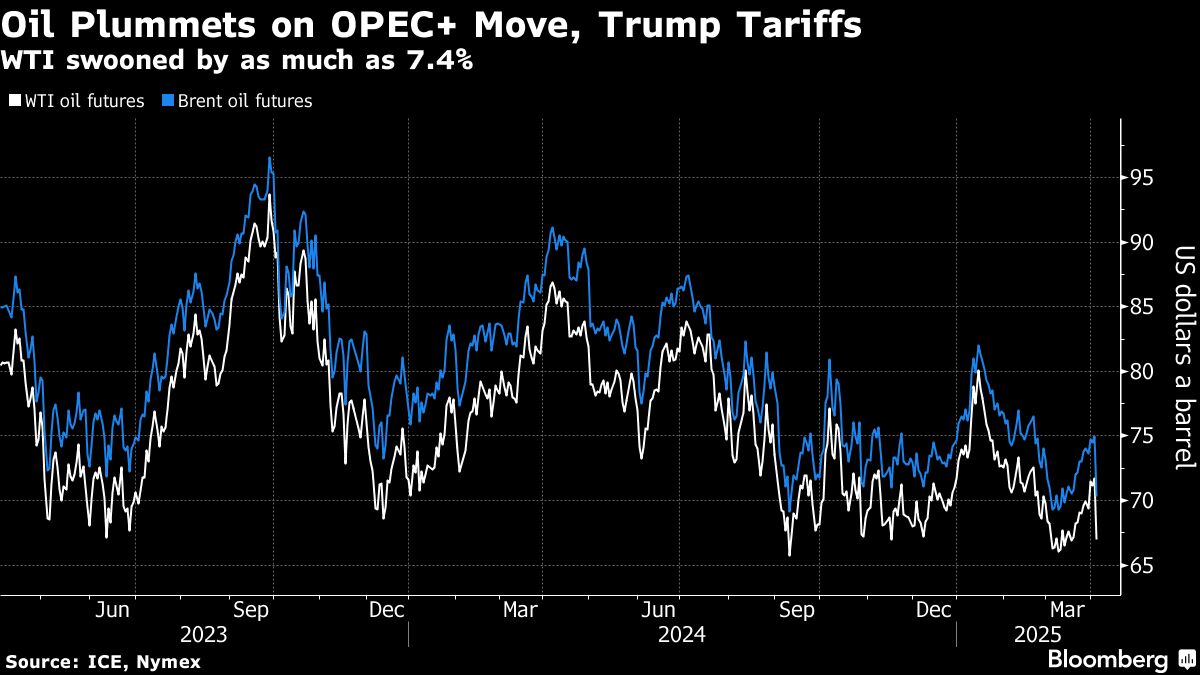
Hours later, the Organization of the Petroleum Exporting Countries and its allies unexpectedly said they would add more than 400,000 barrels of daily output back to the market next month. That was three times the amount the group had previously planned to revive, signaling a significant policy shift after years of supply constraints that had supported crude prices.
The two moves sent shockwaves across oil markets, though potentially offer a win for Trump, who has repeatedly bemoaned high crude prices. While falling oil prices could ease inflationary pressures for central banks, they also underscore a wider concern about the outlook for growth that's led firms across the industry to slash their forecasts in recent weeks.
“First recession and demand fears driven by Trump's tariff bazooka, and now the prospect for rising supply from OPEC,” said Ole Hansen, head of commodities strategy at Saxo Bank A/S. “Traders will once again turn their attention to the risk of an oversupplied market.”
OPEC Shift
The bumper output boost is a big change for OPEC+, which had previously emphasized that it could pause or reverse its planned supply hikes if needed. The group's communications have made little reference to the idea of accelerating production increases.
The policy shift follows a long period of tension within the group over certain members that have consistently flouted production limits. Kazakhstan has been a particular source of friction after it significantly exceeded its output ceiling during the startup of the expansion of its giant Tengiz oil field.
Thursday's decision is intended to put price pressure on quota cheats, while also providing them with the opportunity to make larger compensation cuts to atone for past overproduction, delegates said, asking not to be identified as the talks were private.
As well as internal issues, OPEC+ has also faced external pressure from Trump to cut the price of crude.
“If OPEC+ wanted to keep the oil price at bay, their timing could not have been better now that President Trump has initiated reciprocal tariff measures with the rest of the world,” said Harry Tchilinguirian, group head of research at Onyx Capital Group.
Lost Barrel
The extra supply from OPEC+ could tie into another policy priority for Trump — tighter sanctions on Iran and Venezuela.
The US president has pledged a maximum-pressure campaign to limit oil exports from both countries. He also threatened “secondary tariffs” on Russian shipments earlier this week. Higher supplies from other OPEC+ members could give him more leeway to restrict flows elsewhere.
“We think this is to replace barrels lost from tighter US sanctions on Iran, and, possibly, also lower expectations than just recently of a Ukraine ceasefire and related western sanctions relief,” Henning Gloystein, head of energy and climate at consultants Eurasia Group, said of the OPEC+ hike.
Thursday's huge price swings, the biggest in more than two years, are also a reminder of the type of volatility that has kept some traders on the sidelines in recent months. Some of the world's biggest commodity trading houses last month said that while the market's outlook was weaker, both Trump and OPEC+ were adding to the uncertainty.
The eight OPEC+ countries participating in the group's so-called voluntary cuts said they will hold monthly meetings to review market conditions, according to the group's statement. Talks on May 5 will decide on June production levels.

-
Talking Points This Week: Tech Nerves, FII Buying, And A Faraway Banking Shock

The global markets are not shining this Diwali. The exception in the large markets is, India.
-
Midterm Rally Lasted A Day. The Hard Reality Of A Divided US May Last Two Years | Opinion
Between a contested AI boom, a debt ceiling that arrives in 2027 and a president with every incentive to act alone, the next two years may prove more volatile than the first day's rally suggests.
-
Blue Wave Will Derail the AI Trade but Won't Dismantle the AI Era | Unhedged Position
The Democrats' sweep of the US Congress will see politics collide with economic forces both over the long and short term.
-
It's Time To Take The GST Council's Bet On Trust Global
Payment records can prove India's services exports, and clear, proportionate rules can bring foreign digital sellers into the tax net.
-
Opinion | India at 38: From Innovation Overperformer to Innovation Powerhouse
India now has 453 VC-backed deep science startups, 18 of them late-stage, after 117 percent growth since 2020. Laurus Labs, at USD 9.3 billion, is the most valuable deep science company in any middle-income economy outside China.
-
Navigating Energy Crossroads: S Jaishankar's Call For Diversified Supply Chains At G20 Ministerial Meeting
As geopolitical fault lines continue to test maritime trade routes and commodity flows, Jaishankar's message remains pertinent: true economic resilience requires open markets, protected transit lines, and a genuine commitment to multilateral cooperation rather than coercion.
-
Indians Are Travelling, But Not Every Journey Is A Holiday | The Week In Whys
Pilgrims, patients and working women are the real travellers, and the system hasn't quite caught up with them.
-
Getting To Work Costs Women More | The Reason Why
It is not just about women paying more than men. It is about women paying much more in cities than in villages.
-
AI Bias In Investing Cannot Be Eliminated, But It Can Be Governed
Framing is a particularly important example as identical financial information presented in terms of gains rather than losses can lead an LLM to reach a different assessment.









