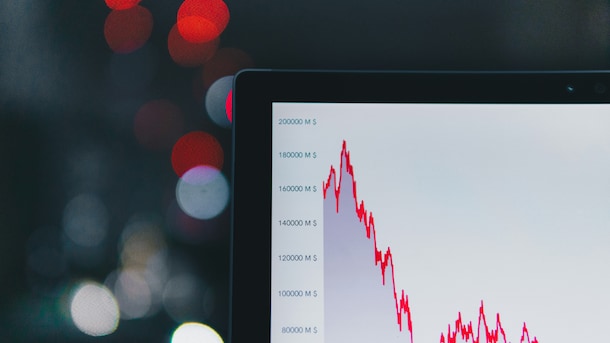
That $4.3 Trillion Wipeout in Asian Stocks Is Getting Deeper
(Bloomberg) -- It was looking like a week of wound-licking for Asian stocks. Then crude oil entered a bear market and alarm bells rang on China's slowdown as tech stocks plunged.
Just like that, the region's equity benchmark erased weekly gains and posted its sixth slide in seven weeks. The MSCI Asia Pacific Index slumped 1.2 percent Friday, worsening the wipeout that already erased $4.3 trillion of market value this year.
It's anyone's guess how regional stock markets will do on Monday but it isn't looking good right now: the S&P 500 Index dropped 0.9 percent Friday and futures contracts on the Nikkei 225 fell.
Read more: Trying to Salvage a Ruined Year in Stocks With Seven Weeks to Go
Of note: energy companies were, by far, the biggest decliners, followed by tech shares as Tencent Holdings sank almost 5 percent. Watch for its quarterly results next week -- analysts expect the giant will report its slowest revenue increase in more than three years.
One thing that might be worth keeping an eye on is data around China's consumption -- car sales fell for a fifth month and and Ctrip.com International joined the likes of Baidu and Alibaba Group Holding in being unable to avoid the economic slowdown.
Also throwing cold water on the recovery is the U.S. dollar, which resumed its appreciation as the Federal Reserve signaled it's still ready to increase rates in December. The strong greenback has been a key concern for investors in the region, as it's weakened local currencies and triggered massive outflows from emerging-market assets.
There are also some country-specific news to keep in mind:
- China's factory inflation slowed for a fourth month while consumer prices steadied amid sluggish demand.
- The nation is also aiming to boost large banks' loans to private companies to at least one-third of new corporate lending, said Guo Shuqing, chairman of the China Banking and Insurance Regulatory Commission.
- Australia's central bank said it expects stronger growth and hiring to help lift inflation, but warned of risks to the global outlook from a worsening trade war and weaker China.
- Malaysia's industrial production rose 2.3 percent in September from a year earlier, matching projections, while data on Indonesia's current-account balance is due later.
Hong Kong and Chinese shares tanked more than 1 percent on Friday, with the Hang Seng China Enterprises Index showing a familiar look that doesn't inspire any good -- just see this chart by Mark Cranfield, a Bloomberg M-Live strategist:
Indonesia's Jakarta Composite Index also slumped amid concerns that a rebalancing of indexes will lead to the lower weighting of some companies.
Here are some of Friday's big movers:
- Nexon, one of the biggest foreign video-game publishers in China, sank after saying profits in the mainland will drop by about a fifth in the current quarter.
- Lenovo rallied 4.5 percent. The company's quarterly profit beat estimates after the Chinese reclaiming the top spot in the global PC market.
- Two Hong Kong-listed online gaming companies that lost more than 60 percent of their value Thursday saw big gains in early trading Friday, another example of wild moves in the world's fourth-biggest stock market.
- Beijing-based developers and construction firms rose after a newspaper reported a development plan for the capital's Tongzhou district -- which could involve investment of up to 1 trillion yuan ($144 billion) over the next three years -- will be released soon.
And a look at what's coming over the weekend and next week:
- Alibaba will hold its annual Singles' Day online-shopping event on Nov. 11.
- China money supply and new-yuan loans data will be released any time through Nov. 15.
- Asean Summit begins in Singapore, with leaders from 10 member countries, along with China, the U.S., Japan and Russia.
- Japan GDP and industrial production data are due Nov. 14.
- Companies including Tencent, Mitsubishi UFJ Financial, Want Want China, Singapore Airlines will report earnings next week.
Stock-Market Summary - Japan's Topix index down 0.5%; Nikkei 225 down 1.1%
- Hong Kong's Hang Seng Index down 2.4%; Hang Seng China Enterprises down 2.5%; Shanghai Composite down 1.4%
- Taiwan's Taiex index down 1.2%
- South Korea's Kospi index down 0.3%; Kospi 200 down 0.3%
- Australia's S&P/ASX 200 down 0.1 percent; New Zealand's S&P/NZX 50 up 0.4%
- India's S&P BSE Sensex Index down 0.2%; NSE Nifty 50 down 0.1%
- Singapore's Straits Times Index down 0.5%; Malaysia's KLCI down 0.8%; Philippine Stock Exchange down 1%; Jakarta Composite down 1.7%; Thailand's SET down 0.8%; Vietnam's VN Index down 1.3%
--With assistance from Shamim Adam.
To contact the reporter on this story: Moxy Ying in Hong Kong at yying13@bloomberg.net
To contact the editors responsible for this story: Divya Balji at dbalji1@bloomberg.net, Cecile Vannucci
©2018 Bloomberg L.P.

-
Talking Points This Week: Tech Nerves, FII Buying, And A Faraway Banking Shock

The global markets are not shining this Diwali. The exception in the large markets is, India.
-
Midterm Rally Lasted A Day. The Hard Reality Of A Divided US May Last Two Years | Opinion
Between a contested AI boom, a debt ceiling that arrives in 2027 and a president with every incentive to act alone, the next two years may prove more volatile than the first day's rally suggests.
-
Blue Wave Will Derail the AI Trade but Won't Dismantle the AI Era | Unhedged Position
The Democrats' sweep of the US Congress will see politics collide with economic forces both over the long and short term.
-
It's Time To Take The GST Council's Bet On Trust Global
Payment records can prove India's services exports, and clear, proportionate rules can bring foreign digital sellers into the tax net.
-
Opinion | India at 38: From Innovation Overperformer to Innovation Powerhouse
India now has 453 VC-backed deep science startups, 18 of them late-stage, after 117 percent growth since 2020. Laurus Labs, at USD 9.3 billion, is the most valuable deep science company in any middle-income economy outside China.
-
Navigating Energy Crossroads: S Jaishankar's Call For Diversified Supply Chains At G20 Ministerial Meeting
As geopolitical fault lines continue to test maritime trade routes and commodity flows, Jaishankar's message remains pertinent: true economic resilience requires open markets, protected transit lines, and a genuine commitment to multilateral cooperation rather than coercion.
-
Indians Are Travelling, But Not Every Journey Is A Holiday | The Week In Whys
Pilgrims, patients and working women are the real travellers, and the system hasn't quite caught up with them.
-
Getting To Work Costs Women More | The Reason Why
It is not just about women paying more than men. It is about women paying much more in cities than in villages.
-
AI Bias In Investing Cannot Be Eliminated, But It Can Be Governed
Framing is a particularly important example as identical financial information presented in terms of gains rather than losses can lead an LLM to reach a different assessment.