Nestle Q4 Results: Profit Drops 5% On Cost Pressures, Meets Street View
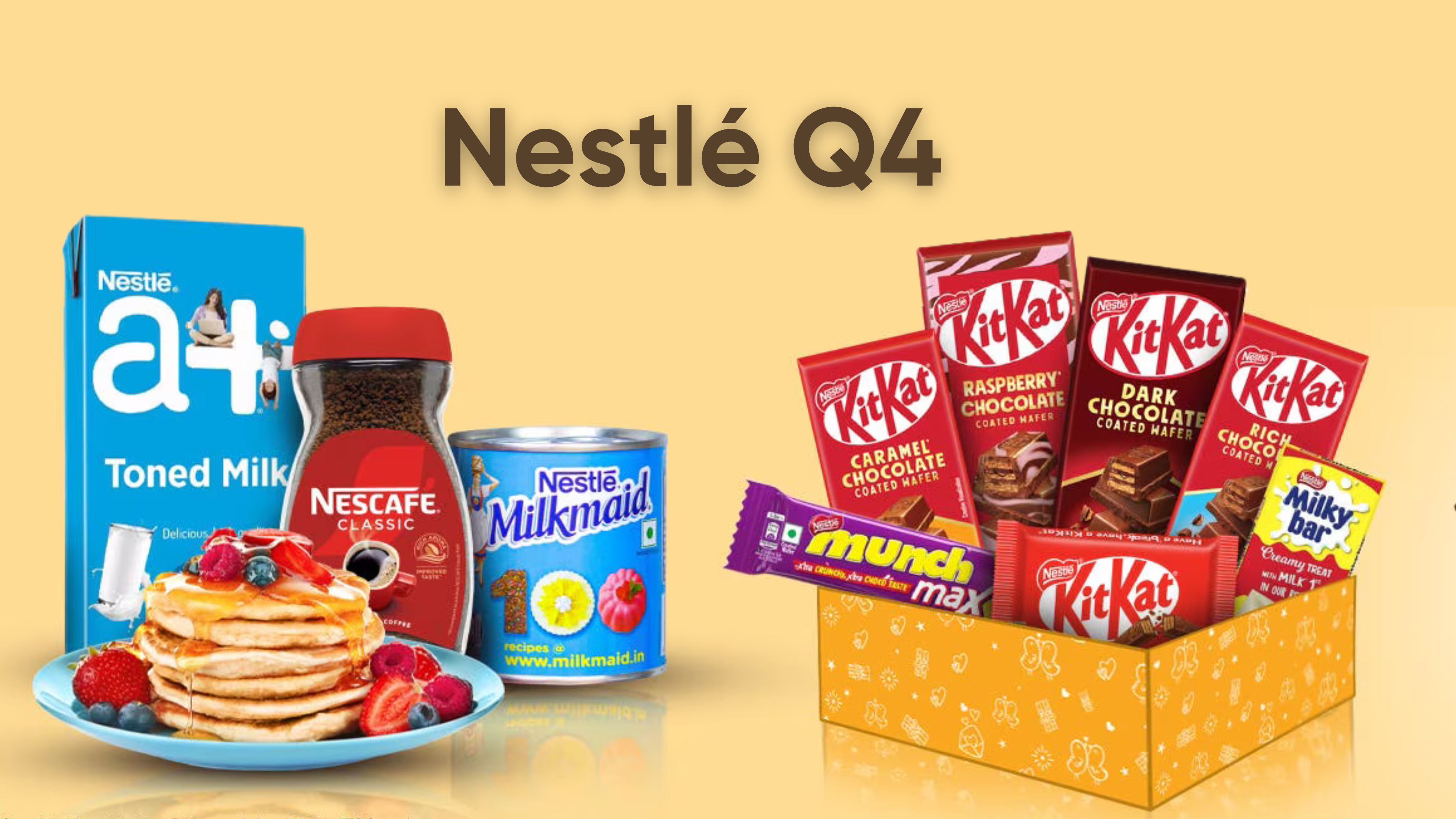
Nestle India Ltd.'s profit for the three months ended March fell 5% year-on-year, as rising input costs weighed on margins, even as the company's earnings matched analyst expectations.
The maker of Maggi noodles and Nescafé coffee reported a net profit of Rs 885.4 crore for the March quarter, according to a filing to the stock exchanges on Thursday. Revenue from operations rose 4.5% to Rs 5,503.8 crore from Rs 5,268 crore a year earlier, broadly in line with the Bloomberg consensus estimate of Rs 5,495 crore.
The cost of materials consumed rose nearly 13% year-on-year to Rs 2,345.87 crore in the quarter, compared to Rs 2,075.82 crore in the same period last year, according to the company's balance sheet. Total sales and domestic sales during the quarter rose 3.7% and 4.2%, respectively.
JPMorgan said moderating prices of cocoa and edible oils should support an improvement in gross margins going ahead, even though some input costs—such as coffee and dairy—remain elevated. The combination of improving volume growth and a more positive margin outlook could aid share price performance, the brokerage said.
The company has also announced a dividend of Rs 10 per share with payout record date set at July 24, following approval from its board of directors.
Nestlé India Q4 Results (Standalone, YoY)
Revenue up 4.5% to Rs 5,503.8 crore versus Rs 5,268 crore (Bloomberg estimate: Rs 5,495 crore).
Ebitda up 3% to Rs 1,388.9 crore versus Rs 1,350 crore (Bloomberg estimate: Rs 1,325 crore).
Margin at 25.2% versus 25.6% (Bloomberg estimate: 24.11%).
Net profit down 5% to Rs 885.4 crore versus Rs 934 crore (Bloomberg estimate: Rs 857 crore).
Management Commentary
Nestle said prices of key commodities remained volatile. Coffee prices continued to be firm, milk prices rose with the onset of summer, and cocoa prices—though down 22.7%—remained historically high at $7,968.18 per metric ton, according to Bloomberg data. Edible oil prices, however, were said to be stable.
Sales growth in the quarter was supported by improved volume growth, with e-commerce now contributing 8.5% to domestic sales.
Q4 Key Highlights
The company reiterated that it will continue to execute its investment plan of approximately Rs 6,500 crore between 2020 and 2025 to develop new capabilities and capacity.
Double-digit growth in beverages and confectionery.
Powdered and liquid beverages were the top contributors in financial year 2025.
Nescafé gained market share and added 5.1 million households to the coffee category
Milk products and nutrition segment saw growth backed by new product launches.
Petcare business posted high double-digit growth—its best since integration into India operations.
Business Updates | Full Year FY25
E-commerce business was strengthened through availability and specialised forward packs.
Organised trade saw broad-based growth, led by store expansion.
Out-of-home consumption accelerated, supported by deeper channel penetration and premium offerings.
Export footprint expanded to Maldives and Papua New Guinea; Maggi noodles launched in new markets across the Middle East and South Africa.

-
Blue Wave Will Derail the AI Trade but Won't Dismantle the AI Era | Unhedged Position

The Democrats' sweep of the US Congress will see politics collide with economic forces both over the long and short term.
-
It's Time To Take The GST Council's Bet On Trust Global
Payment records can prove India's services exports, and clear, proportionate rules can bring foreign digital sellers into the tax net.
-
Opinion | India at 38: From Innovation Overperformer to Innovation Powerhouse
India now has 453 VC-backed deep science startups, 18 of them late-stage, after 117 percent growth since 2020. Laurus Labs, at USD 9.3 billion, is the most valuable deep science company in any middle-income economy outside China.
-
Navigating Energy Crossroads: S Jaishankar's Call For Diversified Supply Chains At G20 Ministerial Meeting
As geopolitical fault lines continue to test maritime trade routes and commodity flows, Jaishankar's message remains pertinent: true economic resilience requires open markets, protected transit lines, and a genuine commitment to multilateral cooperation rather than coercion.
-
Indians Are Travelling, But Not Every Journey Is A Holiday | The Week In Whys
Pilgrims, patients and working women are the real travellers, and the system hasn't quite caught up with them.
-
Getting To Work Costs Women More | The Reason Why
It is not just about women paying more than men. It is about women paying much more in cities than in villages.
-
AI Bias In Investing Cannot Be Eliminated, But It Can Be Governed
Framing is a particularly important example as identical financial information presented in terms of gains rather than losses can lead an LLM to reach a different assessment.
-
Joining The Dots | Dark Skies, Steady Diya: Why Hope Holds This Diwali
With war, a weak rupee and foreign outflows weighing on sentiment, policymakers at the NDTV World Summit and market veterans at NDTV Profit Ignite: Diwali Edition offered the same advice: stay invested and filter out the noise.
-
The Curious Case of Equitas Small Finance Bank And A CEO Who Quit For Stock
PN Vasudevan believes persistent investor concerns over a perceived conflict of interest had become a governance overhang on Equitas Small Finance Bank's stock, even as the lender improved profitability and asset quality.










