Market Investors More Focussed On US Tariff Impact On Sectors: Piper Serica's Abhay Agarwal
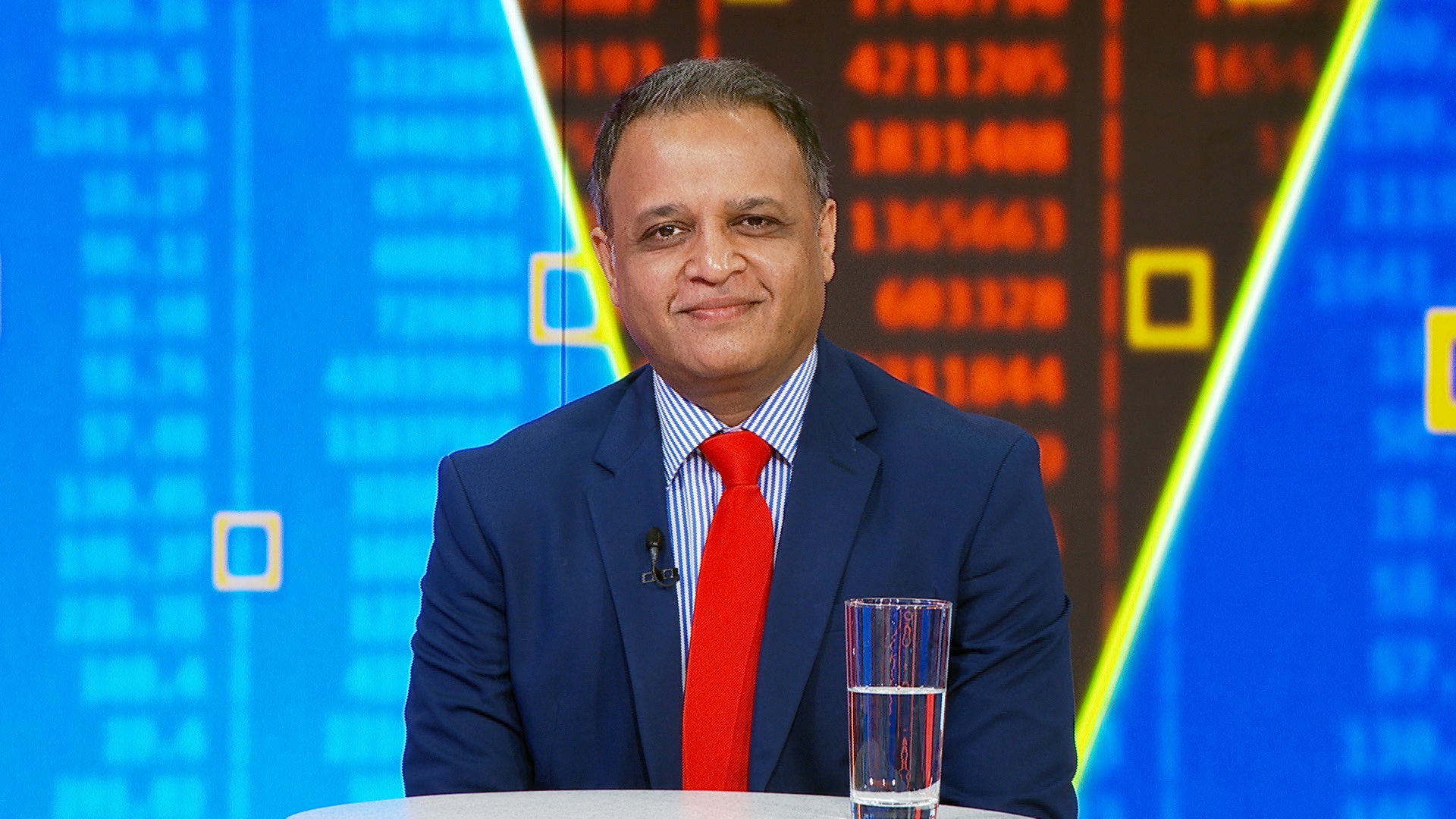
The initial knee-jerk reaction to US tariff announcements are over now. Market participants are becoming familiar with the unpredictability and surprising nature of tariff announcements, said Abhay Agarwal, founder and managing director, Piper Serica Advisors. They are more focussed on assessing the probable impact of tariffs in specific sectors, he added.
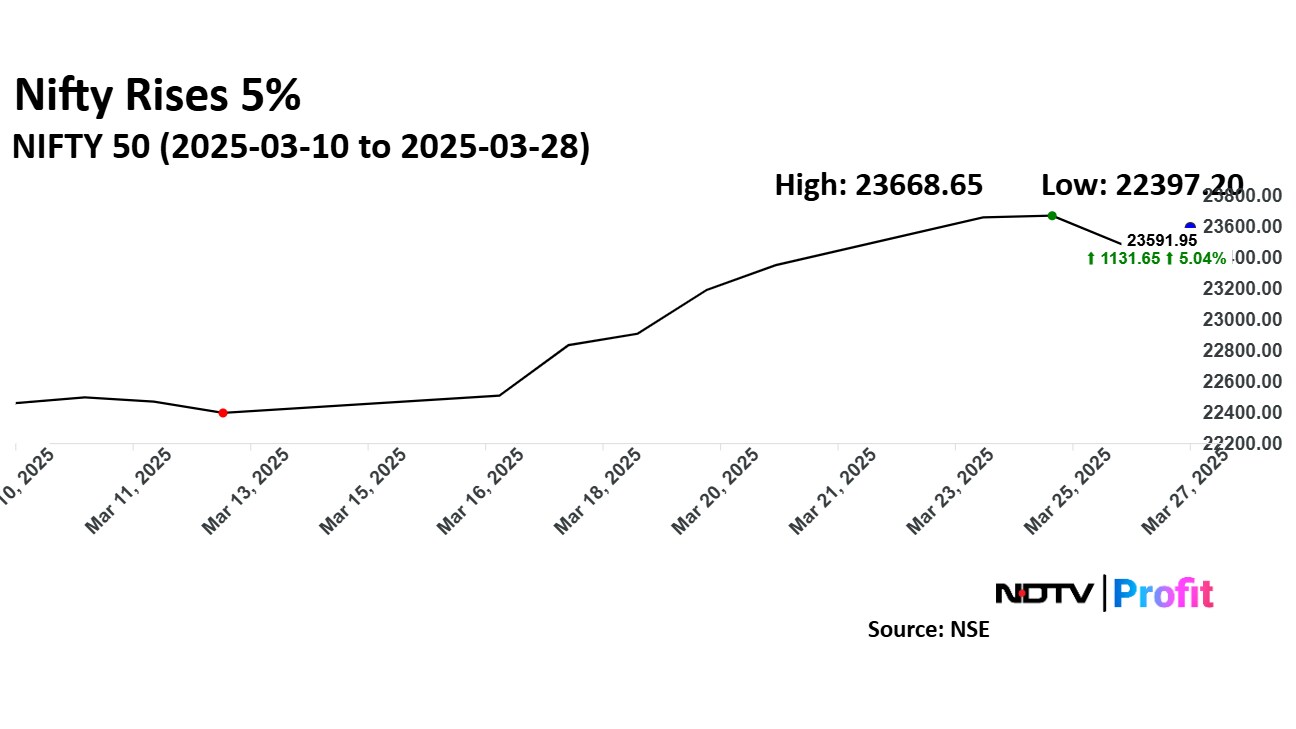
The NSE Nifty 50 declined 3.39% between late January and early March. From March 2, the large-cap index started to recover and as of Friday it has gained 4.99%, according to data from Bloomberg.
Back in late September, when it started to become clear that Donald Trump will return to the Oval office, Indian markets witnessed steep fall as Nifty 50 declined from lifetime high of 26,277.35, due to fear of protectionist US trade policies.
In last two and half months in the Oval office, Trump has levied tariffs on Canada, China, and Mexico. He has announced 25% tariffs on automobile and automobile component part imports from other countries. The reciprocal tariffs which Trump announced early in March, will come into effect on April 2.
During this series of announcements on tariffs, Trump and his administration had delivered contradictory views about the date of the tariff imposition and technicalities. This also created additional uncertainties in the global trade scenario.
India is a small percentage in global trade. Therefore, the impact will not be severe, Agarwal said. All eyes are on the Indian government and what steps they are taking to mitigate the impact of tariffs, he said.
The Assistant US Trade Representative for South and Central Asia Brendan Lynch is on a three-day visit to New Delhi, which will end on Friday. The purpose of the visit is to negotiate terms to flesh out a India-US bilateral deal. The first phase of the trade deal is expected to conclude by September or October.
Good Time To Look For Opportunities
This is a good time to look for opportunities rather than being wary about the threats, according to Agarwal. The market has formed a strong bottom and it will rise from here.
The dollar index and US treasury yields have corrected. Hence, investing in those safe-haven assets is not as profitable as it was five-six months back. Some investors have started to return to emerging-market assets like Indian equities, according to the portfolio manager.
Piper Serica's recent channel checks show green shoots in the consumption-driven sectors. Auto and consumer companies will be able to sell more going forward, given the steps the government and regulator is taking to boost consumption, the MD said.
The brokerage is bullish on large-cap banks, pharma, insurance and agro-chemical companies, he said. Piper Serica is noticing value emerging on small and mid-sized banks. The brokerage is seeing some provision write-backs in near term.
It is negative on information technology. The sector has zero weightage in the brokerage's model portfolio for last couple of years, and this is unlikely to change. The earnings will be lower because of US economic growth uncertainties. There will be budget cuts in the US. "I won't be surprised to see it (information technology) as the weakest performing sector in the Nifty index for next one year," Agarwal said.

-
High US Salaries, No Green Card Certainty: The Financial Calculation Facing Indian H-1B Families

The suspension of PERM processing at eight technology employers does not cancel existing H-1B visas. What it does is force a question many Indian families have been avoiding: is the US salary worth tying your career and family plans to one employer?
-
Swiggy vs Eternal: Food Delivery's Two Rivals Are No Longer In The Same Race
Eternal is building a private AI assistant, dark.ai. Swiggy is still working out how to make Instamart pay, with an operating loss of Rs 895 crore in the July-September quarter while Blinkit stayed profitable.
-
Where You Live Shapes How You Get To Work | The Reason Why
Two-wheelers are the most popular way to get to work in India, accounting for nearly 43% of workplace commutes.
-
Unhedged Position: Can India See An Indonesia-Style Time Correction?
The Nifty is trading below levels it first clocked in 2024. Is there, then, as I have suggested in the headline, potential that the current time correction drags on painfully for the next three-five, even ten years?
-
Navigating Friction And Energy Realities: An Analysis Of Marco Rubio's October Visit To India
Occurring at a critical juncture marked by stalled trade negotiations and escalating geopolitical pressures over global energy supplies, the visit offers a profound window into modern US-India relations.
-
India Exports Capital. Why Not Export Trusteeship?
The big question, then, is whether India can build an institution that global borrowers, investors, banks, and lawyers can trust, even without an Indian connection.
-
France's Economy & Politics Are In Crisis | The Reason Why
Let's look at how the French economy and politics evolved under Nicolas Sarkozy, Franois Hollande and Emmanuel Macron.
-
You May Inherit The Business. You Must Earn Its Credibility.
Succession tests the founder's ability to share authority as much as it tests the next generation's readiness to assume it.
-
Signing Deals Is One Thing; Making Them Work Is Another | The Week In Whys
Sometimes, things don't turn out as planned. Indian companies have lost some bids to rivals, some projects won't produce until 2030.
-
FOMC Wall, PERM Suspension, Hospital Stocks | Talking Points This Week
A PERM suspension would directly affect green-card sponsorship rather than H-1B visas, so the near-term earnings impact could remain relatively limited. The key question is whether this marks a new phase in US scrutiny of Indian IT.









