Jefferies' Chris Wood Sees Sensex Hitting 1,00,000 In 5 Years. Here's Why...
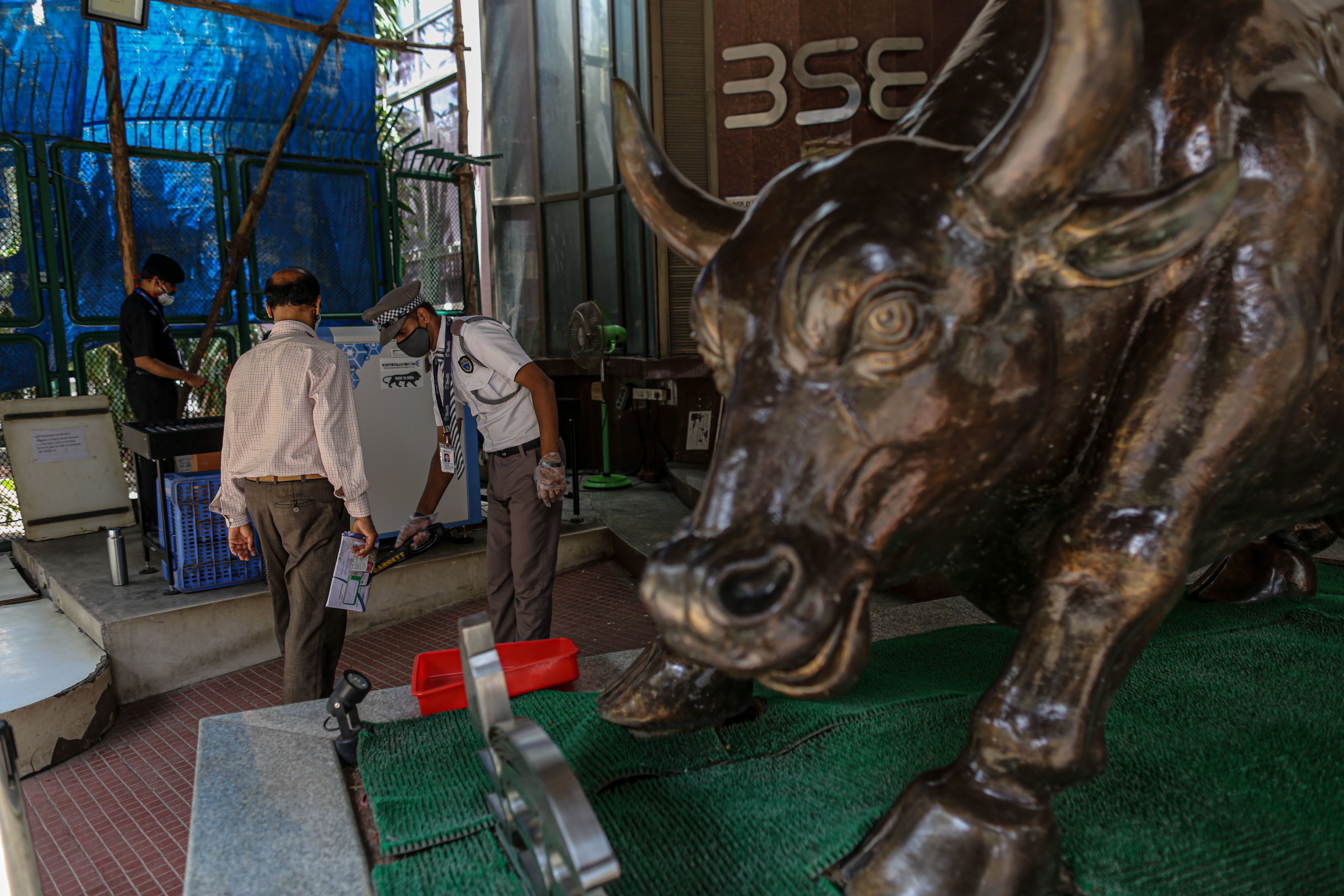
Jefferies' Christopher Wood sees India's benchmark S&P BSE Sensex hitting 1,00,000 in five years.
While the target is based on aggressive assumptions, it's eminently achievable, Wood wrote in his latest Greed & Fear note. He assumes a 15% earnings-per-share growth and that a five-year average multiple of 19.4 is maintained. The would take the Sensex to 1,00,000 sometime in late 2026. The index closed at 58,788 on Thursday.
"India has always been a stock market for growth investors with the multiple to go with it," said Wood, global head of equity strategy at Jefferies. "In a G7 world where value investors may finally enjoy an extended period of outperformance over growth, until at least the Fed performs another U-turn, India should be a prime object of focus for growth oriented equity investors."
Wood reposes faith in India's equities even as the stock market has slid 5.1% since peaking in October on a selloff by foreign investors. The latest bout of global volatility was triggered by an expected Fed taper and Ukraine tensions.
The market would have suffered "much more" were it not for continuing healthy inflows into domestic mutual funds, he said. Net inflows into domestic equity mutual funds totalled $9.3 billion in October-December and $22.2 billion since March 2021.
Risks And Positives
Higher tax revenues and a capex push announced in the Budget explains the "continuing resilience of the stock market despite perceived high valuations", Wood wrote.
He remains "most encouraged" by the conclusive evidence last year that a housing cycle has commenced after a seven-year downturn. "This should translate in due course into a broader capex cycle which should be earnings positive and mean the stock market will prove to be surprisingly resilient in the face of rising interest rates."
That's reflected in Jefferies' long-only Indian portfolio with a 17% weight for real estate stocks.

India also looks set to record perhaps the best earnings growth in Asia this year with only Indonesia and the Philippines higher in terms of consensus forecasts, according to the note. The consensus earnings growth forecast for the MSCI India index this year is 20.3% compared to 11.3% for Asia, excluding Japan.
Yet, two external risks persist—the Fed tightening cycle and a further spike in oil prices.
"On the Fed tightening issue, it is important to remember that the inflation problem is primarily an American and G7 one, not an Asian one," he said. "India has seen nothing like the monetary expansion witnessed in the G7 world in the pandemic era. True interest rates have been negative in India but nothing like on the scale seen in America or the Eurozone."
Oil prices, Wood said, can definitely hit India, which is why Greed & Fear's Indian portfolio has a 20% weighting in energy and why he still advises global emerging market investors to hedge their Indian equity exposure by owning energy stocks elsewhere. There is "every reason" for oil to head higher than $90 a barrel, unless a new more lethal Covid variant emerges.
The two risks might trigger more correction in India but Greed & Fear sees them as opportunities. If the current housing upturn proves to be the lead indicator of a broader private sector capex cycle, as was the case in 2002-03, then India should once again become one of the best performing stock markets in Asia as it was between 2003 and 2007, Wood wrote.
Greed & Fear hopes that the Indian macro story will be more resilient to rising crude than has been in previous cycles, he said. "It is certainly the case that the rupee has thus far been surprisingly stable."
Budget Views
While the fiscal deficit for this and the next fiscal year estimated in the Budget might seem high, given that it is driven primarily by investment related capex, he is "relatively relaxed".
Also, Finance Minister Nirmala Sitharaman might be "too conservative" on revenues, he said. Gross tax revenues have risen 44% year-on-year in the first nine months of FY22, about 20% over the budget estimate for the whole fiscal year.
Wood cited a note by Jefferies' Head of India Research Mahesh Nandurkar, who estimates that the tax collection could end up being six to seven percentage points higher both in this fiscal year and the next over the projected 9.6% growth.

-
Ten Things I Learnt This Samvat

Patience can be a trap. Cheap stocks can stay cheap. Leverage can wipe you out. What did Samvat 2082 teach us? Niraj Shah writes on 10 lessons from the year gone by.
-
Talking Points This Week: Tech Nerves, FII Buying, And A Faraway Banking Shock
The global markets are not shining this Diwali. The exception in the large markets is, India.
-
Midterm Rally Lasted A Day. The Hard Reality Of A Divided US May Last Two Years | Opinion
Between a contested AI boom, a debt ceiling that arrives in 2027 and a president with every incentive to act alone, the next two years may prove more volatile than the first day's rally suggests.
-
Blue Wave Will Derail the AI Trade but Won't Dismantle the AI Era | Unhedged Position
The Democrats' sweep of the US Congress will see politics collide with economic forces both over the long and short term.
-
It's Time To Take The GST Council's Bet On Trust Global
Payment records can prove India's services exports, and clear, proportionate rules can bring foreign digital sellers into the tax net.
-
Opinion | India at 38: From Innovation Overperformer to Innovation Powerhouse
India now has 453 VC-backed deep science startups, 18 of them late-stage, after 117 percent growth since 2020. Laurus Labs, at USD 9.3 billion, is the most valuable deep science company in any middle-income economy outside China.
-
Navigating Energy Crossroads: S Jaishankar's Call For Diversified Supply Chains At G20 Ministerial Meeting
As geopolitical fault lines continue to test maritime trade routes and commodity flows, Jaishankar's message remains pertinent: true economic resilience requires open markets, protected transit lines, and a genuine commitment to multilateral cooperation rather than coercion.
-
Indians Are Travelling, But Not Every Journey Is A Holiday | The Week In Whys
Pilgrims, patients and working women are the real travellers, and the system hasn't quite caught up with them.
-
Getting To Work Costs Women More | The Reason Why
It is not just about women paying more than men. It is about women paying much more in cities than in villages.









