Iran-Israel Tensions: Indian Oil, Asian Paints, IndiGo & More — Stocks Likely To Be Impacted
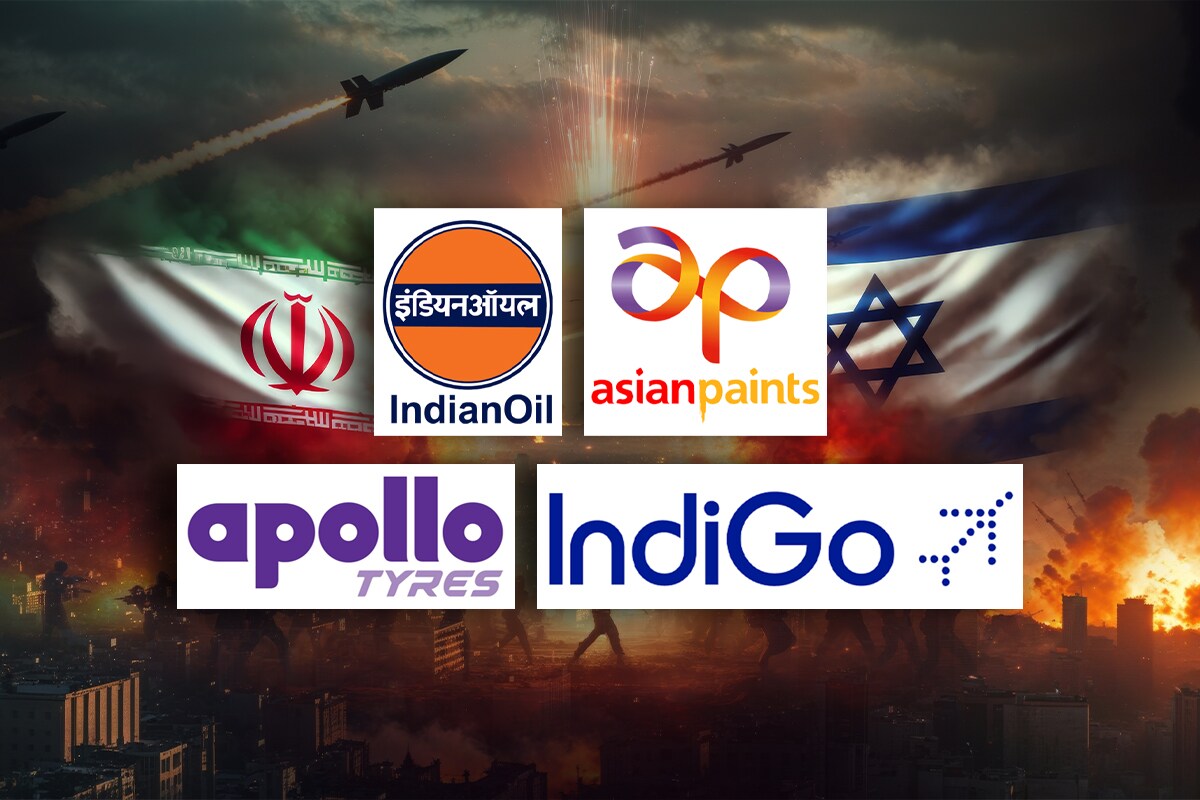
The escalating tensions between Israel and Iran could just put the Strait of Hormuz back in global spotlight and this time the biggest worry would be on the impact of supply chain issues for key crude oil producer countries.
The Strait of Hormuz, a narrow waterway connecting the Persian Gulf with the Gulf of Oman and the Arabian Sea, stands as one of the world's most critical maritime chokepoints.
Over the years, Iran has repeatedly targeted merchant ships traversing the choke point, and has even threatened to block the Strait in the past.
Saudi Arabia, Iraq, Kuwait, Qatar, and the United Arab Emirates are heavily reliant on the Strait for nearly all their oil and gas exports.
Significance Of Strait Of Hormuz
About one-third of the global seaborne oil, accounting for about 20-21% of total global petroleum liquids consumption, moves through the Strait of Hormuz.
This makes it an indispensable artery for the world's energy markets. Disruptions here directly impact global energy supplies and prices.
The most immediate and significant impact would be a massive surge in global oil and natural gas prices.
It is also the primary export route for virtually all Liquefied Natural Gas exports from Qatar and the UAE. These two nations are major players in the global LNG market.
In fact, Qatar and the UAE together account for 20% of the total global LNG trade, highlighting the Strait's role in the global natural gas supply chain.
India is particularly reliant on this route. Two-thirds of the country's oil imports and half of its LNG imports flow via the Strait of Hormuz.
In the event of a closure or severe disruption, Asia Pacific countries like India would face significant challenges in sourcing imports, leaving them scrambling for alternative countries and shipping routes, which often come with higher costs and logistical complexities.
Impact Of Shutdown
The most immediate impact would be a sharp increase in crude oil prices. As per JPMorgan, oil prices can also spike to levels of $120 per barrel, driving the US CPI to 5%.
Shipping companies would face drastically higher operational costs due to rerouting vessels, longer transit times, and increased fuel expenses.
The heightened risk associated with navigating a conflict-prone or closed Strait would lead to a substantial rise in insurance costs for vessels and cargo. These increased premiums would further impact shipping companies and, by extension, global trade.
Stocks That May Be Impacted Negatively
Oil & Gas Stocks
Negative impact due to margin pressures on higher prices.
Stocks in focus: Petronet LNG, Indraprastha Gas Ltd., Mahanagar Gas Ltd.
Downstream Oil Companies:
Stocks in focus: Bharat Petroleum Corp., Hindustan Petroleum Corp., Indian Oil Corp.
Paint Companies:
The cost of crude oil can make up 30–35% of total raw material price for paint makers. This would have a negative impact on margins.
Stocks in focus: Asian Paints Ltd., Kansai Nerolac Paints Ltd., Indigo Paints, Berger Paints.
Tyre Companies:
Crude derivatives roughly account for 30-35% of the raw material.
Stocks in focus: Apollo Tyre, JK Tyre, CEAT.
Lubricants
Base oil and additives account for 40-50% of the raw material cost with higher crude to impact margins.
Stock in focus: Gulf Oil, Castrol India.
Aviation
Aviation Turbine Fuel will get expensive as higher crude will impact margins.
Stocks in focus: InterGlobe Aviation Ltd., SpiceJet Ltd.

-
Navigating Energy Crossroads: S Jaishankar's Call For Diversified Supply Chains At G20 Ministerial Meeting

As geopolitical fault lines continue to test maritime trade routes and commodity flows, Jaishankar's message remains pertinent: true economic resilience requires open markets, protected transit lines, and a genuine commitment to multilateral cooperation rather than coercion.
-
Indians Are Travelling, But Not Every Journey Is A Holiday | The Week In Whys
Pilgrims, patients and working women are the real travellers, and the system hasn't quite caught up with them.
-
Getting To Work Costs Women More | The Reason Why
It is not just about women paying more than men. It is about women paying much more in cities than in villages.
-
AI Bias In Investing Cannot Be Eliminated, But It Can Be Governed
Framing is a particularly important example as identical financial information presented in terms of gains rather than losses can lead an LLM to reach a different assessment.
-
Joining The Dots | Dark Skies, Steady Diya: Why Hope Holds This Diwali
With war, a weak rupee and foreign outflows weighing on sentiment, policymakers at the NDTV World Summit and market veterans at NDTV Profit Ignite: Diwali Edition offered the same advice: stay invested and filter out the noise.
-
The Curious Case of Equitas Small Finance Bank And A CEO Who Quit For Stock
PN Vasudevan believes persistent investor concerns over a perceived conflict of interest had become a governance overhang on Equitas Small Finance Bank's stock, even as the lender improved profitability and asset quality.
-
Talking Points This Week: AI Cash Burn, A Tiger Comeback And An India That Still Finds Its Own Path
India is not immune to higher oil or tighter global liquidity, yet its earnings base is broader, its domestic policy levers are still available.
-
Foreign Investors Own Half Of HDFC Bank and ICICI Bank. An LTCG Cut Could Matter Most Here
Foreign portfolio investors have US$115 billion parked in HDFC Bank, ICICI Bank. If the government cuts long-term capital gains tax, Jefferies says returning foreign money could land here first.
-
'Never Seen This Level Of Negativity': Sandeep Tandon Says The Next Rally May Be Closer Than You Think
Veteran investor Sandeep Tandon says foreign selling is easing, large-caps are due a comeback and mid-caps are crowded, while he turns positive on gold, power and pharma this Diwali.










