IPO Subscription Jumps To 11-Year High In 2017
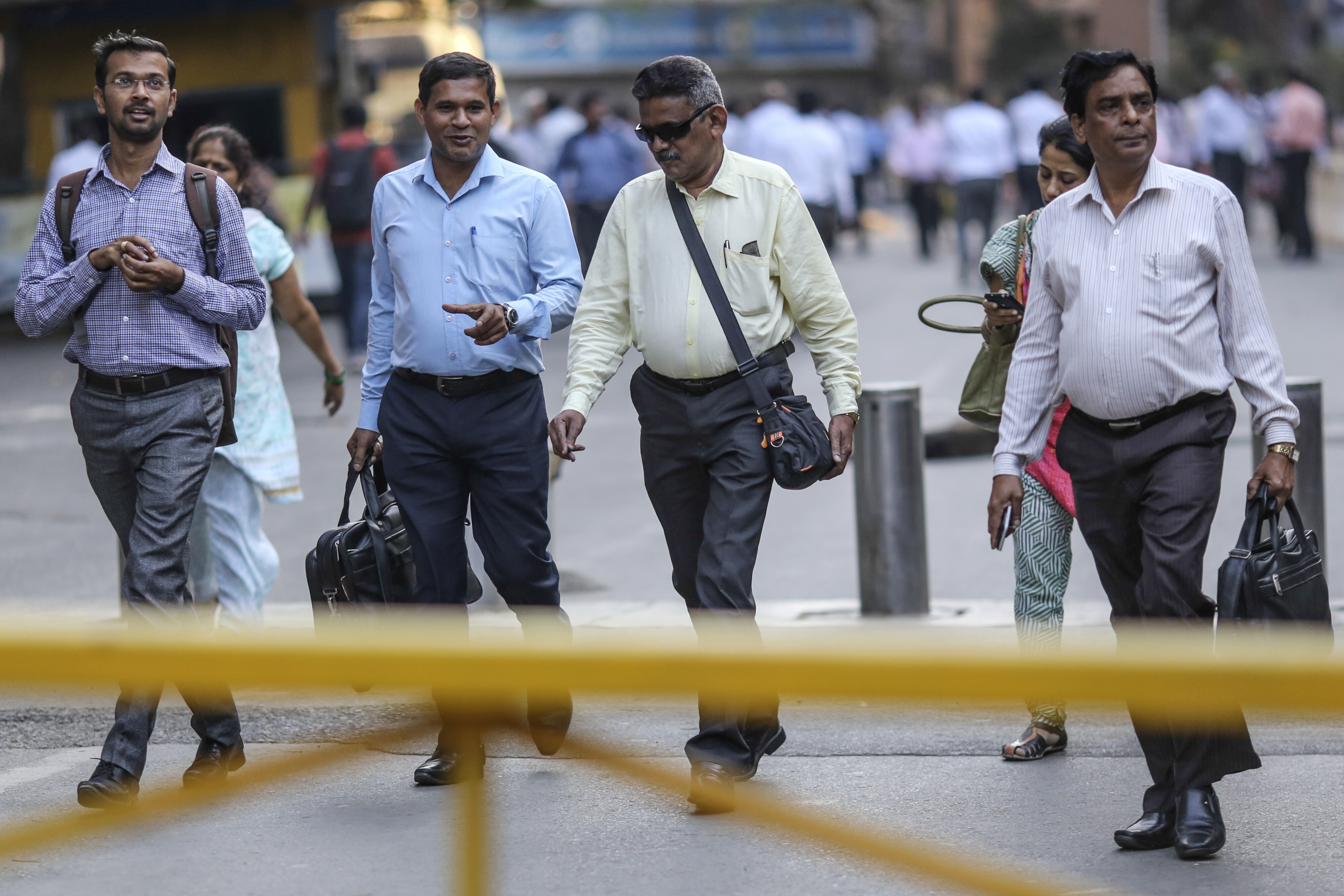
Demand for initial public offerings (IPO) is at an 11-year high, driven by institutional investors even as higher equity inflows pushed the benchmark NSE Nifty 50 Index to a record.
The five IPOs so far this year have been cumulatively subscribed 70 times amid a four-fold jump in demand over the previous year from qualified institutional buyers (QIBs) such as foreign portfolio investors, mutual funds and insurance companies. Taking a cue from that retail investors have also put in double the bids compared to 2016.
QIBs are perceived to possess expertise and the financial muscle to evaluate and invest in the capital markets.
The Nifty 50 Index has risen 10.5 percent year-to-date, touching an all-time high of 9,160 on March 17, as domestic and foreign inflows crossed Rs 22,500 crore as of March 24. That compares with a net outflow of Rs 1,758 crore in the last three months of 2016.

Retail participation has also been at 7.8 times the overall retail allocation in all five IPOs - the highest in last three years.
Market analysts such as Pranav Haldea of Prime Database say retail investors tend to take a cue from institutional buyers, a trend that the data supports.
Retail investors typically follow qualified institutional buyers. There is a strong co-relation between them.Pranav Haldea, Managing Director, Prime Database
Retail investor subscriptions exceeded 7.8 times only in two prior years in the period - 2014 and 2008. In calendar year 2014, six companies went public and received retail subscription of 12 times, while in 2008 more than 37 companies went public and received retail subscription of 10.8 times.
Retail investors also invest in companies with good background, sound fundamentals and if the pricing is acceptable, added Haldea.
Another factor luring retail investors are the gains on listing day, says Ajay Saraf, executive director at ICICI Securities Ltd.
When all recent issues get listed at a premium, retail investors just join the party as they do not want to be left out.Ajay Saraf, Executive Director, ICICI Securities

The three companies that have listed in 2017 have debuted at an average listing premium of 54.3 percent. Avenue Supermarts Ltd. led the pack as it listed at a premium of 102 percent, while Music Broadcast Ltd. and BSE Ltd. listed at a premium of 26 percent and 34.6 percent respectively. CL Educate Ltd. and Shankara Building Products Ltd. are expected to list on the exchanges in the next 10 days.
The retail investors' willingness to take more risks is another reason, added Saraf who expects the trend to continue at least this year, with 14 companies ready to hit the primary markets over the next 12 months, hoping to raise over Rs 20,000 crore.

-
Talking Points This Week: Tech Nerves, FII Buying, And A Faraway Banking Shock

The global markets are not shining this Diwali. The exception in the large markets is, India.
-
Midterm Rally Lasted A Day. The Hard Reality Of A Divided US May Last Two Years | Opinion
Between a contested AI boom, a debt ceiling that arrives in 2027 and a president with every incentive to act alone, the next two years may prove more volatile than the first day's rally suggests.
-
Blue Wave Will Derail the AI Trade but Won't Dismantle the AI Era | Unhedged Position
The Democrats' sweep of the US Congress will see politics collide with economic forces both over the long and short term.
-
It's Time To Take The GST Council's Bet On Trust Global
Payment records can prove India's services exports, and clear, proportionate rules can bring foreign digital sellers into the tax net.
-
Opinion | India at 38: From Innovation Overperformer to Innovation Powerhouse
India now has 453 VC-backed deep science startups, 18 of them late-stage, after 117 percent growth since 2020. Laurus Labs, at USD 9.3 billion, is the most valuable deep science company in any middle-income economy outside China.
-
Navigating Energy Crossroads: S Jaishankar's Call For Diversified Supply Chains At G20 Ministerial Meeting
As geopolitical fault lines continue to test maritime trade routes and commodity flows, Jaishankar's message remains pertinent: true economic resilience requires open markets, protected transit lines, and a genuine commitment to multilateral cooperation rather than coercion.
-
Indians Are Travelling, But Not Every Journey Is A Holiday | The Week In Whys
Pilgrims, patients and working women are the real travellers, and the system hasn't quite caught up with them.
-
Getting To Work Costs Women More | The Reason Why
It is not just about women paying more than men. It is about women paying much more in cities than in villages.
-
AI Bias In Investing Cannot Be Eliminated, But It Can Be Governed
Framing is a particularly important example as identical financial information presented in terms of gains rather than losses can lead an LLM to reach a different assessment.









