India Can Attain Current Account Surplus In Three Years, Says Axis Bank's Neelkanth Mishra
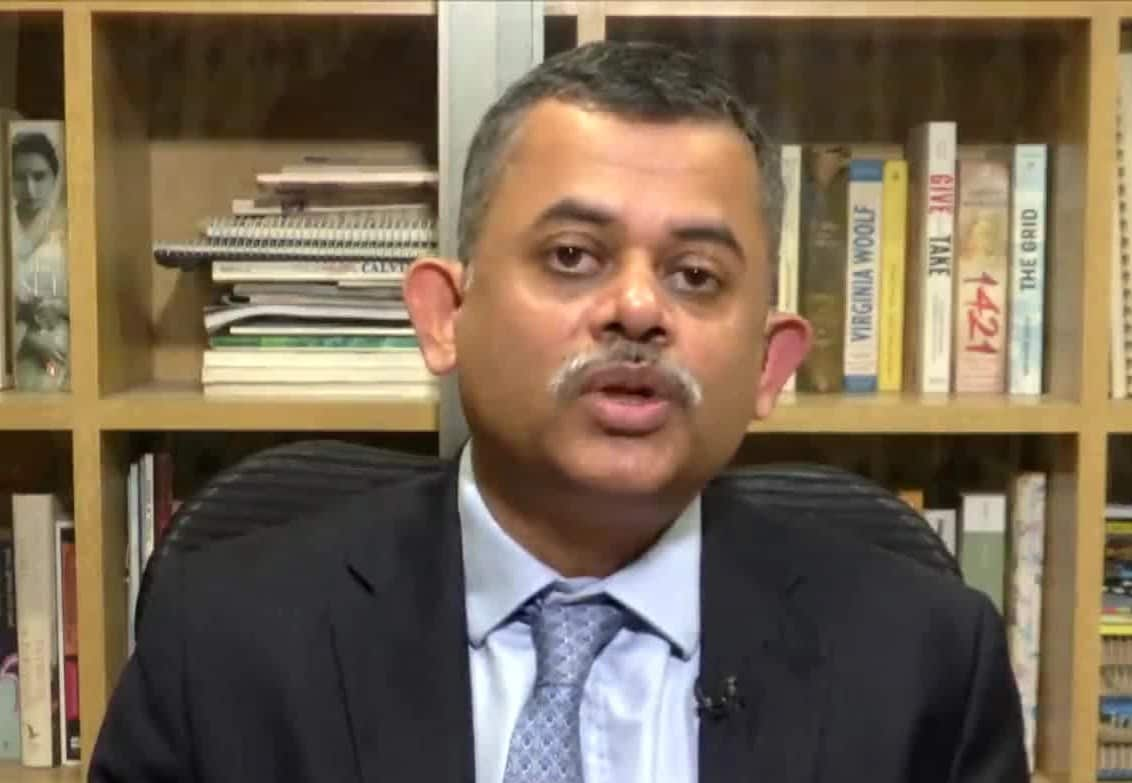
India has a high probability of achieving current account deficit neutrality if oil prices stabilise and the country continues to grow at over 6%, according to Axis Bank Ltd.'s Neelkanth Mishra.
However, the preference would be for an India with a current account deficit if it resulted in accelerated and enhanced economic growth for the country, the chief economist at the bank told BQ Prime.
India's demographic reasons increase its likelihood of entering a current account surplus, he said. It would reach this scenario if rising oil prices flatten out and India grows at a 6.5–7% rate in the next three years, said Mishra, who is also head of global research at Axis Capital Ltd.
The current account surplus would also dramatically improve economic stability, as it would reduce the country's dependency and offer better control to government, Mishra said. However, the current account deficit also represents fiscal deficit, and if the government doesn't focus on the fiscal aspect, then the current deficit will continue to grow, he said.
Valuations
In the next 12 to 24 months, there will be an increased risk premium associated with equities as valuations in the Indian equity market will be stretched, according to Mishra. India's price-to-earnings ratio will remain elevated due to foreign fund inflows but won't stretch out after a certain point, he said.
Mishra expressed concerns about the elevated valuations of mid-cap and small-cap stocks in India, attributing this to the influx of mutual funds into these segments.
Large-cap stocks have not experienced the same level of overvaluation as they are subject to discipline from foreign institutional investors, who sell their stake when valuations become excessive, he said. In contrast, mid-cap stocks lack this discipline as they are predominantly owned by domestic investors, Mishra said.
Capex Cycle
India possesses the capability to fund capital expenditure from the supply side, given the clean balance sheet of borrowers and lenders as well as the deleveraging efforts of firms and well-capitalised banks. However, Mishra cautioned that there may be disappointment on the demand side of capital expenditure.
Segments requiring capacity expansion—such as renewable energy, energy storage, electronic components, batteries, and automation—already have access to ample capital. Nevertheless, achieving substantial expansion or acceleration in these sectors appears challenging, Mishra said. He also identified a risk of the order flow momentum stalling or failing to accelerate, which could impact the government's ability to drive capital expenditure.
According to him, while there are similarities between the current capex cycle and the 2003-08 cycle, including corporate deleveraging, the two cycles are fundamentally different. In the previous cycle, there were factors like the likelihood of an upswing in U.S. real estate and the early stages of China's growth story. However, none of these conditions are present in the current scenario, he said.
Economic And Market Growth
In terms of India's economic and market expansion, Mishra said that there are internal and external drivers.
From an external perspective, Mishra said that the growth of goods exports, constituting approximately 12-13% of the GDP, is already on the decline. He expressed concern about the potential increase in imports and rising demand for foreign goods, which could intensify competition for Indian manufacturers.
Mishra highlighted the significance of India's services sector, which accounts for 10% of GDP through exports. If the year-on-year growth rate in this sector were to slow down from 15% to 10%, it could result in a 1% reduction in headline GDP growth for India, he said.
However, India possesses robust internal drivers, such as the resurgence of the real estate and construction sectors, according to him. While many countries worldwide grapple with housing market challenges, India has experienced a corrective phase spanning a decade, and the demand in this sector is now showing signs of growth. It is evident in the increasing demand for construction materials like cement, cables, wires, tiles, PVC pipes, MDF boards, and more, Mishra said.
India's gross value of output related to construction, expressed as a percentage of GDP, has declined from 16% to 11%. Even a modest 1% increase could lead to an increase in the value of construction, with positive implications for job creation, Mishra said.

-
Why Amazon And Flipkart Are Struggling To Beat Meesho In India's Smaller Cities

With 274 million users and lowest-cost logistics, Meesho is defending its value commerce crown against giants like Amazon and Flipkart.
-
High US Salaries, No Green Card Certainty: The Financial Calculation Facing Indian H-1B Families
The suspension of PERM processing at eight technology employers does not cancel existing H-1B visas. What it does is force a question many Indian families have been avoiding: is the US salary worth tying your career and family plans to one employer?
-
Swiggy vs Eternal: Food Delivery's Two Rivals Are No Longer In The Same Race
Eternal is building a private AI assistant, dark.ai. Swiggy is still working out how to make Instamart pay, with an operating loss of Rs 895 crore in the July-September quarter while Blinkit stayed profitable.
-
Where You Live Shapes How You Get To Work | The Reason Why
Two-wheelers are the most popular way to get to work in India, accounting for nearly 43% of workplace commutes.
-
Unhedged Position: Can India See An Indonesia-Style Time Correction?
The Nifty is trading below levels it first clocked in 2024. Is there, then, as I have suggested in the headline, potential that the current time correction drags on painfully for the next three-five, even ten years?
-
Navigating Friction And Energy Realities: An Analysis Of Marco Rubio's October Visit To India
Occurring at a critical juncture marked by stalled trade negotiations and escalating geopolitical pressures over global energy supplies, the visit offers a profound window into modern US-India relations.
-
India Exports Capital. Why Not Export Trusteeship?
The big question, then, is whether India can build an institution that global borrowers, investors, banks, and lawyers can trust, even without an Indian connection.
-
France's Economy & Politics Are In Crisis | The Reason Why
Let's look at how the French economy and politics evolved under Nicolas Sarkozy, Franois Hollande and Emmanuel Macron.
-
You May Inherit The Business. You Must Earn Its Credibility.
Succession tests the founder's ability to share authority as much as it tests the next generation's readiness to assume it.
-
Signing Deals Is One Thing; Making Them Work Is Another | The Week In Whys
Sometimes, things don't turn out as planned. Indian companies have lost some bids to rivals, some projects won't produce until 2030.










