HUL Q4 Results: Profit In Line With Estimates, Margins Still Under Pressure
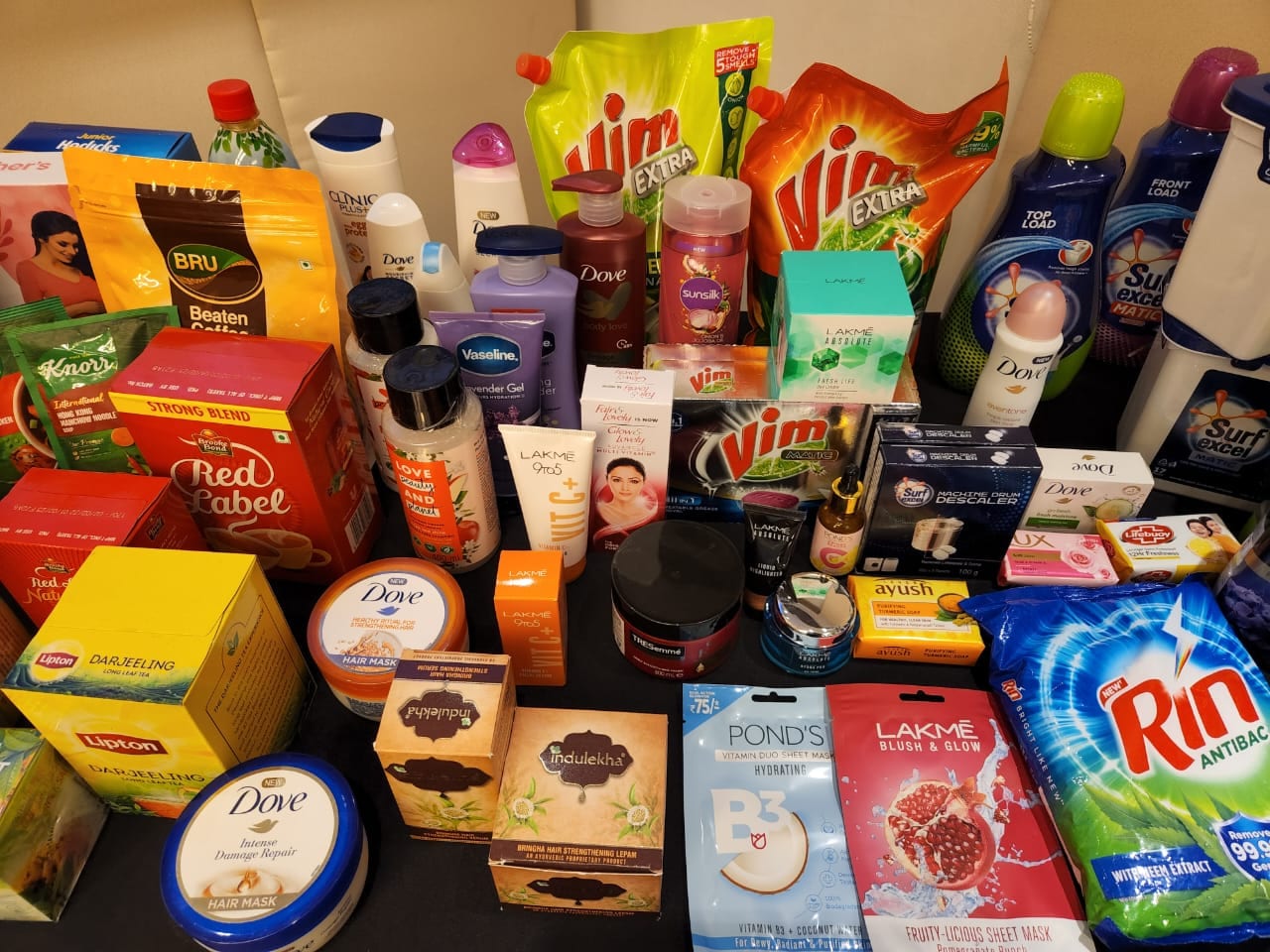
Hindustan Unilever Ltd.'s fourth-quarter profit rose in line with estimates, even as higher costs continued to weigh on its margin.
The consolidated net profit of India's largest consumer goods maker, attributable to the shareholders, increased 13% over the preceding year to Rs 2,600 crore in the quarter ended March, according to its exchange filing. That compares with the Rs 2,609.67-crore consensus estimate of analysts tracked by Bloomberg.
For the full fiscal, the soaps-to-tea maker grew its turnover by 16% to Rs 58,154 crore and its net profit rose 13% to Rs 9962 crore during the year.
HUL Q4 FY23 Highlights (YoY)
Revenue up 11% to Rs 15,215 crore, against the Rs 15,253.65-crore forecast.
Operating profit rose 8% to Rs 3,574 crore, against the projected Rs 3,632.77 crore.
Margin stood at 23.5% against 24%. Analysts had pegged it at 23.8%.
Cost of materials consumed rose 9% to Rs 4908 crore. It, however, dipped marginally on a sequential basis for the first time in many months.
Advertising spends rose 1.15% to Rs 1,311 crore. It's 8.4% higher than the previous quarter.
Volumes grew 4% over a year ago in the fourth quarter, as compared with 5% in the preceding three months, according to the company.
India's FMCG market remained flat during the quarter over the previous year, with rural volumes declining 3%.
HUL derives 40% of its sales from rural India, where consumers have been downtrading to cheaper alternatives, thereby impacting volume growth.
The prices of Brent crude oil fell 16%, soda ash by 6%, caustic soda by 25%, tea by 1%, and crude palm oil by 39% compared to the previous year, according to the company. However, the prices of these key commodities remain elevated as compared to long-term averages. Prices of other key inputs, such as barley, rose 8% and skimmed milk power by 18%.
Segment-wise, revenue from home care rose 19% on a high base driven by double-digit growth in fabric wash and household care, while beauty and personal care grew 10% led by double-digit growth in skin care.
Price reductions taken in the March quarter in the soap portfolio also boosted sales in the beauty and personal care portfolio.
During the quarter, the company launched three new brands in the premium beauty space — ‘Acne Squad', ‘Find Your Happy Place' and clinically-proven products brand ‘Novology' to solve skin concerns.
Revenue from food and refreshment grew by a weak 3% to Rs 3,794 crore, due to downgrading in packaged tea business due to high inflation in premium segment and unseasonal rains impacting ice-cream sales.
The management of HUL, however, expects the growth in ice-creams to bounce back as and when the company gets into the peak summer season. The ice-cream portfolio has grown very well in FY23, the company said.
The health food drinks market, according to the company, remained subdued during the quarter due to persistent high inflation in milk prices.
"The near-term operating environment is likely to remain volatile," said Sanjiv Mehta, HUL's CEO and Managing Director. With inflation easing due to lapping of high base and sequential softening in a few commodities, he expects the price and volume growths to rebalance. "Market volumes will recover gradually as consumption habits readjust," said Mehta, adding, he remains confident over the medium- to long-term potential of the sector.
Peers, including Tata Consumer Products Ltd. and Nestle India Ltd., that have so far declared their results, however, recorded strong fourth quarters, led by price hikes. Both packaged consumer goods makers also benefited from the respite in input inflation.
Still, headwinds from a sluggish rural recovery remain a concern.
Marico Ltd., for instance, highlighted in its quarterly update that while volumes are bouncing back gradually amid easing inflation, a "visible and sustained recovery" is expected only in the coming quarters.
HUL's Mehta also highlighted that premiumisation as a trend is not expected to peak. "To put a perspective, the laundry with volumes growing at 9% even through raw material prices have been inflated has given the company the comfort that premiumisation as a trend will not stop."
HUL now has 19 brands with sales of Rs 1,000 crore each, with Close Up, Pears and Comfort being the latest additions in FY23. Besides, Ponds and Lux joined the Rs 2,000 crore-club during the year. Two of its brands — Brooke Bond and Surf — has revenues in excess of Rs 5,000 crore.
According to its investor's presentation, HUL has been steadily increasing its share of online sales. It now derives 30% of its sales through digital channels. About 1.2 million mom-and-pop stores onboarded the Shikhar app, which allows enables HUL's retailers to order digitally.
Shares of HUL fell 1.57% after the earnings were declared as compared with 0.21% gains in the benchmark Nifty 50.

-
Ten Things I Learnt This Samvat

Patience can be a trap. Cheap stocks can stay cheap. Leverage can wipe you out. What did Samvat 2082 teach us? Niraj Shah writes on 10 lessons from the year gone by.
-
Talking Points This Week: Tech Nerves, FII Buying, And A Faraway Banking Shock
The global markets are not shining this Diwali. The exception in the large markets is, India.
-
Midterm Rally Lasted A Day. The Hard Reality Of A Divided US May Last Two Years | Opinion
Between a contested AI boom, a debt ceiling that arrives in 2027 and a president with every incentive to act alone, the next two years may prove more volatile than the first day's rally suggests.
-
Blue Wave Will Derail the AI Trade but Won't Dismantle the AI Era | Unhedged Position
The Democrats' sweep of the US Congress will see politics collide with economic forces both over the long and short term.
-
It's Time To Take The GST Council's Bet On Trust Global
Payment records can prove India's services exports, and clear, proportionate rules can bring foreign digital sellers into the tax net.
-
Opinion | India at 38: From Innovation Overperformer to Innovation Powerhouse
India now has 453 VC-backed deep science startups, 18 of them late-stage, after 117 percent growth since 2020. Laurus Labs, at USD 9.3 billion, is the most valuable deep science company in any middle-income economy outside China.
-
Navigating Energy Crossroads: S Jaishankar's Call For Diversified Supply Chains At G20 Ministerial Meeting
As geopolitical fault lines continue to test maritime trade routes and commodity flows, Jaishankar's message remains pertinent: true economic resilience requires open markets, protected transit lines, and a genuine commitment to multilateral cooperation rather than coercion.
-
Indians Are Travelling, But Not Every Journey Is A Holiday | The Week In Whys
Pilgrims, patients and working women are the real travellers, and the system hasn't quite caught up with them.
-
Getting To Work Costs Women More | The Reason Why
It is not just about women paying more than men. It is about women paying much more in cities than in villages.









