How India Gains From Inclusion In JPMorgan EM Bond Index—Morgan Stanley's Take
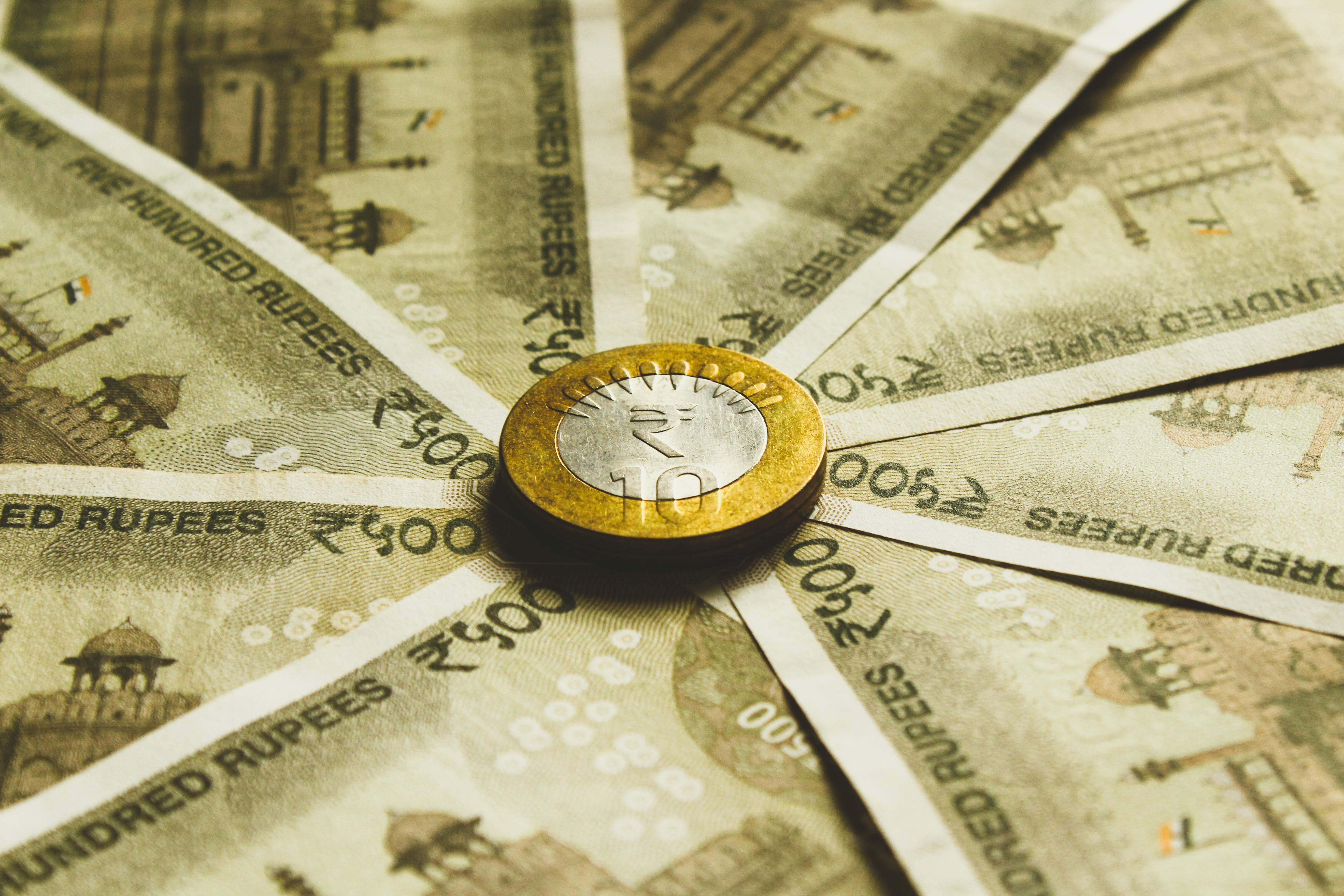
India's joining JPMorgan's Emerging Market Global Bond Index will favourably impact the country's external balance sheet, deepen its bond markets, and lower the cost of capital, according to Morgan Stanley.
The inclusion begins in June 2024 with a weight of 1%, increasing 1% each month until it reaches 10% by April 2025. It is expected to lead to $30 billion in inflows into its government bond market, with monthly inflows of $3 billion during the inclusion period.
"This move has been supported by the government's introduction of the FAR programme in the February 2020 Budget (which removes foreign ownership limits) and a leg up in market reforms for aiding foreign portfolios," it said in a Sept. 24 note.
Only 30% of GBI-EM investors have actual India exposure in their portfolios, according to Morgan Stanley's proprietary database, it stated, despite the 73% of investors that supported the index inclusion, according to JPMorgan's survey, it said in another note dated Sept. 22.
Index Implication
Post-inclusion, India is set to become the second-largest emerging-market country in the index after China, bringing Asia's contribution to the index to approximately 50%.
Other countries' weights are to be reduced, with Thailand at 1.65%, South Africa at 1.36%, Poland at 1.27%, Brazil at 1%, the Czech Republic at 1%, Colombia at 0.78%, and Romania at 0.65%.
Macro-Economic Implications
Morgan Stanley expects that greater foreign participation in India's bond market would have a favourable impact on India's macro-economic indicators.
In the short term, it expects India's balance of payments surplus to rise, a reduction of external funding pressures on the currency, and an increase in liquidity.
"Over the medium term, the cost of capital is likely to come down, bringing about sustained and productive economic growth through a virtuous cycle of investment," it said.
Market Implications
The brokerage expects the 10-year benchmark goverment bond and rupee to outperform in the short term.
"We like long 10-year G-sec outrights without FX hedges, and we also add a bond to our 5-year NDOIS trade as we expect the asset swap to tighten."
It stated its recommendation to hold short TWD/INR and short CNH/INR during the short term.
"In the medium term, we expect investors to pre-position themselves before the index inclusion in June 2024."
Over the longer term, it states an expectation for the move to trigger other index inclusions, such as the Bloomberg Global Aggregate Index, which could attract another $10 billion.
Annual inflows into the G-sec market beyond the inclusion could be $18.5 billion, it said.
It also stated an expectation that the internationalisation of rupee and the reform of India's capital market could lead to special drawing rights inclusion for the rupee.
Key Risks
The few key risks that may upset market sentiment and disrupt foreign flows are:
Volatility in global commodity prices, such as oil.
Deterioration in domestic fundamentals, i.e., high inflation or a slowdown in growth
Uncertainty in the political environment and a slowdown of reform momentum

-
Why Amazon And Flipkart Are Struggling To Beat Meesho In India's Smaller Cities

With 274 million users and lowest-cost logistics, Meesho is defending its value commerce crown against giants like Amazon and Flipkart.
-
High US Salaries, No Green Card Certainty: The Financial Calculation Facing Indian H-1B Families
The suspension of PERM processing at eight technology employers does not cancel existing H-1B visas. What it does is force a question many Indian families have been avoiding: is the US salary worth tying your career and family plans to one employer?
-
Swiggy vs Eternal: Food Delivery's Two Rivals Are No Longer In The Same Race
Eternal is building a private AI assistant, dark.ai. Swiggy is still working out how to make Instamart pay, with an operating loss of Rs 895 crore in the July-September quarter while Blinkit stayed profitable.
-
Where You Live Shapes How You Get To Work | The Reason Why
Two-wheelers are the most popular way to get to work in India, accounting for nearly 43% of workplace commutes.
-
Unhedged Position: Can India See An Indonesia-Style Time Correction?
The Nifty is trading below levels it first clocked in 2024. Is there, then, as I have suggested in the headline, potential that the current time correction drags on painfully for the next three-five, even ten years?
-
Navigating Friction And Energy Realities: An Analysis Of Marco Rubio's October Visit To India
Occurring at a critical juncture marked by stalled trade negotiations and escalating geopolitical pressures over global energy supplies, the visit offers a profound window into modern US-India relations.
-
India Exports Capital. Why Not Export Trusteeship?
The big question, then, is whether India can build an institution that global borrowers, investors, banks, and lawyers can trust, even without an Indian connection.
-
France's Economy & Politics Are In Crisis | The Reason Why
Let's look at how the French economy and politics evolved under Nicolas Sarkozy, Franois Hollande and Emmanuel Macron.
-
You May Inherit The Business. You Must Earn Its Credibility.
Succession tests the founder's ability to share authority as much as it tests the next generation's readiness to assume it.
-
Signing Deals Is One Thing; Making Them Work Is Another | The Week In Whys
Sometimes, things don't turn out as planned. Indian companies have lost some bids to rivals, some projects won't produce until 2030.










