Stocks Extend Drop As Trump Dials Up Tariff Threat: Markets Wrap
A global equities selloff extended into Asia, while the dollar strengthened and Treasury yields edged lower after President Donald Trump's tariff announcements prompted investors to trim risky bets.
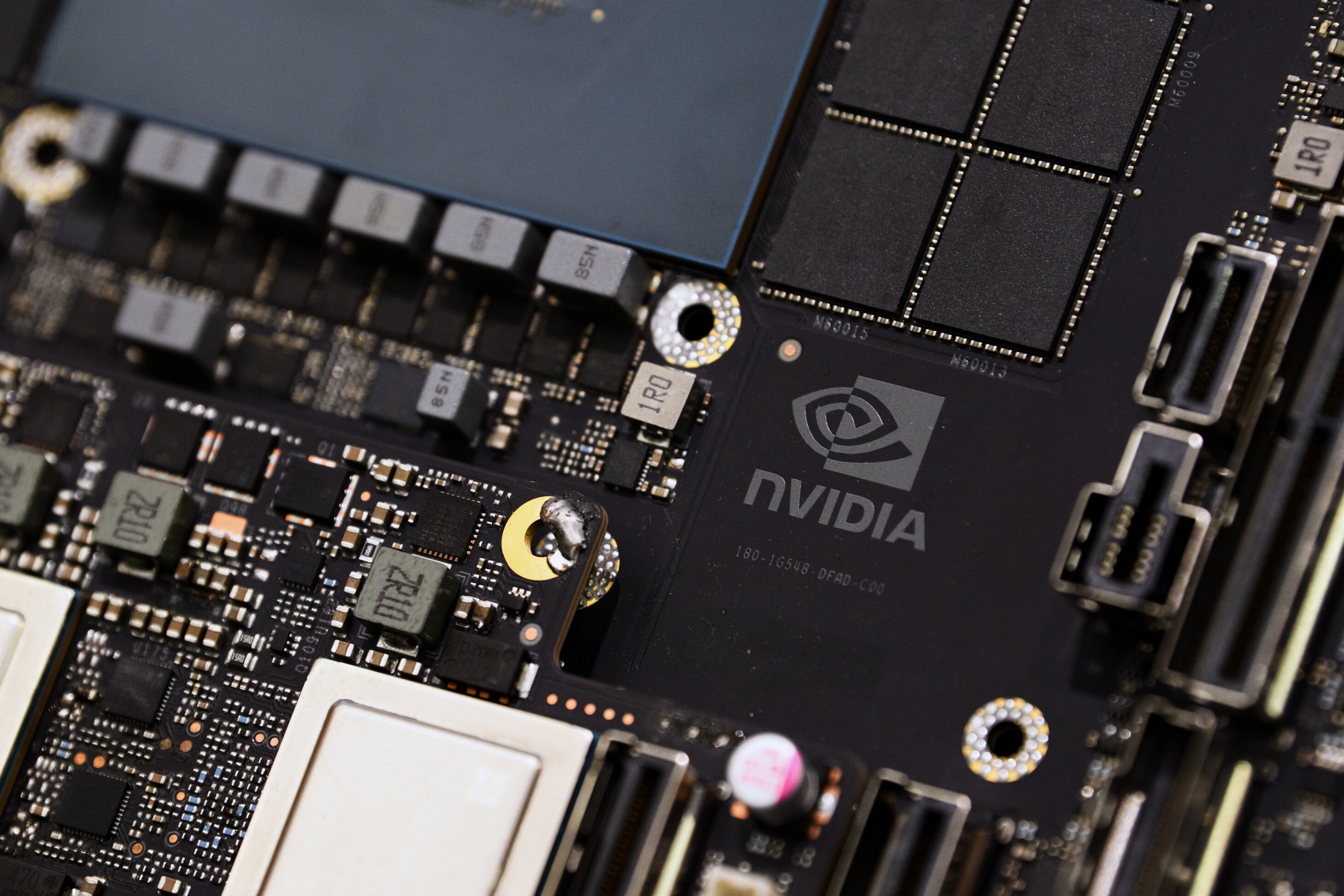
A benchmark of Asian shares fell to the lowest in more than two weeks after the S&P 500 slid 1.6% Thursday and erased its gains for the year. The Nasdaq 100 declined 2.8% while Nvidia Corp. shares slumped 8.5% after its latest earnings weighed on the ‘Magnificent Seven' group. The rout in Bitcoin worsened, sending it down 25% from the all-time high it set less than six weeks ago.
The greenback advanced after Trump said the 25% tariffs on Canada and Mexico would come into force from March 4, while Chinese imports would face a further 10% levy. Economists say tariffs may hurt US growth, worsen inflation and possibly spark recessions in Mexico and Canada. If there's no last-minute reprieve, the plan will see taxes ramped up on well over $1 trillion of imports.
The announcements “have prompted market participants to reassess their expectations of tariff risks,” said Jun Rong Yeap, market strategist at IG Asia Pte. “Whether this is still a negotiation tactic or a definite move remains up for debate, but markets are unwilling to take chances.”
Treasuries advanced Friday in Asian trading, extending gains for short-dated US government debt from the prior session. US 10-year yields dropped to around 4.23%, a level not seen since December.

Trump unveiling additional tariffs on Chinese imports raises the risk Beijing will ramp up its retaliation and a spiraling of tensions between the world's two largest economies.
The additional 10% tariff on China “is frustrating because it keeps uncertainty alive and reinforces the risk that this becomes a pattern,” said Billy Leung, an investment strategist at Global X ETFs. “Markets were already fatigued and tired by tariff talk, and now investors are being forced to reassess.”
While tariffs introduce near-term risks, they don't significantly alter the current narrative around Chinese markets, which have been supported by enthusiasm over artificial intelligence, said Charu Chanana, chief investment strategist at Saxo Markets. Focus will now be on the National People's Congress meeting next week, which will play a crucial role in sustaining the current momentum in China, she said.
Chinese shares in Hong Kong fell Friday, trimming their gains this month to 15%. The onshore benchmark CSI 300 Index headed for its first weekly loss in a month.
“The combination of heightened tariff risks and a stronger dollar could be a near-term headwind, but there could be an offset from expectations that tariffs could be a negotiating tool, and China's administration has the stimulus tools to respond,” Chanana said.

The yen strengthened against the greenback Friday as inflation in Tokyo slowed more than expected, although it is unlikely to deter the central bank from considering more hikes to its benchmark interest rate.
In Indonesia, the rupiah dropped to its lowest level since April 2020 as Trump's tariff threats reverberated across Asian currencies. The country's main stock index fell Friday, extending a slump from a September high to 20%.
PCE Inflation
The Fed's preferred inflation metric is due later Friday and is expected to cool to the slowest pace since June. The core personal consumption expenditures price index — which excludes often-volatile food and energy costs — probably rose 2.6% in the year through January. Overall PCE inflation likely eased on an annual basis as well, according to the median estimate in a Bloomberg survey of economists.
In other commodities, oil headed for a monthly loss and gold was set for its first weekly loss of the year.
Key events this week:
India GDP, Friday
Japan Tokyo CPI, industrial production, retail sales, Friday
US PCE inflation, income and spending, Friday
Fed's Austan Goolsbee speaks, Friday
Some of the main moves in markets:
Stocks
S&P 500 futures fell 0.2% as of 12:41 p.m. Tokyo time
Japan's Topix fell 2.2%
Australia's S&P/ASX 200 fell 1.3%
Hong Kong's Hang Seng fell 2.5%
The Shanghai Composite fell 0.9%
Euro Stoxx 50 futures fell 1.2%
Currencies
The Bloomberg Dollar Spot Index was little changed
The euro fell 0.1% to $1.0387
The Japanese yen rose 0.1% to 149.60 per dollar
The offshore yuan rose 0.1% to 7.2918 per dollar
Cryptocurrencies
Bitcoin fell 4.5% to $80,475.73
Ether fell 5.4% to $2,156.55
Bonds
The yield on 10-year Treasuries declined three basis points to 4.23%
Australia's 10-year yield declined four basis points to 4.30%
Commodities
West Texas Intermediate crude fell 0.5% to $70.03 a barrel
Spot gold fell 0.3% to $2,868.08 an ounce

-
Talking Points This Week: Tech Nerves, FII Buying, And A Faraway Banking Shock

The global markets are not shining this Diwali. The exception in the large markets is, India.
-
Midterm Rally Lasted A Day. The Hard Reality Of A Divided US May Last Two Years | Opinion
Between a contested AI boom, a debt ceiling that arrives in 2027 and a president with every incentive to act alone, the next two years may prove more volatile than the first day's rally suggests.
-
Blue Wave Will Derail the AI Trade but Won't Dismantle the AI Era | Unhedged Position
The Democrats' sweep of the US Congress will see politics collide with economic forces both over the long and short term.
-
It's Time To Take The GST Council's Bet On Trust Global
Payment records can prove India's services exports, and clear, proportionate rules can bring foreign digital sellers into the tax net.
-
Opinion | India at 38: From Innovation Overperformer to Innovation Powerhouse
India now has 453 VC-backed deep science startups, 18 of them late-stage, after 117 percent growth since 2020. Laurus Labs, at USD 9.3 billion, is the most valuable deep science company in any middle-income economy outside China.
-
Navigating Energy Crossroads: S Jaishankar's Call For Diversified Supply Chains At G20 Ministerial Meeting
As geopolitical fault lines continue to test maritime trade routes and commodity flows, Jaishankar's message remains pertinent: true economic resilience requires open markets, protected transit lines, and a genuine commitment to multilateral cooperation rather than coercion.
-
Indians Are Travelling, But Not Every Journey Is A Holiday | The Week In Whys
Pilgrims, patients and working women are the real travellers, and the system hasn't quite caught up with them.
-
Getting To Work Costs Women More | The Reason Why
It is not just about women paying more than men. It is about women paying much more in cities than in villages.
-
AI Bias In Investing Cannot Be Eliminated, But It Can Be Governed
Framing is a particularly important example as identical financial information presented in terms of gains rather than losses can lead an LLM to reach a different assessment.









