Five Key Charts to Watch in Global Commodity Markets This Week

(Bloomberg) -- Saudi Aramco reports first-quarter earnings this week, marking the end of the reporting season for the world's largest oil companies. Meanwhile, the dismal performance of US energy stocks may not be over, according to one technical indicator. Here are five notable charts to consider in global commodities.
Oil
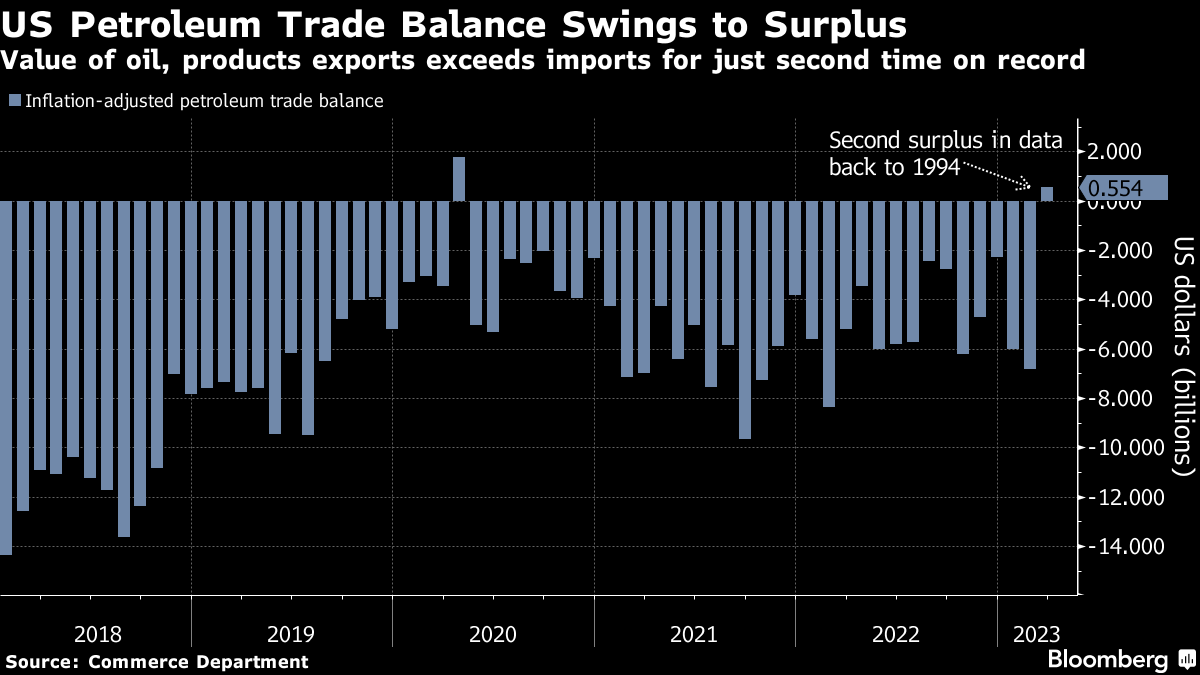
For just the second time in Commerce Department records back to 1994, the US registered a petroleum-trade surplus after adjusting for inflation. Exports of oil and products surged more than 24% in March to a record $27.6 billion in the biggest monthly advance since 2017. The nation imported $27.1 billion in petroleum, the least since November, data released last week showed.
Crude endured a wild ride to start the month of May, with West Texas Intermediate and Brent futures both falling for a third straight week. The drop came days after the OPEC+ coalition began a new round of production cuts designed to help prop up prices and preemptively guard against a weakening macroeconomic outlook. Traders will be focused on OPEC's monthly oil-market report due Thursday for further guidance on supply and demand. Reduced output by the cartel this year has prompted analysts to revise their year-end price outlooks, with the median forecast now at $86.38 a barrel for Brent and $82 for WTI, according to data compiled by Bloomberg.
Saudi Aramco
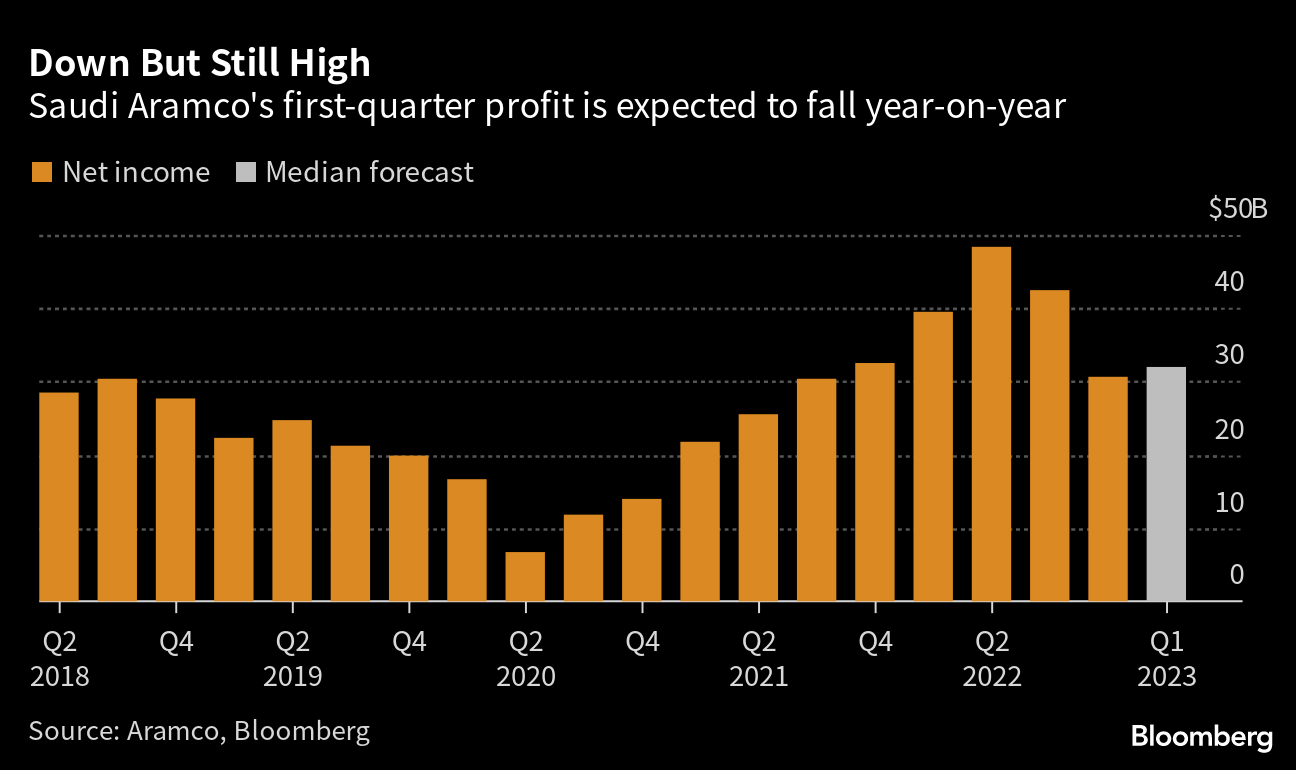
The world's biggest energy company releases its quarterly results on Tuesday, wrapping up the first-quarter earnings season for Big Oil. Saudi Aramco likely made net income of just over $32 billion, according to the median estimate in a Bloomberg survey of analysts. That would mark a slowdown from a year earlier — similar to other oil firms that have already reported, including BP Plc and Shell Plc — but still a strong number by historical standards. The state-controlled company announced a dividend of $19.5 billion for the fourth quarter and has said it wants to maintain payouts at that level, if not raise them.
Energy Stocks
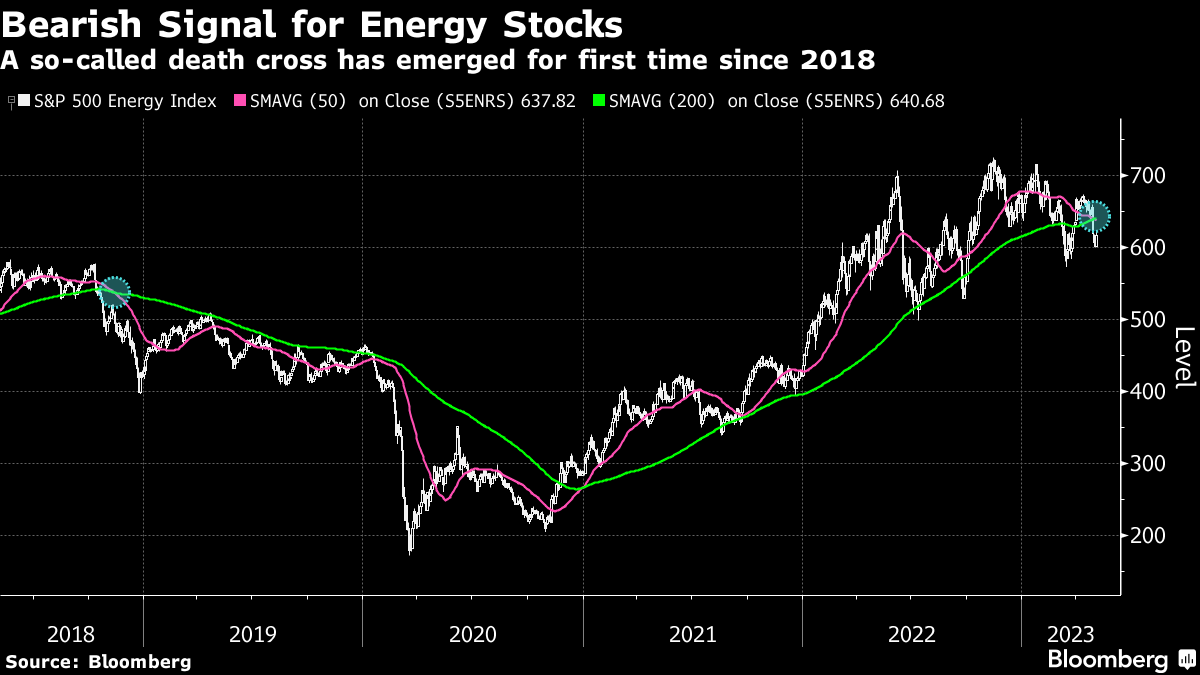
The slump in US energy stocks may be far from over. Despite strong earnings from the largest-weighted members of the S&P 500 Energy Index — think Exxon Mobil Corp. and Chevron Corp. — uncertainty over the global economy and oil consumption have traders on edge. A look at the technicals adds to the bearish sentiment: The gauge's 50-day moving average fell below its 200-day average last week in a so-called death cross, the first time since late 2018. That often signals that further selling pressure is in store. Year-to-date, the 23-member index is the worst performer among the S&P 500 Index's 11 industry groups and is down 8.2%.
Metals
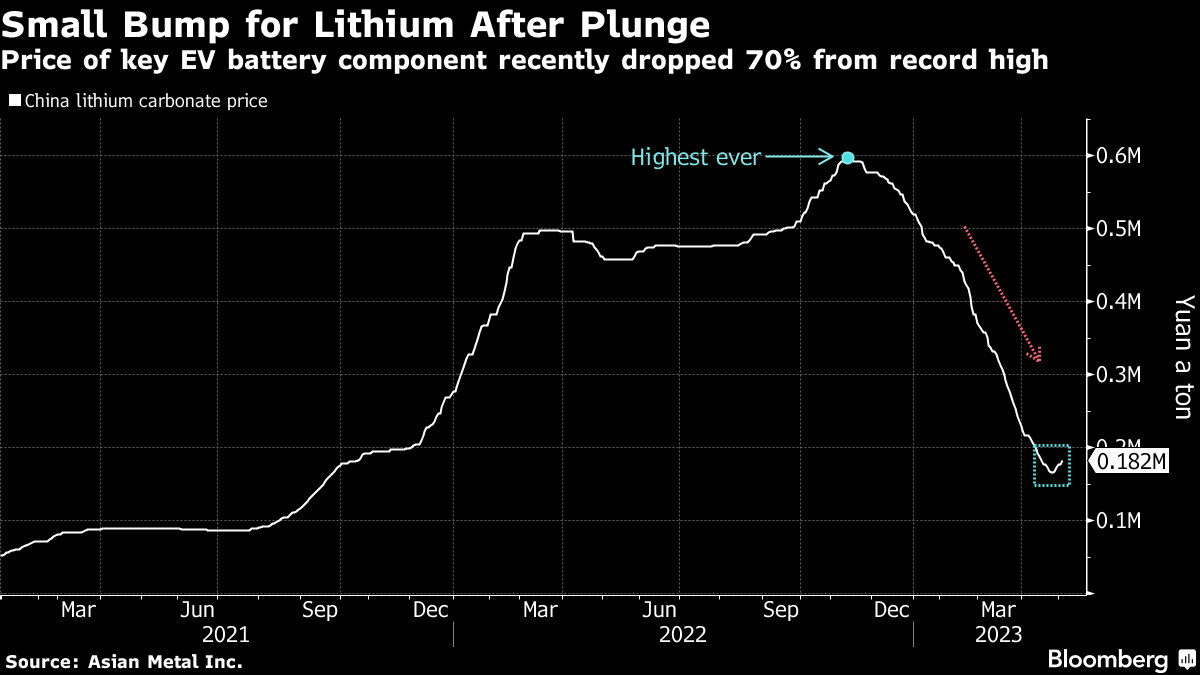
The price of a key component of batteries that power the world's electric vehicles is seeing a tiny bit of respite after a massive plunge. Lithium carbonate prices in China, which tumbled 70% since hitting a record in November, have rallied in recent days on renewed optimism over EV demand. The metal will certainly be in focus when explorers and producers gather at the Canaccord Genuity Global Metals & Mining Conference in Palm Desert, California, this week. According to BloombergNEF's New Energy Outlook 2022, demand for the metal will be 16 times the total lithium in use today by 2040, potentially outrunning supply by more than 40%.
Agriculture
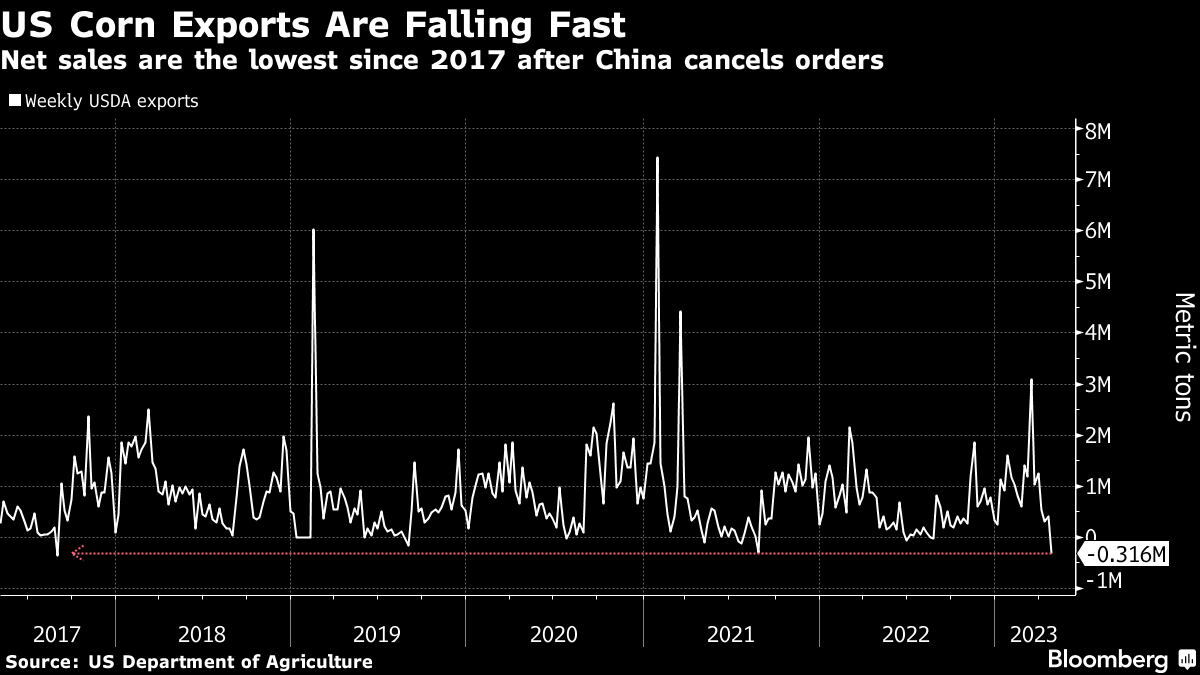
American corn exports will be in focus on Friday when the US Department of Agriculture releases its first outlook for the upcoming 2023-24 season as part of the monthly World Agricultural Supply and Demand Estimates (WASDE) report. A massive Brazilian corn harvest has meant product from the US — traditionally the biggest corn producer and exporter — is more expensive than shipments from South America, making it less attractive for buyers. The cancellation of US sales by China could force the USDA to trim its outlook for exports.
--With assistance from Vince Golle, Ana Monteiro, Paul Wallace, Amanda Jordan and Michael Hirtzer.
More stories like this are available on bloomberg.com
©2023 Bloomberg L.P.

-
Ten Things I Learnt This Samvat

Patience can be a trap. Cheap stocks can stay cheap. Leverage can wipe you out. What did Samvat 2082 teach us? Niraj Shah writes on 10 lessons from the year gone by.
-
Talking Points This Week: Tech Nerves, FII Buying, And A Faraway Banking Shock
The global markets are not shining this Diwali. The exception in the large markets is, India.
-
Midterm Rally Lasted A Day. The Hard Reality Of A Divided US May Last Two Years | Opinion
Between a contested AI boom, a debt ceiling that arrives in 2027 and a president with every incentive to act alone, the next two years may prove more volatile than the first day's rally suggests.
-
Blue Wave Will Derail the AI Trade but Won't Dismantle the AI Era | Unhedged Position
The Democrats' sweep of the US Congress will see politics collide with economic forces both over the long and short term.
-
It's Time To Take The GST Council's Bet On Trust Global
Payment records can prove India's services exports, and clear, proportionate rules can bring foreign digital sellers into the tax net.
-
Opinion | India at 38: From Innovation Overperformer to Innovation Powerhouse
India now has 453 VC-backed deep science startups, 18 of them late-stage, after 117 percent growth since 2020. Laurus Labs, at USD 9.3 billion, is the most valuable deep science company in any middle-income economy outside China.
-
Navigating Energy Crossroads: S Jaishankar's Call For Diversified Supply Chains At G20 Ministerial Meeting
As geopolitical fault lines continue to test maritime trade routes and commodity flows, Jaishankar's message remains pertinent: true economic resilience requires open markets, protected transit lines, and a genuine commitment to multilateral cooperation rather than coercion.
-
Indians Are Travelling, But Not Every Journey Is A Holiday | The Week In Whys
Pilgrims, patients and working women are the real travellers, and the system hasn't quite caught up with them.
-
Getting To Work Costs Women More | The Reason Why
It is not just about women paying more than men. It is about women paying much more in cities than in villages.









