Five Key Charts To Watch In Global Commodities Markets This Week

(Bloomberg) -- Investors are protecting against a potential spike in crude prices. Palm oil futures are surging, and traders are warming up to exchange-traded funds for gold against a backdrop of geopolitical uncertainty and interest-rate cuts.
Here are five notable charts to consider in global commodity markets as the week gets underway.
Oil Options
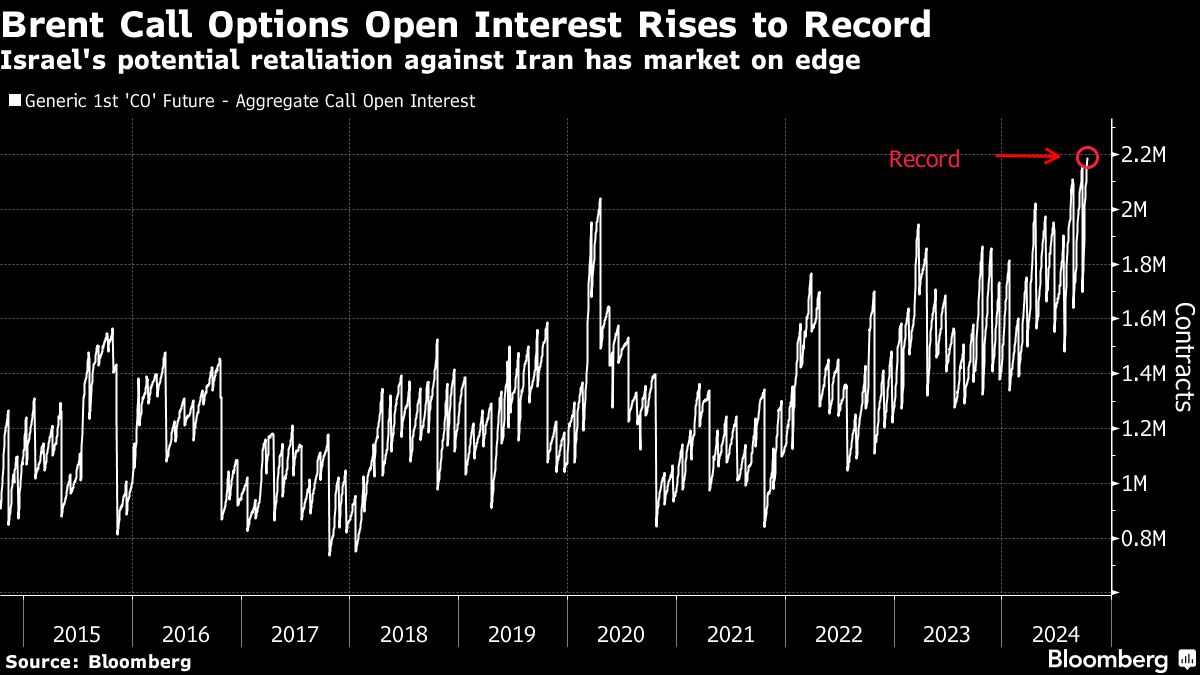
While the rally in oil futures has cooled a bit, buying of call options to protect against a price spike has continued apace. The aggregate open interest for Brent call options — which benefit when prices rise — rose to a record 2.19 million contracts as of Thursday. Investors continue to be on edge amid uncertainty about the conflict in the Middle East.
Renewables Spending
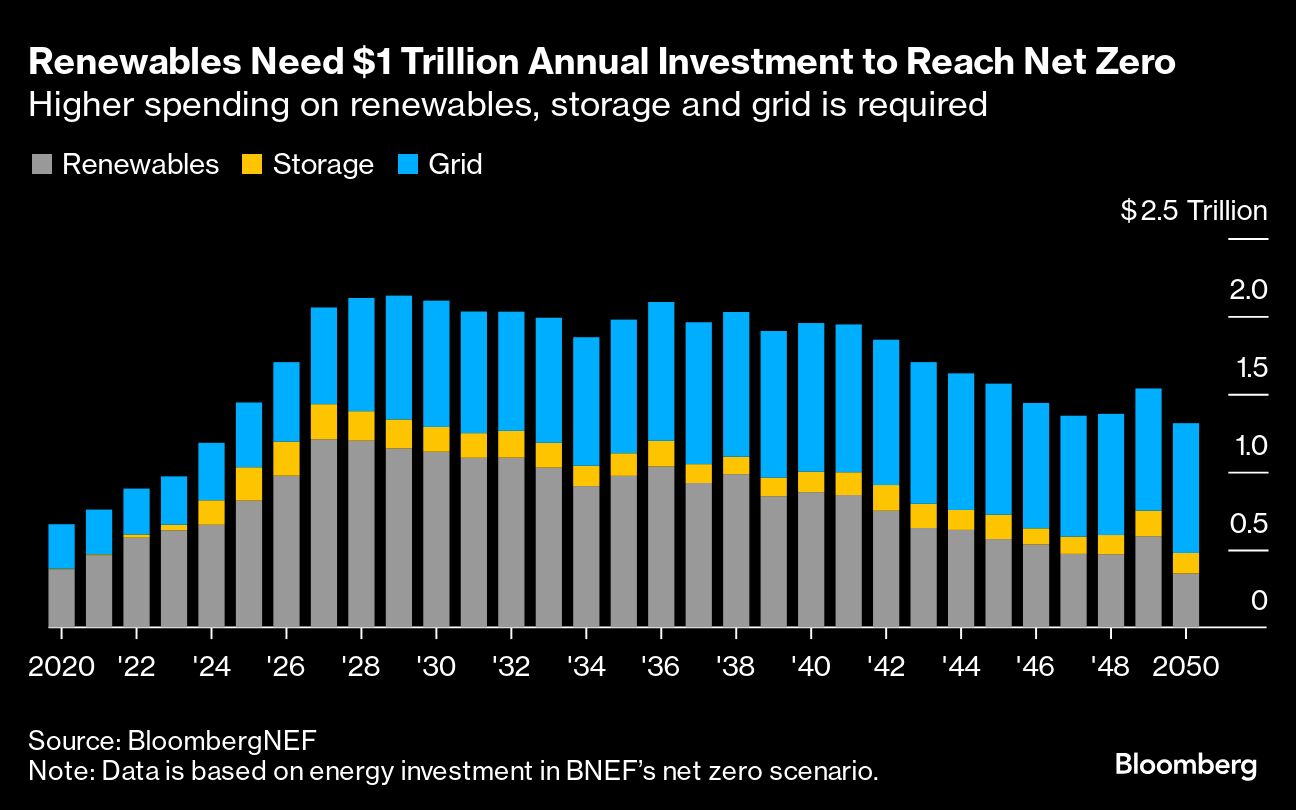
Global spending on renewable energy, battery storage and grid upgrades need to accelerate beyond the record level seen in 2023 to zero out greenhouse gas emissions by 2050, according to BloombergNEF. Renewables require an average investment of $1 trillion per year between 2024 and 2030 to reach that target, according to BNEF estimates. Over the same time frame, average investments in battery storage will need to be $193 billion a year, while $607 billion will need to be spent annually in grid upgrades. Governments need to end fossil fuel subsidies, remove regulations and ease supply chains to enable clean-power developers to build projects, BNEF said.
Palm Oil
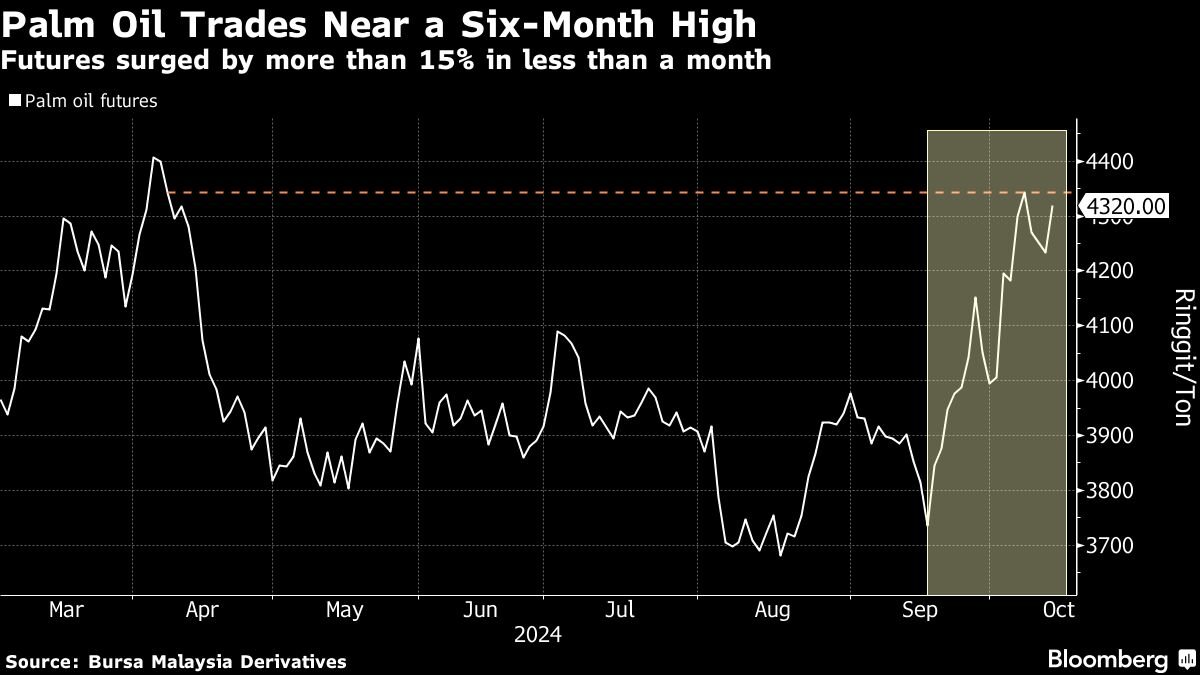
Tight supply in top producers Indonesia and Malaysia has driven futures of palm oil — the world's most widely consumed vegetable oil — to highs last seen in April. The trees that grow the commodity are aging, and the rally has put the crop at an unusual premium to its main alternative, soybean oil, where global harvests have been more bountiful. Should an escalation of hostilities in the Middle East disrupt commodities and energy trade, that could stand to further boost the tropical oil, which is also used as a feedstock for biofuels.
Gold ETF
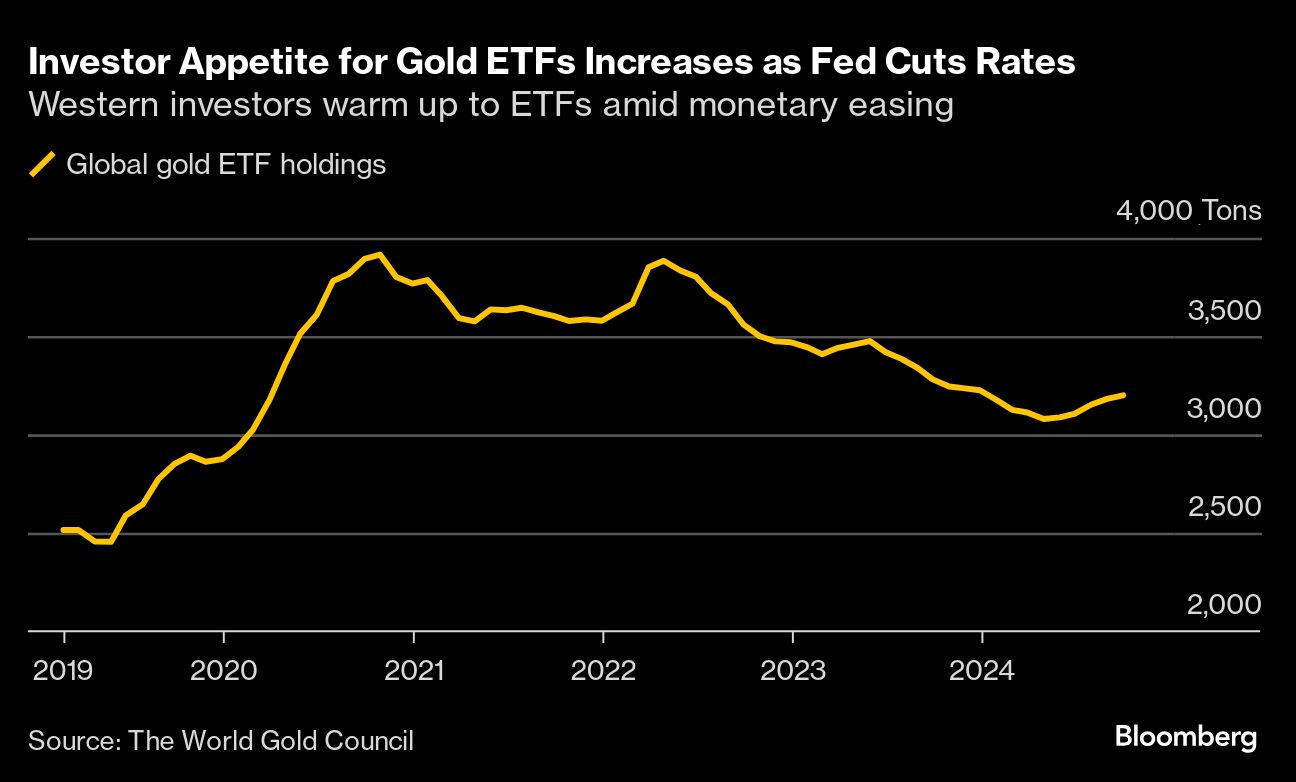
Investors are warming up to gold ETFs amid the metal's more than 25% surge this year, thanks to its appeal as a haven asset in times of geopolitical and economic uncertainty and its role as diversification play to safeguard wealth. Global holdings of physically backed gold funds have registered five straight months of gains, reaching 3,200 tons by September, according to data from the World Gold Council. While investors remained net sellers of about 25 tons in gold ETFs year-to-date, strong inflows over the past few months turned the year-to-date value of the ETFs to positive to $389 million, according to John Reade, market strategist at WGC. The precious metal surpassed $2,600 an ounce to an all-time high last month, bolstered by the Federal Reserve's shift to interest rate cuts. Non-yielding gold tends to perform better in a low-rate environment.
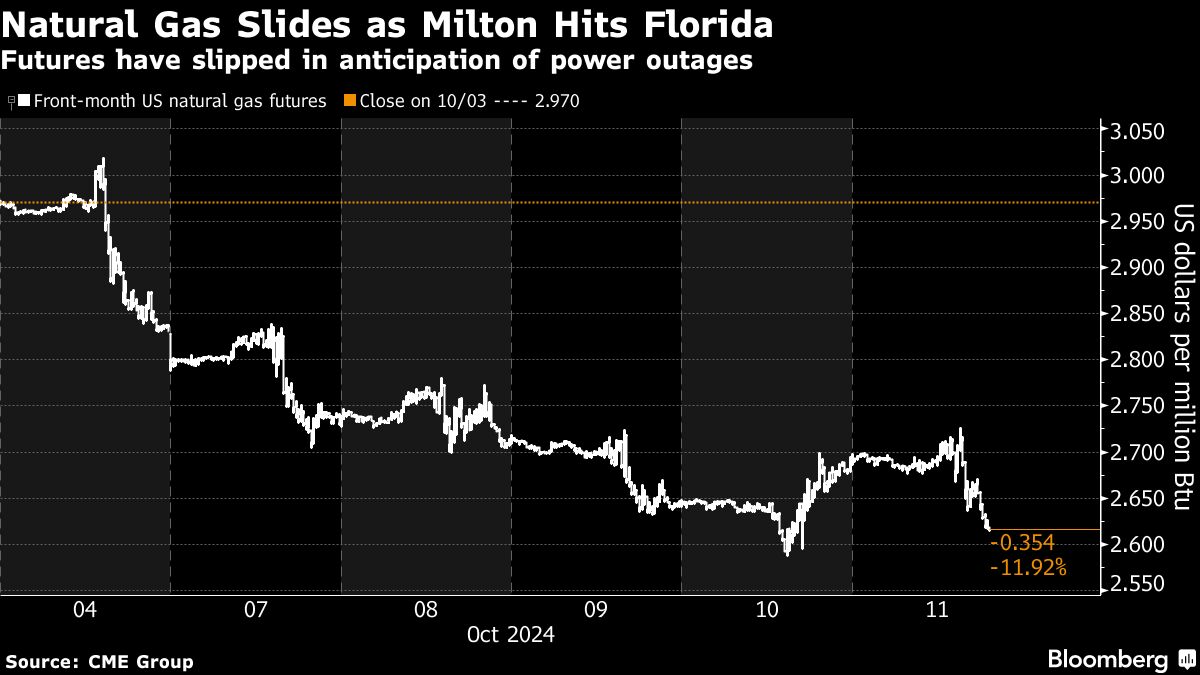
Milton & Gas
Natural gas futures slid in the lead-up to Hurricane Milton and in its aftermath as millions lost electricity. Gas is used to power the plants that create electricity for homes and businesses, and when the lights go out, demand for gas typically plummets. Futures were down nearly 8% week-over-week.

-
High US Salaries, No Green Card Certainty: The Financial Calculation Facing Indian H-1B Families

The suspension of PERM processing at eight technology employers does not cancel existing H-1B visas. What it does is force a question many Indian families have been avoiding: is the US salary worth tying your career and family plans to one employer?
-
Swiggy vs Eternal: Food Delivery's Two Rivals Are No Longer In The Same Race
Eternal is building a private AI assistant, dark.ai. Swiggy is still working out how to make Instamart pay, with an operating loss of Rs 895 crore in the July-September quarter while Blinkit stayed profitable.
-
Where You Live Shapes How You Get To Work | The Reason Why
Two-wheelers are the most popular way to get to work in India, accounting for nearly 43% of workplace commutes.
-
Unhedged Position: Can India See An Indonesia-Style Time Correction?
The Nifty is trading below levels it first clocked in 2024. Is there, then, as I have suggested in the headline, potential that the current time correction drags on painfully for the next three-five, even ten years?
-
Navigating Friction And Energy Realities: An Analysis Of Marco Rubio's October Visit To India
Occurring at a critical juncture marked by stalled trade negotiations and escalating geopolitical pressures over global energy supplies, the visit offers a profound window into modern US-India relations.
-
India Exports Capital. Why Not Export Trusteeship?
The big question, then, is whether India can build an institution that global borrowers, investors, banks, and lawyers can trust, even without an Indian connection.
-
France's Economy & Politics Are In Crisis | The Reason Why
Let's look at how the French economy and politics evolved under Nicolas Sarkozy, Franois Hollande and Emmanuel Macron.
-
You May Inherit The Business. You Must Earn Its Credibility.
Succession tests the founder's ability to share authority as much as it tests the next generation's readiness to assume it.
-
Signing Deals Is One Thing; Making Them Work Is Another | The Week In Whys
Sometimes, things don't turn out as planned. Indian companies have lost some bids to rivals, some projects won't produce until 2030.
-
FOMC Wall, PERM Suspension, Hospital Stocks | Talking Points This Week
A PERM suspension would directly affect green-card sponsorship rather than H-1B visas, so the near-term earnings impact could remain relatively limited. The key question is whether this marks a new phase in US scrutiny of Indian IT.









