Fitch’s India Rating Unchanged For 12th Year In A Row
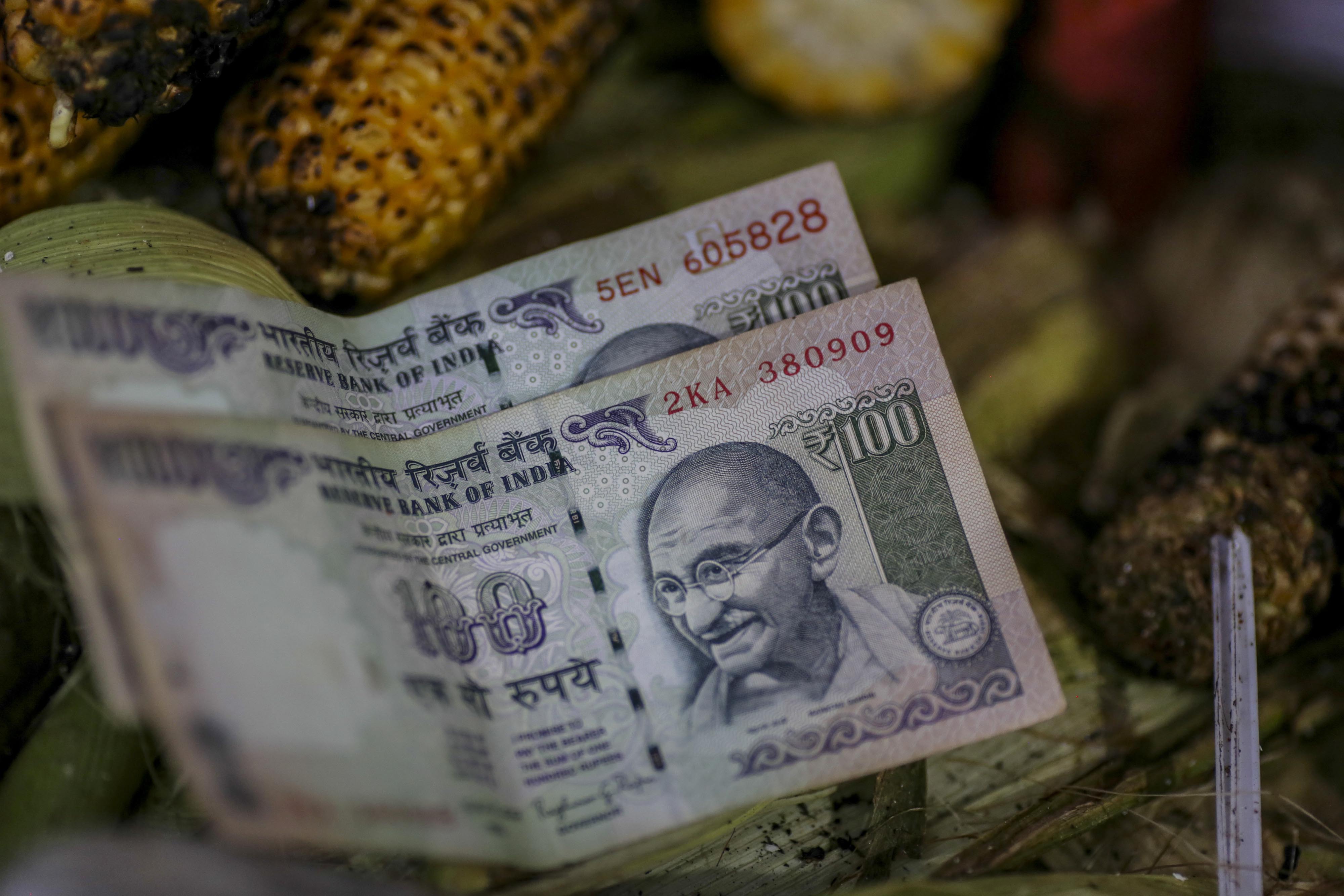
Fitch on Thursday retained its sovereign rating for the country at 'BBB-', the lowest investment grade with a stable outlook. The rating agency said that a weak fiscal position continues to constrain the ratings and there were significant risks to macroeconomic outlook.
The government has been making a strong pitch to Fitch Ratings for an upgrade after rival Moody's Investors Service in November 2017 gave the country its first sovereign rating upgrade since 2004.
Fitch had last upgraded India's sovereign rating from BB+ to BBB- with a stable outlook on Aug. 1, 2006. "Fitch Ratings has affirmed India's long-term foreign-currency issuer default rating at 'BBB-' with a Stable Outlook," it said in a statement.
The rating, it said, “balances a strong medium-term growth outlook and favourable external balances relative to peers with weak fiscal finances, a fragile financial sector and some lagging structural factors”.
"Risks to the macroeconomic outlook are significant, and include a drop in credit growth, resulting from further problems in the banking or shadow-banking sector," it said. "A weak fiscal position continues to constrain India's sovereign ratings."
Government debt at close to 70 percent of GDP, a difficulty to meet deficit target of 3.3 percent of GDP in the current financial year due to lower revenues including from GST in first half, and expenditures being difficult to control in the run-up to general elections were main reasons for the weak fiscal position, it said.
The Indian economy continues to exhibit some structural weaknesses relative to peers and is less developed on a number of metrics, Fitch said.
"Governance standards continue to be weak, as illustrated by a low score for the World Bank governance indicator (47th percentile versus the 'BBB' median of 59th percentile). India's ranking on the United Nations Human Development Index (31st percentile versus the 'BBB' median of 68th percentile) also indicates relatively low basic human development," it said.
While a reduction in general government debt over the medium term and higher sustained investment and growth rates without the creation of macro imbalances could trigger a "positive rating action", a rise in debt burden of the sovereign and loose macroeconomic policy settings that cause a return of persistently high inflation and widening current account deficits could trigger the opposite rating action, it said.
After the last rating upgrade in August 2006, Fitch had changed the outlook to negative in 2012 and then again to stable in the following year, though it kept the rating unchanged at the lowest investment grade.
The Fitch review for annual sovereign rating follows India's rating upgrade by Moody's after a gap of 14 years, while S&P retained its rating for the country.
While Moody's had in November 2017 raised India's sovereign rating from the lowest investment grade of 'Baa3' to 'Baa2', S&P refrained from upgrading the rating from 'BBB-' citing high government debt and low-income levels. S&P has maintained 'BBB-' rating on India since 2007.
Fitch in its rating action on Thursday listed recent defaults by Infrastructure Leasing & Financial Services Ltd. and some public-sector banks to highlight risks in a sector that in recent years supplied around a third of total credit growth.
Banks "do not seem in a position to significantly spur credit growth, as they still have weak core capital positions," it said, adding non-performing loan ratio could in near future rise from 11.6 percent in the financial year 2017-18 due to residual stress.
"Pressures to support credit growth could continue in the run-up to the general elections to be held by May 2019, and relaxation of lending regulations to some troubled sectors could delay the clean-up of the banking sector," it said.
Stating that its strong growth outlook continues to stand out among peers, Fitch put the real GDP growth in the current financial year ending March 2019 at 7.8 percent, up from 6.7 percent in the previous financial year.
This forecast is, however, subject to downside risks from tightening financial conditions, weak financial-sector balance sheets and high international oil prices. "Fitch forecasts growth to decelerate to a still-strong 7.3 percent in both financial year 2019-20 and 2020-21 for the same reasons," it said.
The current year growth forecast of Fitch is an upgrade over 7.3 percent it had predicted in April this year but for the prediction for the next fiscal is a downgrade from last projection of 7.5 percent.
Fitch expected current-account deficit to widen to 3 percent in fiscal 2018-19 and 3.1 percent in the next fiscal from 1.9 percent in financial 2017-18.
While India's jump of 23 positions in two years to 77th out of 190 countries on the World Bank's Ease of Doing Business ranking was "remarkable", lingering difficulties in doing business in India remain, including in starting a business and enforcing contracts, and FDI is lagging, it said.
"The reform effort also has yet to translate into a significant strengthening of total factor productivity growth, as steep labour productivity growth in the past decade was instead underpinned by a swift rise in capital deepening."

-
Navigating Energy Crossroads: S Jaishankar's Call For Diversified Supply Chains At G20 Ministerial Meeting

As geopolitical fault lines continue to test maritime trade routes and commodity flows, Jaishankar's message remains pertinent: true economic resilience requires open markets, protected transit lines, and a genuine commitment to multilateral cooperation rather than coercion.
-
Indians Are Travelling, But Not Every Journey Is A Holiday | The Week In Whys
Pilgrims, patients and working women are the real travellers, and the system hasn't quite caught up with them.
-
Getting To Work Costs Women More | The Reason Why
It is not just about women paying more than men. It is about women paying much more in cities than in villages.
-
AI Bias In Investing Cannot Be Eliminated, But It Can Be Governed
Framing is a particularly important example as identical financial information presented in terms of gains rather than losses can lead an LLM to reach a different assessment.
-
Joining The Dots | Dark Skies, Steady Diya: Why Hope Holds This Diwali
With war, a weak rupee and foreign outflows weighing on sentiment, policymakers at the NDTV World Summit and market veterans at NDTV Profit Ignite: Diwali Edition offered the same advice: stay invested and filter out the noise.
-
The Curious Case of Equitas Small Finance Bank And A CEO Who Quit For Stock
PN Vasudevan believes persistent investor concerns over a perceived conflict of interest had become a governance overhang on Equitas Small Finance Bank's stock, even as the lender improved profitability and asset quality.
-
Talking Points This Week: AI Cash Burn, A Tiger Comeback And An India That Still Finds Its Own Path
India is not immune to higher oil or tighter global liquidity, yet its earnings base is broader, its domestic policy levers are still available.
-
Foreign Investors Own Half Of HDFC Bank and ICICI Bank. An LTCG Cut Could Matter Most Here
Foreign portfolio investors have US$115 billion parked in HDFC Bank, ICICI Bank. If the government cuts long-term capital gains tax, Jefferies says returning foreign money could land here first.
-
'Never Seen This Level Of Negativity': Sandeep Tandon Says The Next Rally May Be Closer Than You Think
Veteran investor Sandeep Tandon says foreign selling is easing, large-caps are due a comeback and mid-caps are crowded, while he turns positive on gold, power and pharma this Diwali.
-
Indians Stay With Family, Not In Hotels | The Reason Why
India still lacks enough clean, reliable and affordable hotels for budget-conscious travellers.










