Fed's Williams Sees `Much Smaller' Balance Sheet in Five Years
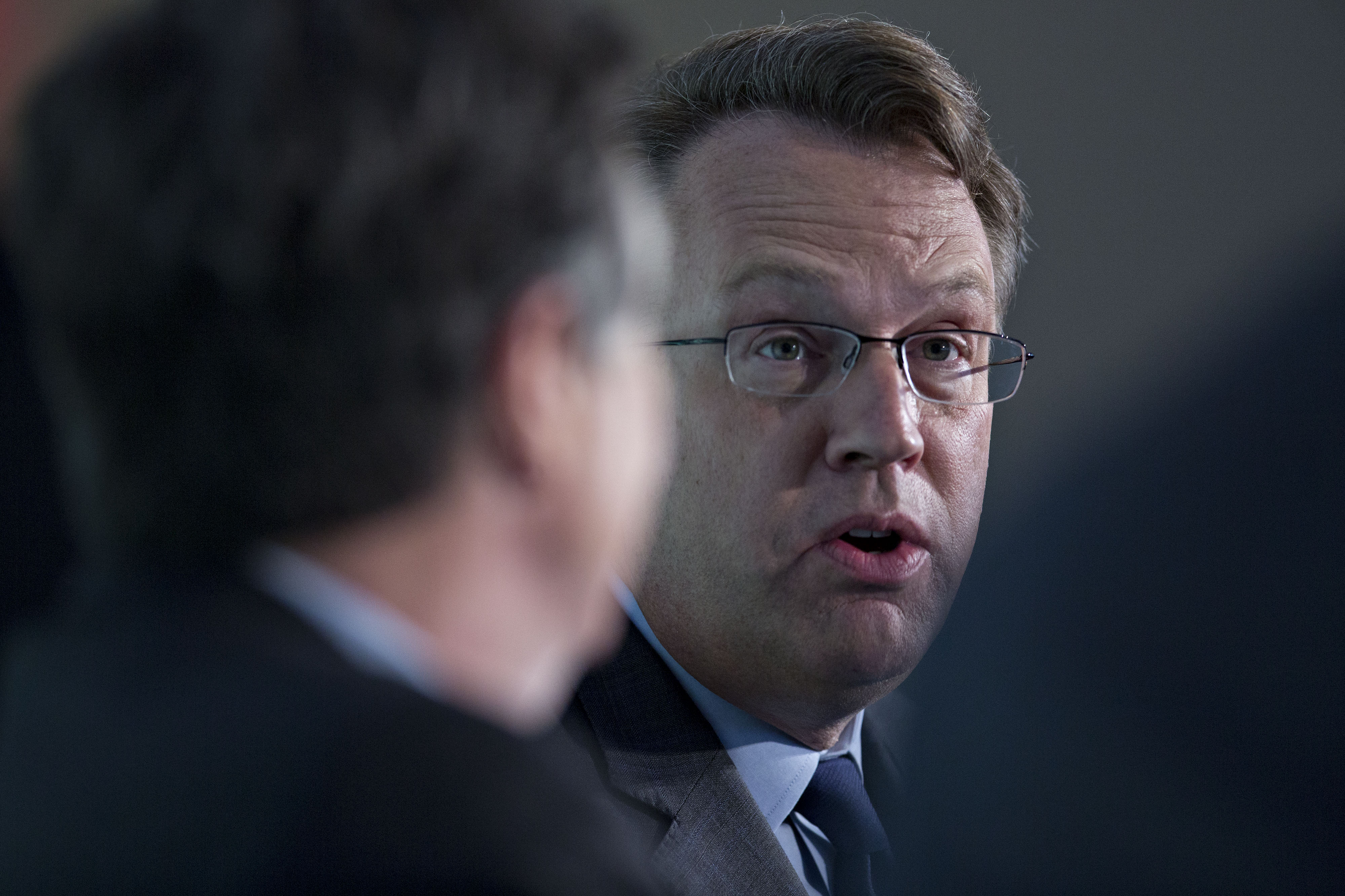
(Bloomberg) -- Federal Reserve Bank of San Francisco President John Williams sees a “much smaller” Fed balance sheet in about five years, at the end of an unwinding process that could start with a “baby step” later this year.
“How big will the balance sheet be five years from now, when this has all happened?” Williams said in a Bloomberg TV interview with Haslinda Amin in Singapore on Monday. “That is something we haven't decided on. It will be much smaller than today.”
Policy makers are coalescing around a plan for gradually reducing the central bank's $4.5 trillion in assets with a predictable process aimed at minimizing market reactions. The concern is to avoid a repeat of the so-called “taper tantrum” of 2013, when then-Fed Chairman Ben Bernanke sent shock waves rippling through global markets with a mere suggestion that the central bank would taper asset purchases.
Williams, who does not vote on monetary policy this year, said the downsizing will be “boring” and take place “in the background.” It will leave the Fed with assets that will still be significantly larger than they were before the crisis.
“It's not a question of are we going to reduce the balance sheet significantly,” he said. “It's really like at the end, is that balance sheet going to have something like 2 trillion or 2 and a half trillion or something like that. I'm not making decisions. We haven't made decisions.”
‘Right Time'
His views echo those of Cleveland Fed's Loretta Mester, also a non-voter this year. In an interview with Germany's Handelsblatt she called for balance-sheet unwinding to start this year and to be communicated “at the right time.”
In a speech in Singapore earlier on Monday, Williams reaffirmed his view that a total of three interest-rate increases this year make sense in light of “very good” data from the U.S. economy. The Fed raised rates in March. Unemployment is expected to keep falling throughout the year and recent somewhat weak inflation numbers in March should not lead to a change in the Fed strategy if they remain temporary blips, he said.
“The economy is doing well, with good momentum,” he said in the Bloomberg TV interview. “We have a way to go on inflation goals but I am optimistic about the economy.”
The policy tightening aims to avoid letting the economy run “too hot for too long,” Williams added.
The San Francisco Fed president also said he is not overly concerned over China's slower growth but rather about the long-term sustainability of its financial system.
“What worries me in China is not this year or next year,” he said. “It's the pretty significant build-up of debt and risk in their financial system, which poses more of a risk over the next five years or so.”
--With assistance from Haslinda Amin Alister Bull and Netty Ismail
To contact the reporter on this story: Alessandro Speciale in Frankfurt at aspeciale@bloomberg.net.
To contact the editors responsible for this story: Paul Gordon at pgordon6@bloomberg.net, Kevin Costelloe

-
Navigating Energy Crossroads: S Jaishankar's Call For Diversified Supply Chains At G20 Ministerial Meeting

As geopolitical fault lines continue to test maritime trade routes and commodity flows, Jaishankar's message remains pertinent: true economic resilience requires open markets, protected transit lines, and a genuine commitment to multilateral cooperation rather than coercion.
-
Indians Are Travelling, But Not Every Journey Is A Holiday | The Week In Whys
Pilgrims, patients and working women are the real travellers, and the system hasn't quite caught up with them.
-
Getting To Work Costs Women More | The Reason Why
It is not just about women paying more than men. It is about women paying much more in cities than in villages.
-
AI Bias In Investing Cannot Be Eliminated, But It Can Be Governed
Framing is a particularly important example as identical financial information presented in terms of gains rather than losses can lead an LLM to reach a different assessment.
-
Joining The Dots | Dark Skies, Steady Diya: Why Hope Holds This Diwali
With war, a weak rupee and foreign outflows weighing on sentiment, policymakers at the NDTV World Summit and market veterans at NDTV Profit Ignite: Diwali Edition offered the same advice: stay invested and filter out the noise.
-
The Curious Case of Equitas Small Finance Bank And A CEO Who Quit For Stock
PN Vasudevan believes persistent investor concerns over a perceived conflict of interest had become a governance overhang on Equitas Small Finance Bank's stock, even as the lender improved profitability and asset quality.
-
Talking Points This Week: AI Cash Burn, A Tiger Comeback And An India That Still Finds Its Own Path
India is not immune to higher oil or tighter global liquidity, yet its earnings base is broader, its domestic policy levers are still available.
-
Foreign Investors Own Half Of HDFC Bank and ICICI Bank. An LTCG Cut Could Matter Most Here
Foreign portfolio investors have US$115 billion parked in HDFC Bank, ICICI Bank. If the government cuts long-term capital gains tax, Jefferies says returning foreign money could land here first.
-
'Never Seen This Level Of Negativity': Sandeep Tandon Says The Next Rally May Be Closer Than You Think
Veteran investor Sandeep Tandon says foreign selling is easing, large-caps are due a comeback and mid-caps are crowded, while he turns positive on gold, power and pharma this Diwali.










