Dollar Swings Drive Creative Yen Bulls To European-Based Trades

Investors are getting creative in the way they bet on the diverging path for interest rates across major economies as they look for ways to sidestep volatility in the dollar, using European currencies instead to fund bets on the Japanese yen.
Dollar-based strategies are being tested by the uncertainty Donald Trump's trade tariff plans have unleashed on markets. Investors are questioning whether the US president's proposals will prove a bullish driver for the greenback, or turn out to be more of a negotiating tactic.
As an alternative way of wagering on yen strength, some firms are using strategies involving European currencies, rather than the dollar, to profit from a widening rate differential with Japan.
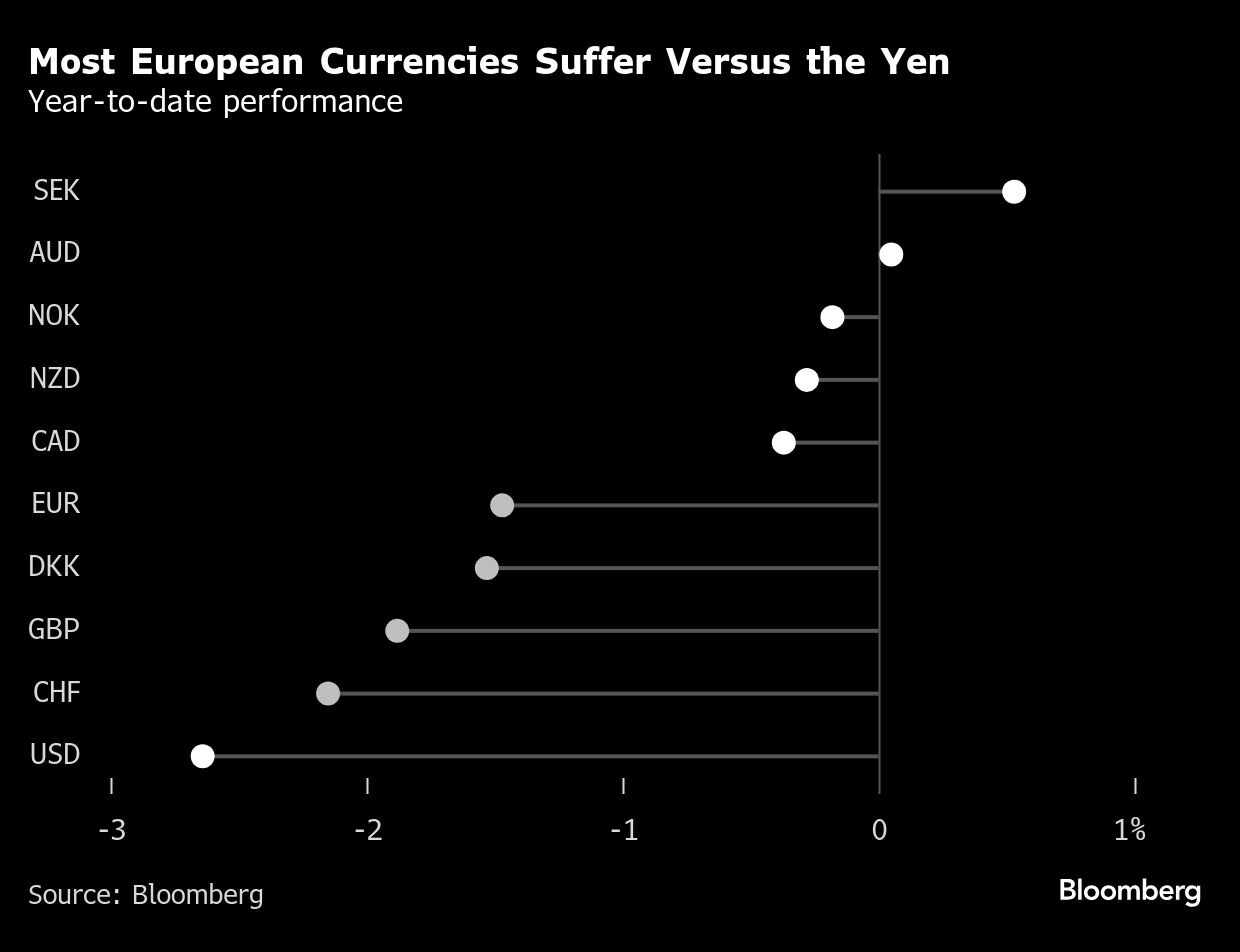
Vanguard Asset Management, Russell Investments, RBC BlueBay Asset Management and Candriam SA are among those favouring a variety of trades reflecting this theme, such as shorting the euro, the Swiss franc and the pound against the yen. That's because they are viewed as offering bigger returns and as safer than betting against an increasingly unpredictable dollar.
“One way of playing the yen trade without necessarily having the dollar risk is to put it on versus the crosses,” said Adrian Boehler, global head of macro distribution at UBS Group AG. “People are opting to express a higher conviction trade around the yen without the headline risk associated with Trump by steering clear of straight dollar/yen.”
After roughly half a decade of broad weakness, the yen finally appears ready to change its reputation as a low-yielding currency. The Bank of Japan has flagged that it will keep raising interest rates from 0.5%, acknowledging that Japan is no longer in deflation.
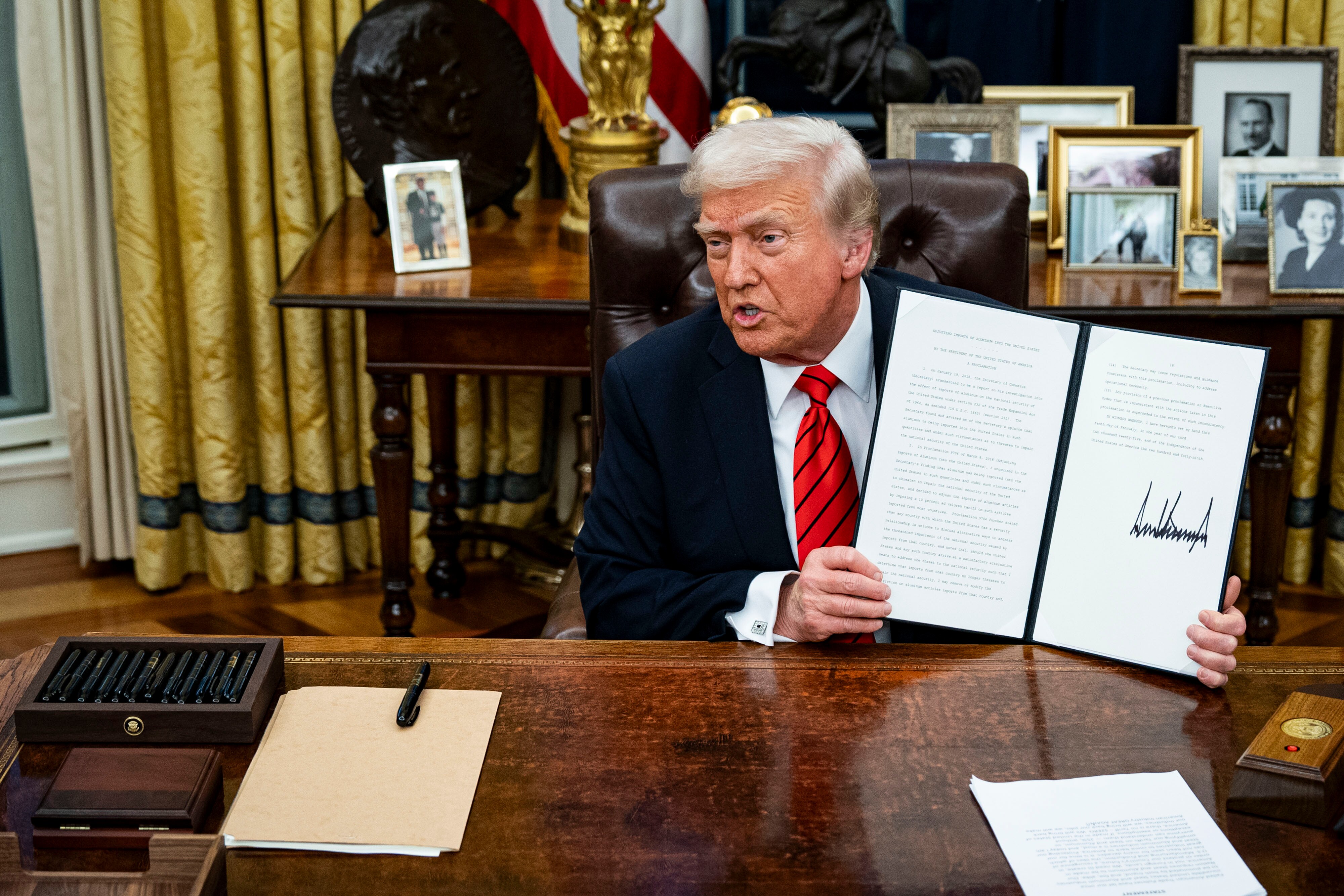
President Trump displays a signed executive order for tariffs on steel and aluminum imports. (Photographer: Al Drago/Bloomberg)
Investors are particularly keen to back the yen against currencies in Europe, given that many countries in the region face the prospect of aggressive rate cuts to support their economies, just as the BOJ is poised to tighten further.
Traders see the European Central Bank making at least three more quarter-point rate cuts this year, compared to just one from the Federal Reserve, a pattern likely to weaken the euro. Meanwhile in Japan, signs of increasing wage growth have bolstered expectations that the BOJ will raise rates at least once more in 2025. The nation's gross domestic product data on Monday also showed the economy outperformed forecasts, logging its third straight quarter of growth and boosting the Japanese currency.
That set-up has propelled the yen roughly 2% higher against the Swiss franc, sterling and the euro since January. It's the best start to the year for the yen against the Swiss and UK currencies since 2017.
“There is downward pressure on the euro against the yen from both economic and political standpoints,” said Juntaro Morimoto, senior analyst at Sony Financial Group Inc. in Tokyo.
Because of this, Citigroup Inc., Rabobank and Danske Bank A/S all see the euro ending the year below 150 yen compared with 160 yen at the moment, with the latter forecasting a 12% drop to 141 yen.

(Image source: Bloomberg)
Signals in the options market have pointed to flagging sentiment toward European currencies versus the yen since the year began. So-called risk reversals for the Swiss franc against the yen are near the most bearish levels in two months and traders cite growing demand among investors to protect against a drop to 160 yen. That would be a decline of 6% from current levels around 169 yen and a level last seen almost two years ago, as Switzerland faces a possible return to negative interest rates.
As the same time, volatility in the euro-yen pair has remained relatively subdued since the start of the year, compared with euro-dollar volatility. The spread between the two has been broadly narrowing since the run-up to last year's US election, when options markets began to reflect tariff risk premiums, largely in dollar crosses.
Mark Dowding, chief investment officer at Bluebay, said he was buying the Japanese currency versus the euro and the pound as a way to bet on a strong yen while “cutting through the US tariff noise.”
Ales Koutny, head of international rates at Vanguard Asset Management, said he began buying the Japanese currency against the franc in December, alongside the euro and the South Korean won. “The yen used to be one of our favourite shorts,” he said. “It has now become one of our preferred longs.”

-
Love, Sex Aur Dhokha: The Audacious Plot To Spy On Jensen Huang

A Taipei dinner, a Singapore chip buyer and a suspected Chinese asset: inside the alleged spy operation that got close to NVIDIA's Jensen Huang.
-
Ten Things I Learnt This Samvat
Patience can be a trap. Cheap stocks can stay cheap. Leverage can wipe you out. What did Samvat 2082 teach us? Niraj Shah writes on 10 lessons from the year gone by.
-
Talking Points This Week: Tech Nerves, FII Buying, And A Faraway Banking Shock
The global markets are not shining this Diwali. The exception in the large markets is, India.
-
Midterm Rally Lasted A Day. The Hard Reality Of A Divided US May Last Two Years | Opinion
Between a contested AI boom, a debt ceiling that arrives in 2027 and a president with every incentive to act alone, the next two years may prove more volatile than the first day's rally suggests.
-
Blue Wave Will Derail the AI Trade but Won't Dismantle the AI Era | Unhedged Position
The Democrats' sweep of the US Congress will see politics collide with economic forces both over the long and short term.
-
It's Time To Take The GST Council's Bet On Trust Global
Payment records can prove India's services exports, and clear, proportionate rules can bring foreign digital sellers into the tax net.
-
Opinion | India at 38: From Innovation Overperformer to Innovation Powerhouse
India now has 453 VC-backed deep science startups, 18 of them late-stage, after 117 percent growth since 2020. Laurus Labs, at USD 9.3 billion, is the most valuable deep science company in any middle-income economy outside China.
-
Navigating Energy Crossroads: S Jaishankar's Call For Diversified Supply Chains At G20 Ministerial Meeting
As geopolitical fault lines continue to test maritime trade routes and commodity flows, Jaishankar's message remains pertinent: true economic resilience requires open markets, protected transit lines, and a genuine commitment to multilateral cooperation rather than coercion.
-
Indians Are Travelling, But Not Every Journey Is A Holiday | The Week In Whys
Pilgrims, patients and working women are the real travellers, and the system hasn't quite caught up with them.









