Dollar Eyes More Losses After Biggest Monthly Drop Since 2022
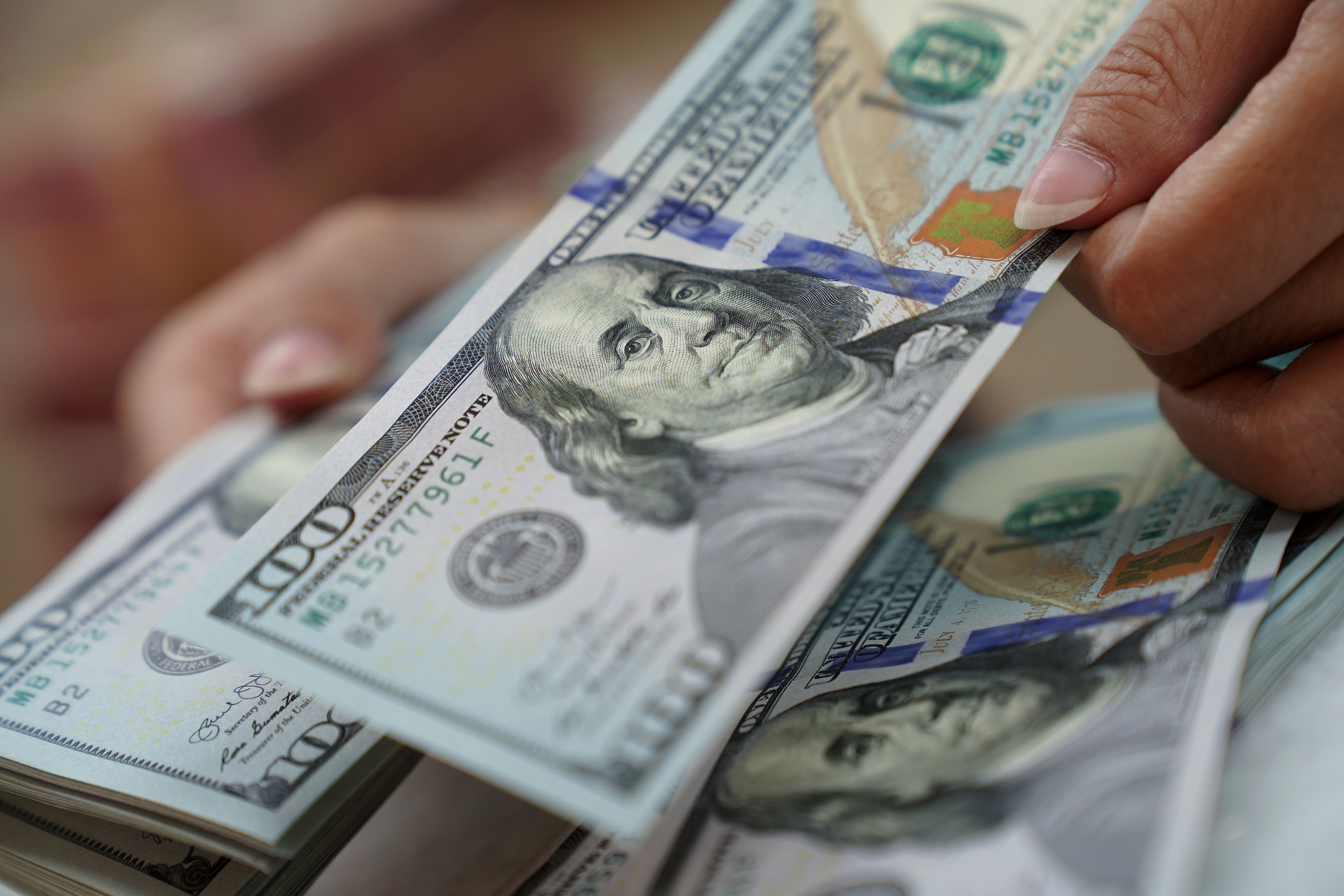
The dollar is heading for its worst month since 2022 after global investors cut back on US assets, with options markets still flashing warning signals.
A gauge of the greenback is down around 4% in April, the result of a selloff in both US stocks and Treasuries as President Donald Trump's chaotic trade tariff rollout rocked global markets. Options show sentiment over the next year is the most negative on the dollar since 2020, creating strong demand for protection from further losses.
This fallout from the tariff turmoil has got investors questioning whether the dollar — the world's reserve currency — is still the safe haven it used to be. That argument was given impetus by the greenback losing further ground this week, even when bank models pointed to end-month buying by companies and asset managers to rebalance their exposure.
“Market action in April looks less like a ‘normal deleveraging' and more like a quiet exodus of domestic and foreign real money from the US,” said Kevin Thozet, a member of the investment committee at Carmignac.

The mayhem in April has exposed the risks that come with pouring so much money into dollar assets. The end of the month is when asset managers take stock and adjust holdings based on performance, while exporters manage their exposure, triggering significant flows in the $7.5 trillion-a-day currency market.
This time around, with US assets underperforming, they were expected to purchase dollars. Models from Barclays Plc and Credit Agricole SA had flagged the likelihood of dollar buying.
The flows on Monday — a key day given it can take two days to settle deals — were positive, according to market participants, with one pointing to corporate buying through their bank alone of around $5 billion.
Even so, the dollar still fell 0.5% on Monday and is heading for a loss this week, suggesting any end-month buying has been drowned out by sellers. Under typical conditions, such flows might have lifted the greenback. Their limited impact this time suggests a possible shift in market behavior.
“There could be broader, structural forces at work here that longer-term investors should be aware of — specifically whether we are looking at the end of US exceptionalism or a general ‘de-dollarization' theme in markets,” said David Chao, global market strategist at Invesco Asset Management, which oversees more than $1.8 trillion in assets.
Up for Debate
While many banks have models for how end-month flows might affect currencies, market participants say these have become less reliable since the pandemic.
Demand for dollars from US companies could still trigger a “snap back” in the currency in the coming weeks, though gauging when and at what level this might happen was “more of an art rather than a science,” said Francesca Fornasari, head of currency solutions at asset manager Insight Investment.
“Usually, when you've had a big move lower in the dollar, you would have expected that US corporates would come in and actually start to buy some dollars. Based on the numbers that we look at, that hasn't really happened,” she said. “You can understand why it hasn't happened because the move in the dollar has been so sharp.”
Some analysts warn it's still early days to judge the outlook for the dollar on just a few weeks of selling, with concerns about its status emerging every few years and usually being batted away by a resurgence.
For investors looking for protection against the uncertainty, it's become more expensive to hedge a continued slide. Interest in how to position on the dollar from clients surged into the month-end, according to Vishnu Varathan, head of economics and strategy at Mizuho Bank Ltd in Singapore.
“Month-end flows can inflict real pain if you're wrong footed on the currency,” he said. “De-dollarization is a longer-term trend, and this could potentially provide another bit of information to markets on where it's headed. How clear it will be though as a longer term indicator is up for debate.”

-
Talking Points This Week: Tech Nerves, FII Buying, And A Faraway Banking Shock

The global markets are not shining this Diwali. The exception in the large markets is, India.
-
Midterm Rally Lasted A Day. The Hard Reality Of A Divided US May Last Two Years | Opinion
Between a contested AI boom, a debt ceiling that arrives in 2027 and a president with every incentive to act alone, the next two years may prove more volatile than the first day's rally suggests.
-
Blue Wave Will Derail the AI Trade but Won't Dismantle the AI Era | Unhedged Position
The Democrats' sweep of the US Congress will see politics collide with economic forces both over the long and short term.
-
It's Time To Take The GST Council's Bet On Trust Global
Payment records can prove India's services exports, and clear, proportionate rules can bring foreign digital sellers into the tax net.
-
Opinion | India at 38: From Innovation Overperformer to Innovation Powerhouse
India now has 453 VC-backed deep science startups, 18 of them late-stage, after 117 percent growth since 2020. Laurus Labs, at USD 9.3 billion, is the most valuable deep science company in any middle-income economy outside China.
-
Navigating Energy Crossroads: S Jaishankar's Call For Diversified Supply Chains At G20 Ministerial Meeting
As geopolitical fault lines continue to test maritime trade routes and commodity flows, Jaishankar's message remains pertinent: true economic resilience requires open markets, protected transit lines, and a genuine commitment to multilateral cooperation rather than coercion.
-
Indians Are Travelling, But Not Every Journey Is A Holiday | The Week In Whys
Pilgrims, patients and working women are the real travellers, and the system hasn't quite caught up with them.
-
Getting To Work Costs Women More | The Reason Why
It is not just about women paying more than men. It is about women paying much more in cities than in villages.
-
AI Bias In Investing Cannot Be Eliminated, But It Can Be Governed
Framing is a particularly important example as identical financial information presented in terms of gains rather than losses can lead an LLM to reach a different assessment.









