Dena Bank Board Clears Merger Proposal With Bank Of Baroda
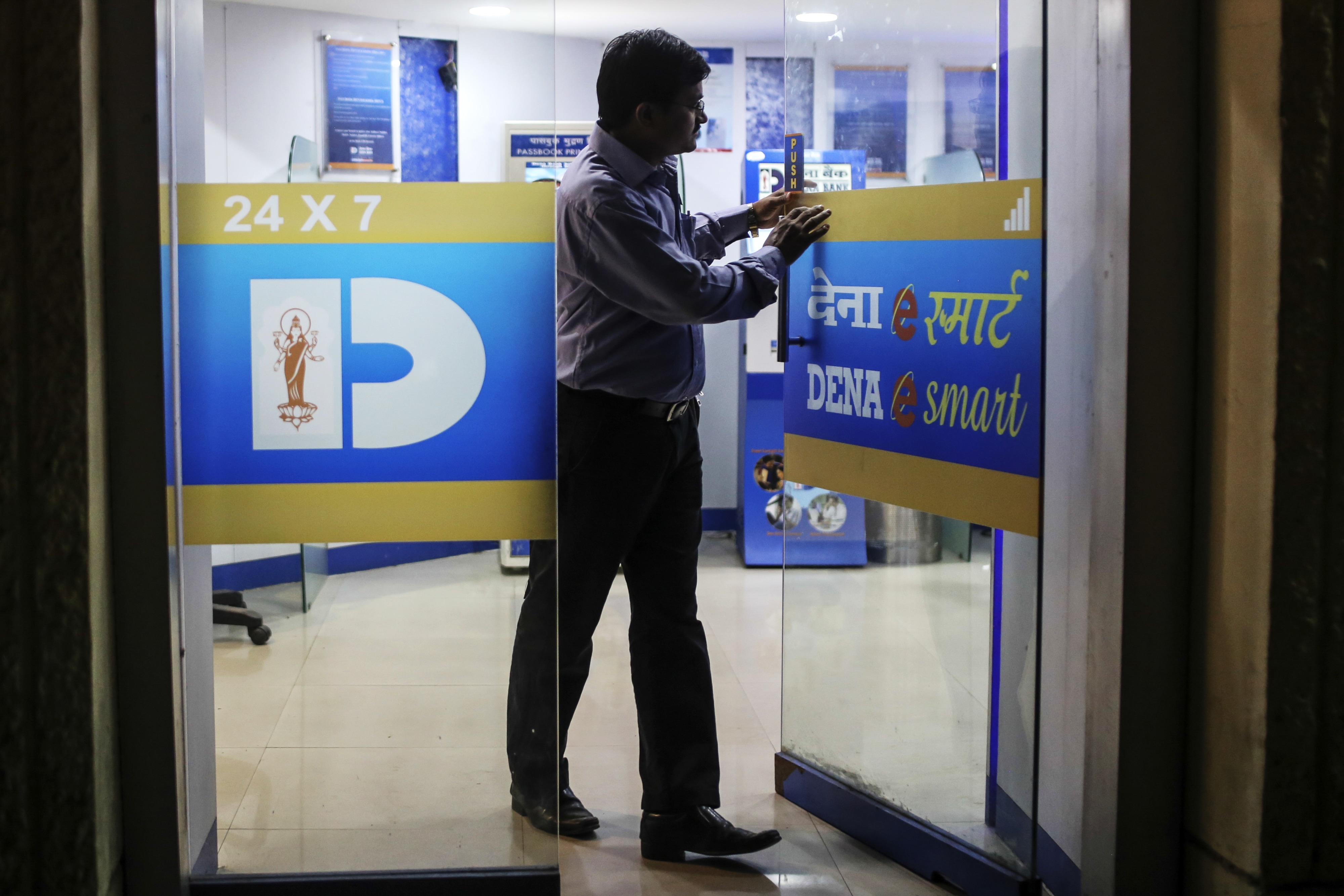
The board of the state-run Dena Bank today approved its merger with Bank of Baroda, and Vijaya Bank.
Last week, the government announced the merger of Bank of Baroda, Vijaya Bank and Dena Bank to create the country's second largest lender by assets and branches.
“The board meeting has decided to recommend for amalgamation of our bank with Bank of Baroda and Vijaya Bank," Dena Bank said in an exchange filing. The consolidation would enable the creation of a bank with business scale comparable to global banks and capable of competing effectively in the country and globally, it said.
Amalgamation of our bank with Bank of Baroda and Vijaya Bank would result in a strong amalgamated bank, equipped with financial cushion to deal with post-amalgamation requirements during the stabilisation phase.Dena Bank in an exchange filing.
Consolidation would also provide impetus to building banks with scale, ramping up credit growth, adoption of best practices across amalgamating entities for cost efficiency and improved risk management and financial inclusion through wider reach, it said.
The combined business of amalgamated entities would make it second largest state-run bank, after State Bank of India. As of June 2018, the combined business mix of these three lenders stood at Rs 14.82 trillion.
While announcing the merger last week, financial services secretary Rajiv Kumar had said that the merged entity would have better financial strength.
Dena Bank's net non-performing assets ratio will be at 5.71 percent, significantly better than the public sector banks' average of 12.13 percent, he said, adding so would be the provision coverage ratio at 67.5 percent against an average of 63.7 percent and cost to income ratio of the combined entity would come down to 48.94 percent as compared to an average of 53.92 percent.
The amalgamation of the three banks would be through share swap which will be the part of scheme of merger. In April 2017, State Bank had merged with itself five of its subsidiary banks and taking over Bharatiya Mahila Bank, catapulting it to be among top 50 global lenders with over $550 billion in combined assets.
Post-merger of Bank of Baroda, Vijaya Bank and Dena Bank, the number of PSU banks will come down to 19.

-
A New Samvat Wishlist: Inclusive Prosperity And Human Development

India has strengthened its economic foundations through infrastructure, digital access and enterprise. Its next growth chapter must deepen productivity, create better livelihoods and widen participation in prosperity.
-
Ten Things I Learnt This Samvat
Patience can be a trap. Cheap stocks can stay cheap. Leverage can wipe you out. What did Samvat 2082 teach us? Niraj Shah writes on 10 lessons from the year gone by.
-
Talking Points This Week: Tech Nerves, FII Buying, And A Faraway Banking Shock
The global markets are not shining this Diwali. The exception in the large markets is, India.
-
Midterm Rally Lasted A Day. The Hard Reality Of A Divided US May Last Two Years | Opinion
Between a contested AI boom, a debt ceiling that arrives in 2027 and a president with every incentive to act alone, the next two years may prove more volatile than the first day's rally suggests.
-
Blue Wave Will Derail the AI Trade but Won't Dismantle the AI Era | Unhedged Position
The Democrats' sweep of the US Congress will see politics collide with economic forces both over the long and short term.
-
It's Time To Take The GST Council's Bet On Trust Global
Payment records can prove India's services exports, and clear, proportionate rules can bring foreign digital sellers into the tax net.
-
Opinion | India at 38: From Innovation Overperformer to Innovation Powerhouse
India now has 453 VC-backed deep science startups, 18 of them late-stage, after 117 percent growth since 2020. Laurus Labs, at USD 9.3 billion, is the most valuable deep science company in any middle-income economy outside China.
-
Navigating Energy Crossroads: S Jaishankar's Call For Diversified Supply Chains At G20 Ministerial Meeting
As geopolitical fault lines continue to test maritime trade routes and commodity flows, Jaishankar's message remains pertinent: true economic resilience requires open markets, protected transit lines, and a genuine commitment to multilateral cooperation rather than coercion.
-
Indians Are Travelling, But Not Every Journey Is A Holiday | The Week In Whys
Pilgrims, patients and working women are the real travellers, and the system hasn't quite caught up with them.









