Import Curbs To Bring Rupee To 68-70 Level, Economic Affairs Secretary Says
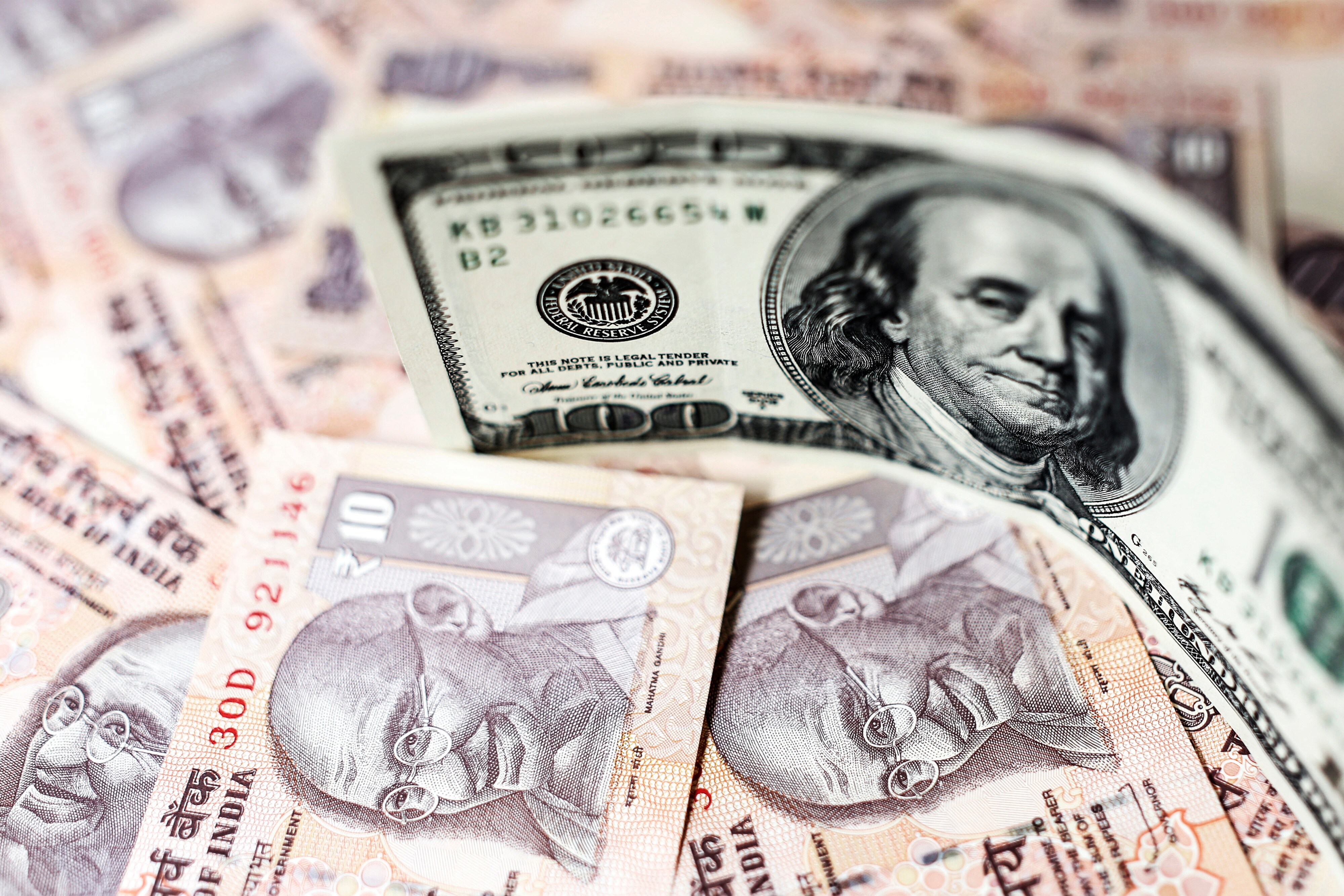
The government will “very soon” implement the second set of measures including curb on imports of non-essential items to shore up the rupee to 68-70 level against the U.S. dollar, Economic Affairs Secretary Subhash Chandra Garg said, terming the about 12 percent slide in the currency as a temporary phenomenon.
Earlier this month, the government had announced the easing of overseas borrowing norms for manufacturing companies, removal of restrictions on foreign portfolio investors investment in corporate bonds, and tax benefits on Masala bonds to shore up rupee and curb widening of current account deficit.
Now, the centre has prepared a list of non-essential items whose imports can be curbed and also drawn up a separate list of goods whose exports can be boosted with a little policy intervention, Garg told PTI in an interview.
Full components of the steps have not been implemented as yet, especially curb on import of non-essential items and boosting some of the exports etc. Those are still to come. These measures are at the final stage. Very soon, these should be announced.Subhash Chandra Garg, Economic Affairs Secretary.
A group headed by the Commerce Secretary has “more or less” completed its task on finalising the list, the DEA secretary said. “Once it gets the nod from higher-ups, it will be announced. It will happen very early,” he said.
The rupee has been battered for over a month now amid sell-offs sweeping emerging markets following a rout in the currencies of Argentina and Turkey. The Indian currency has set a string of record lows, dampening some of the optimism about India's world-beating economic growth.
On Friday, the rupee closed at Rs 72.20 per U.S. dollar, higher than the record low of 72.91 it had hit earlier this month. The government, Garg said, is concerned about the rupee's slump and its adverse impact on the current account deficit.
The CAD, difference between inflow and outflow of foreign exchange, widened to 2.4 percent of GDP in the first quarter. The fall in rupee has shot up oil import bill for the world's fastest-growing oil user by 76 percent to $10.2 billion in July.
Garg said the appropriate level for the rupee is 68-70 per dollar, with 72 being the reasonable outer limit for depreciation.
With first round of measures not having any desired impact, he said there is no question of government being helpless as there are more measures to be taken to rein in falling rupee. Garg further said that in view of present circumstances, CAD and present capital flows, 68-70 range appears to be a reasonable level.
“When it suddenly went down from 69 to 72, the government rightly got concerned that this kind of sudden depreciation is not justified,” he said.
Gard added that the Indian economy recorded an excellent growth of 8.2 percent in the first quarter. With low inflation and good macroeconomic fundamentals, the government is strictly maintaining fiscal deficit and the expenditure programme is going on well, he added.
“Why on earth should there be such a depreciation of 10-12 percent in six months or 6-9 percent in two months? That's why the Prime Minister took a meeting. The Finance Minister got into the act and several decisions were taken and some of them are under implementation,” he said.
Garg expressed confidence that with the measures announced and those in works, the rupee will regain comfortable levels. “I am sure this is temporary and this will come back (to the comfortable level),” he said.

-
High US Salaries, No Green Card Certainty: The Financial Calculation Facing Indian H-1B Families

The suspension of PERM processing at eight technology employers does not cancel existing H-1B visas. What it does is force a question many Indian families have been avoiding: is the US salary worth tying your career and family plans to one employer?
-
Unhedged Position: Can India See An Indonesia-Style Time Correction?
The Nifty is trading below levels it first clocked in 2024. Is there, then, as I have suggested in the headline, potential that the current time correction drags on painfully for the next three-five, even ten years?
-
Navigating Friction And Energy Realities: An Analysis Of Marco Rubio's October Visit To India
Occurring at a critical juncture marked by stalled trade negotiations and escalating geopolitical pressures over global energy supplies, the visit offers a profound window into modern US-India relations.
-
India Exports Capital. Why Not Export Trusteeship?
The big question, then, is whether India can build an institution that global borrowers, investors, banks, and lawyers can trust, even without an Indian connection.
-
France's Economy & Politics Are In Crisis | The Reason Why
Let's look at how the French economy and politics evolved under Nicolas Sarkozy, Franois Hollande and Emmanuel Macron.
-
You May Inherit The Business. You Must Earn Its Credibility.
Succession tests the founder's ability to share authority as much as it tests the next generation's readiness to assume it.
-
Signing Deals Is One Thing; Making Them Work Is Another | The Week In Whys
Sometimes, things don't turn out as planned. Indian companies have lost some bids to rivals, some projects won't produce until 2030.
-
FOMC Wall, PERM Suspension, Hospital Stocks | Talking Points This Week
A PERM suspension would directly affect green-card sponsorship rather than H-1B visas, so the near-term earnings impact could remain relatively limited. The key question is whether this marks a new phase in US scrutiny of Indian IT.
-
Everything, Everywhere, All At Once: Dalal Street's Week To Forget | Joining The Dots
Visa curbs, a Starlink spat and cancer drug caps: what connects this week's shocks for Indian markets
-
India Is Going Abroad For Critical Minerals. But It May Take Years To Pay Off | The Reason Why
Although India's steps are in the right direction, they remain modest compared with India's growing dependence.









