CreditAccess Grameen IPO: Here’s All You Need To Know
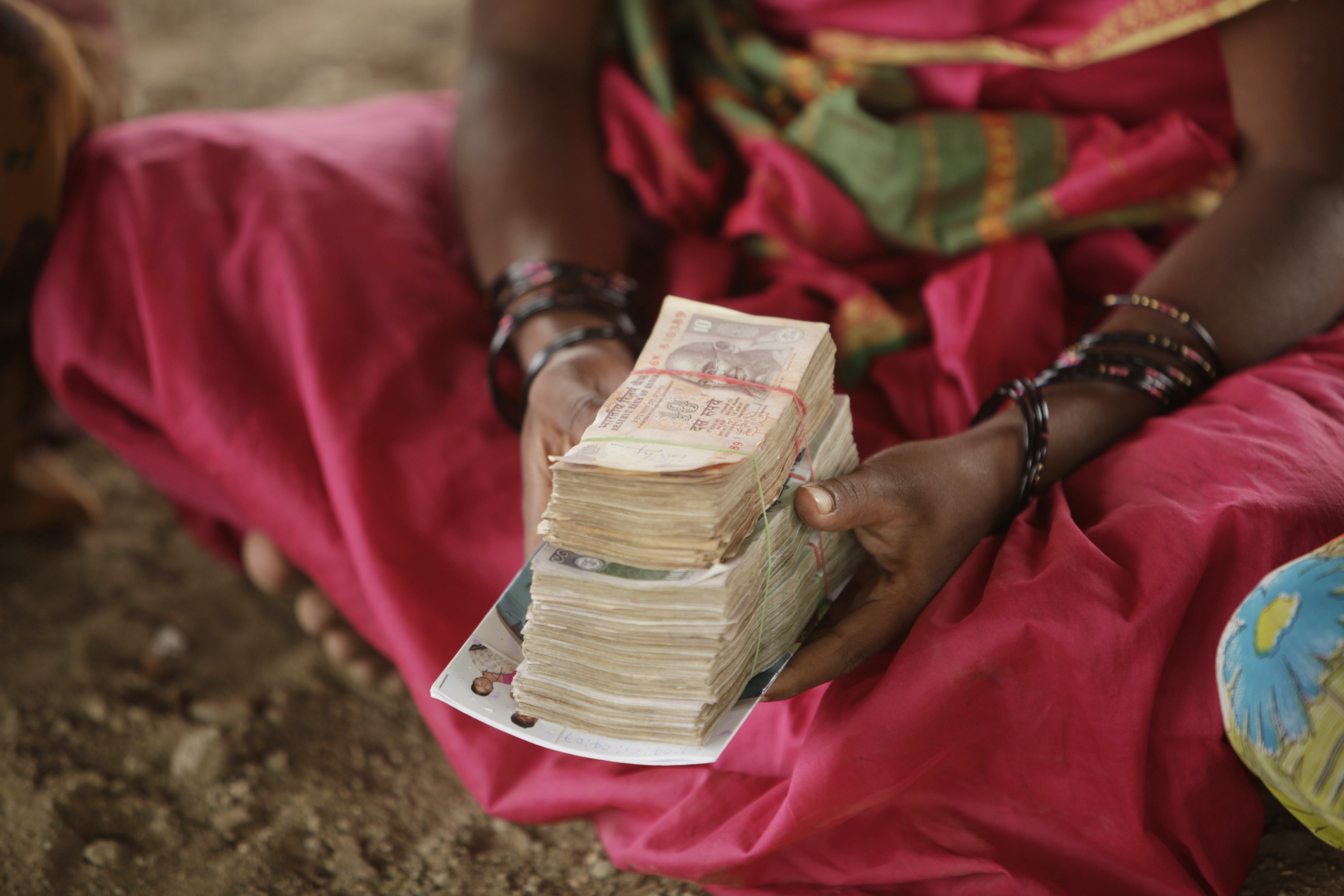
Microfinance lender CreditAccess Grameen Ltd. will launch its three-day initial public offering today as the promoters look to pare part of their stake.
The Bengaluru-based company is looking to raise up to Rs 1,131 crore through the public offer at a price of Rs 418-422 apiece.
The maiden offer, a combination of fresh issue and offer-for-sale, will close on Aug. 10. The lender, promoted by Netherlands-based CreditAccess Asia N V, will use proceeds worth Rs 630 crore from the fresh issue to augment its capital base.
After the share sale, the promoter holding in the non-banking financial company will fall from 98.9 percent to 80.3 percent.
ICICI Securities, Credit Suisse Securities (India), IIFL Holdings and Kotak Mahindra Capital are the book-running lead managers for the offer.
Geographical Presence
The microfinance institution is present in 132 districts across eight states. It has 516 branches and an active customer base of 18.5 lakh. The lender provides micro-loans to women and operates in a joint lending group model.
As much as 86 percent of the company's loan book comes from just two states—Karnataka and Maharashtra. This high geographic concentration exposes the lender to adverse impact of any regional economic slowdown or political unrest like erstwhile SKS Microfinance in Andhra Pradesh.
Financials
The company's assets under management grew sixfold in the last five years (57 percent compounded annual growth rate). Net profit grew at an annualised rate of 65.5 percent over financial years through March 2014-18.
Gross non-performing assets were below 0.1 percent over financial years through March 2014-17 but rose to 1.97 percent in the previous fiscal after demonetisation.
The lender's net interest margin remained at about 12 percent in the financial years 2015-17 and stood at 12.7 percent in 2017-18.
The return on equity, however, declined nearly 800 basis points in the last three years to 11.8 percent as on March 31, 2018.
Valuation And Peer Comparison
The stock will be available at 2.9 times its 2017-18 book value at the upper of the price band on a post-issue basis. Its peer Bharat Financial trades at an FY18 price-to-book value multiple of 5.1 given its higher return of equity at 17 percent. Satin Creditcare trades at 1.7 times its FY18 book value.
Analysts' Take
Antique Broking
- Recommends ‘Avoid'.
- Geographic concentration, lack of technology and people, and its inability to offer beyond joint lending group loans raises questions on long-term competitive positioning.
- Valuations do not leave investors with much margin of safety.
Emkay Global
- Recommends ‘Avoid'.
- Valuations doesn't justify adherent business risks and low returns on equity.
SMC Global
- Recommends ‘Subscribe'.
- While 11.8 percent return on equity for 2017-18 is still sub-optimal compared to some of the large MFIs, the valuation adequately captures this and any improvement in the return on equity will aid further valuations.
Prabhudas Lilladher
- Recommends ‘Subscribe' for long term.
- Expensive valuations and high business concentration risks are key deterrents
- Improvement of return on equity is crucial
- Listing gains may be limited.

-
High US Salaries, No Green Card Certainty: The Financial Calculation Facing Indian H-1B Families

The suspension of PERM processing at eight technology employers does not cancel existing H-1B visas. What it does is force a question many Indian families have been avoiding: is the US salary worth tying your career and family plans to one employer?
-
Swiggy vs Eternal: Food Delivery's Two Rivals Are No Longer In The Same Race
Eternal is building a private AI assistant, dark.ai. Swiggy is still working out how to make Instamart pay, with an operating loss of Rs 895 crore in the July-September quarter while Blinkit stayed profitable.
-
Where You Live Shapes How You Get To Work | The Reason Why
Two-wheelers are the most popular way to get to work in India, accounting for nearly 43% of workplace commutes.
-
Unhedged Position: Can India See An Indonesia-Style Time Correction?
The Nifty is trading below levels it first clocked in 2024. Is there, then, as I have suggested in the headline, potential that the current time correction drags on painfully for the next three-five, even ten years?
-
Navigating Friction And Energy Realities: An Analysis Of Marco Rubio's October Visit To India
Occurring at a critical juncture marked by stalled trade negotiations and escalating geopolitical pressures over global energy supplies, the visit offers a profound window into modern US-India relations.
-
India Exports Capital. Why Not Export Trusteeship?
The big question, then, is whether India can build an institution that global borrowers, investors, banks, and lawyers can trust, even without an Indian connection.
-
France's Economy & Politics Are In Crisis | The Reason Why
Let's look at how the French economy and politics evolved under Nicolas Sarkozy, Franois Hollande and Emmanuel Macron.
-
You May Inherit The Business. You Must Earn Its Credibility.
Succession tests the founder's ability to share authority as much as it tests the next generation's readiness to assume it.
-
Signing Deals Is One Thing; Making Them Work Is Another | The Week In Whys
Sometimes, things don't turn out as planned. Indian companies have lost some bids to rivals, some projects won't produce until 2030.
-
FOMC Wall, PERM Suspension, Hospital Stocks | Talking Points This Week
A PERM suspension would directly affect green-card sponsorship rather than H-1B visas, so the near-term earnings impact could remain relatively limited. The key question is whether this marks a new phase in US scrutiny of Indian IT.









