Chinese Listing Spree Sparks Revival Hopes In Hong Kong Stocks
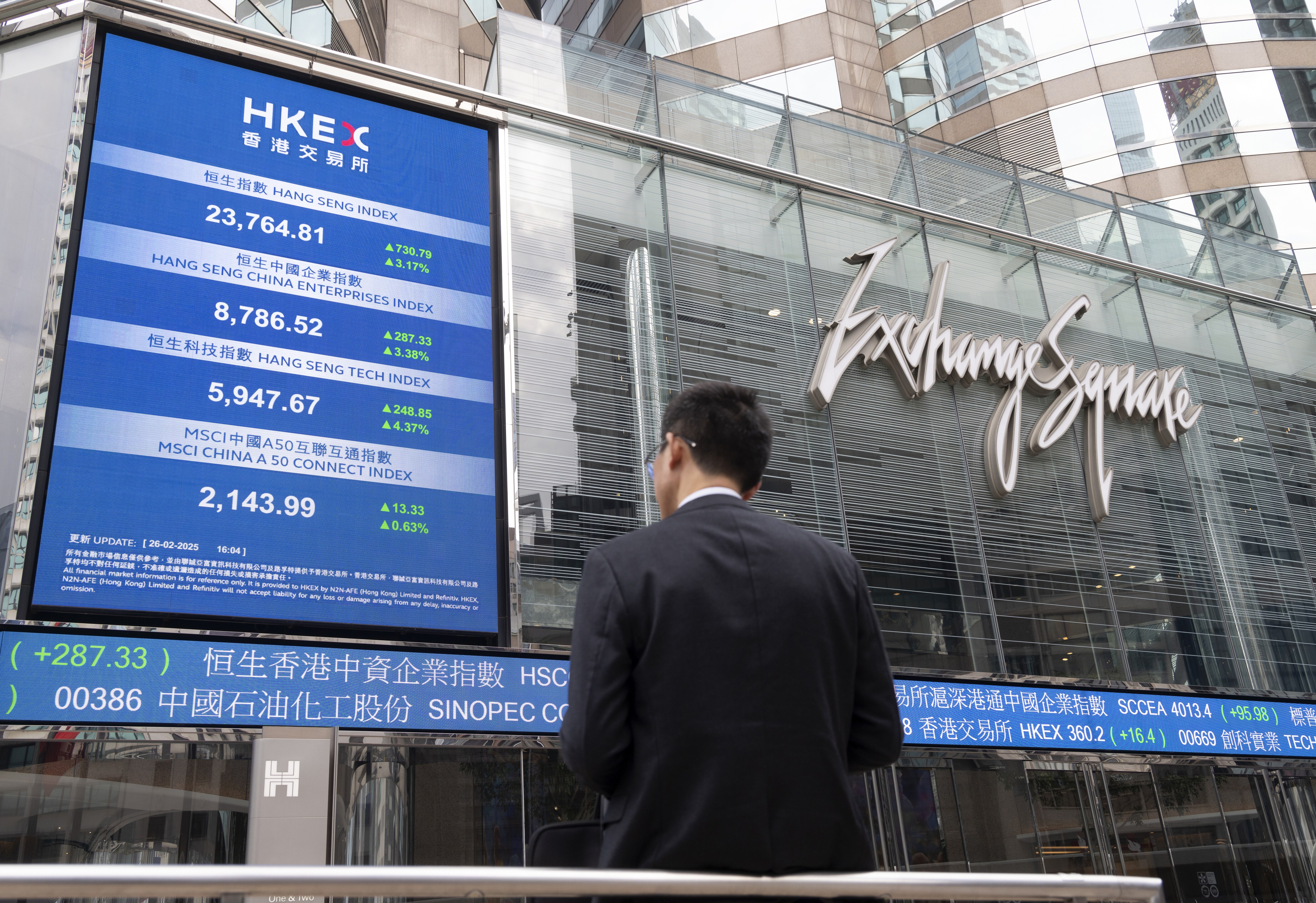
A wave of listings by Chinese companies is expected to reinvigorate trading activity in Hong Kong, with optimism growing that a robust pipeline of debuts will drive the broader stock market higher.
First-time share sales in Hong Kong have raised HK$77 billion ($9.9 billion) this year through May, the most for the period since 2021, buoyed by a blockbuster offering by battery giant Contemporary Amperex Technology Co.
The boom looks set to continue as companies that represent China's industrial ambitions and rising technological capabilities — such as chipmaker Will Semiconductor Co. and luxury carmaker Seres Group Co. — prepare to debut on the Hong Kong exchange.
While there is yet to be a meaningful pickup in turnover, the listings are a welcome development for a market that had been bogged down in recent years by low liquidity and a dearth of prominent new entrants to attract global capital. The Hang Seng Index remains 25% below its 2021 peak despite a 16% gain this year.
“The fundraising rush will be a boon for liquidity and finally make Hong Kong ‘China's Nasdaq,' more so than any of the onshore growth boards, given the quality of the listings,” said Chen Da, founder of Dante Research. The arrival of high-profile Chinese companies, and the trading activity that brings, may revitalize stocks that had fallen into obscurity due to low turnover in the broader market, he said.

Hong Kong has long been a gateway for global investors seeking exposure to mainland Chinese companies, which currently make up 70% of the Hang Seng Index's weighting. While this role has also left the city's stocks vulnerable to China-US tensions, strong performance by recent entrants shows investors believe the rewards of owning a slice of China's new-economy stocks outweigh the risks of volatility.
Share prices for bubble tea makers Mixue Group and Guming Holdings Ltd., and toy manufacturer Bloks Group Ltd., have more than doubled since their Hong Kong debuts this year.
The offerings are “fundamentally reshaping the DNA of the market, representing a strategic upgrade for the city's market,” said Yang Ruyi, fund manager at Shanghai Prospect Investment Management Co. “Hong Kong is re-branding from merely a China offshore market into a globally-watched benchmark pricing the new economy.”
Tech stocks and those embodying new consumption trends could make up 50% of the weightings of the exchange's constituents in the coming years, she expected.
To some market watchers, the burst of activity is evoking memories of the IPO boom in the early 2000s that laid the groundwork for a near-300% rally in the Hang Seng Index over the four years through 2007. Zeng Wenkai, a fund manager at Shengqi Asset Management, draws parallels to the momentum that followed Tencent Holdings Ltd.'s 2004 debut, and sees valuations increasing by 20% across the board over the next year.

In another potential boost, fast-fashion retailer Shein Group Ltd. is considering switching its planned initial public offering to Hong Kong from London. The bullish sentiment is evident in the gains in Hong Kong Exchanges & Clearing Ltd., whose stock has rallied 36% this year.
IPO proceeds could reach HK$160 billion — or $20 billion — this year and put Hong Kong back at the top perch globally, according to estimates by CGS International. Bing Yuan, a fund manager at Edmond de Rothschild Asset Management, said stellar listings by the likes of CATL and Jiangsu Hengrui Pharmaceuticals Co. suggest companies with global footprints and strong governance standards tend to attract more interest from international investors.
Despite the budding optimism, a meaningful boost to liquidity and a shift in global funds' perception of Hong Kong as an attractive destination may take time to materialize. There is also the risk of new listings diverting demand away from existing stocks and somewhat offsetting the boost to the broader market.

There's little doubt though that a broader revaluation is underway. The Hang Seng Index is among Asia's best performers this year, thanks to an earlier rally driven by DeepSeek's artificial intelligence breakthrough and Beijing's economic support. The Hong Kong benchmark now trades at 10.3 times forward earnings estimates, above a three-year average ratio at around nine.
“The inclusion of H-share listings of A-share companies in major MSCI indexes could serve as a meaningful catalyst for both passive and active capital flows into Hong Kong,” said Gary Tan, portfolio manager at Allspring Global Investments. “This is particularly significant for sectors such as tech and consumer, which remain underrepresented in Hong Kong relative to their growing importance in China's economic future.”

-
Talking Points This Week: Tech Nerves, FII Buying, And A Faraway Banking Shock

The global markets are not shining this Diwali. The exception in the large markets is, India.
-
Midterm Rally Lasted A Day. The Hard Reality Of A Divided US May Last Two Years | Opinion
Between a contested AI boom, a debt ceiling that arrives in 2027 and a president with every incentive to act alone, the next two years may prove more volatile than the first day's rally suggests.
-
Blue Wave Will Derail the AI Trade but Won't Dismantle the AI Era | Unhedged Position
The Democrats' sweep of the US Congress will see politics collide with economic forces both over the long and short term.
-
It's Time To Take The GST Council's Bet On Trust Global
Payment records can prove India's services exports, and clear, proportionate rules can bring foreign digital sellers into the tax net.
-
Opinion | India at 38: From Innovation Overperformer to Innovation Powerhouse
India now has 453 VC-backed deep science startups, 18 of them late-stage, after 117 percent growth since 2020. Laurus Labs, at USD 9.3 billion, is the most valuable deep science company in any middle-income economy outside China.
-
Navigating Energy Crossroads: S Jaishankar's Call For Diversified Supply Chains At G20 Ministerial Meeting
As geopolitical fault lines continue to test maritime trade routes and commodity flows, Jaishankar's message remains pertinent: true economic resilience requires open markets, protected transit lines, and a genuine commitment to multilateral cooperation rather than coercion.
-
Indians Are Travelling, But Not Every Journey Is A Holiday | The Week In Whys
Pilgrims, patients and working women are the real travellers, and the system hasn't quite caught up with them.
-
Getting To Work Costs Women More | The Reason Why
It is not just about women paying more than men. It is about women paying much more in cities than in villages.
-
AI Bias In Investing Cannot Be Eliminated, But It Can Be Governed
Framing is a particularly important example as identical financial information presented in terms of gains rather than losses can lead an LLM to reach a different assessment.









