Carl Icahn’s Wealth Plunges $10 Billion On Hindenburg Short-Seller Report
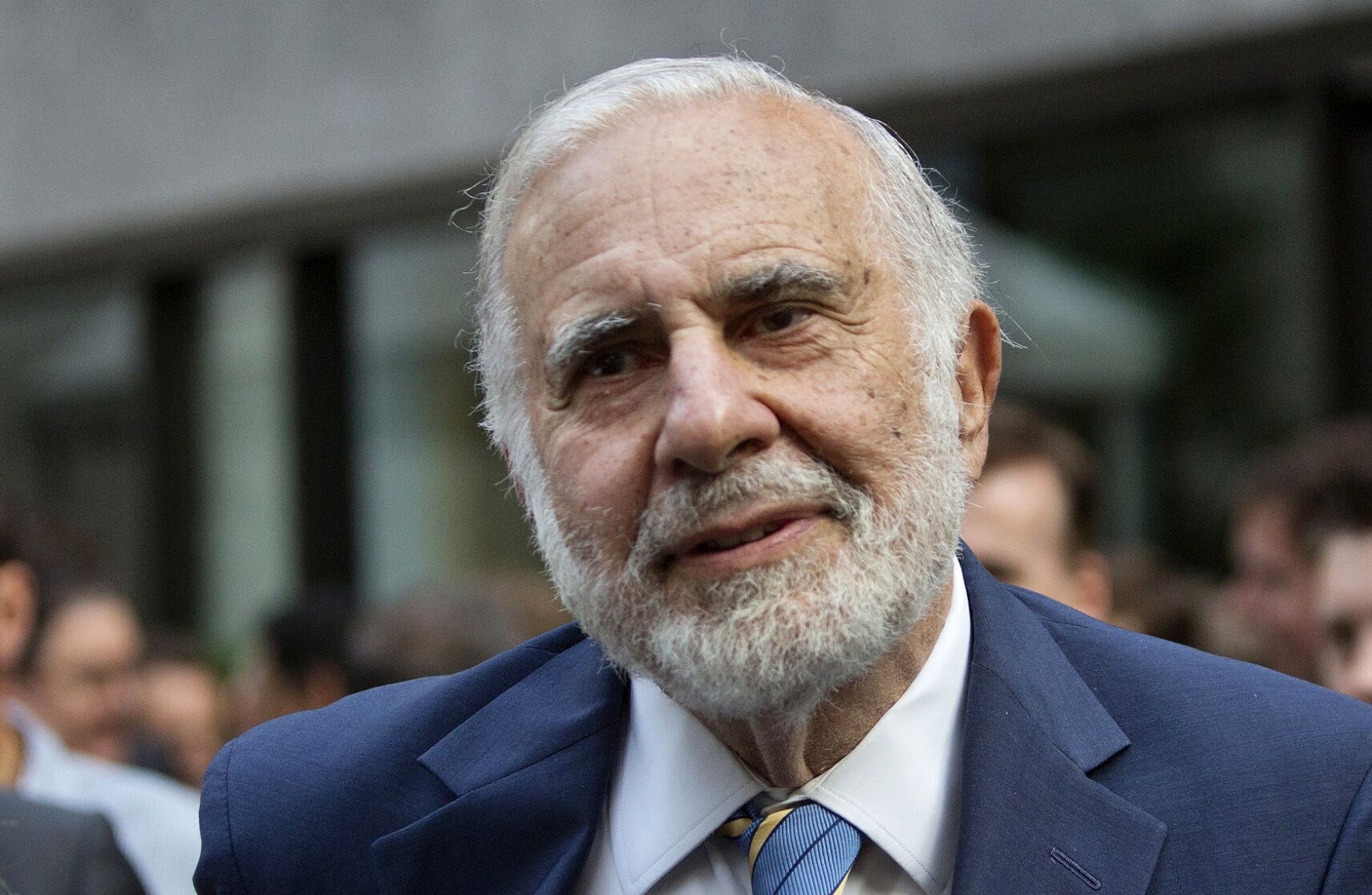
(Bloomberg) -- Corporate activist Carl Icahn's fortune tumbled more than $10 billion Tuesday after short-seller Hindenburg Research accused him of using a “ponzi-like” economic structure at his investment company.
Icahn Enterprises L.P., his publicly traded limited partnership that operates as a holding company, fell by 20% — the most on record — erasing $3.1 billion from his fortune. Hindenburg also detailed the investor's margin loan collateralized by his stake in the company, which was not previously accounted for by the Bloomberg Billionaires Index. That lopped off another $7.3 billion from the net worth calculation.
All told, Icahn's fortune sank by an unprecedented 41% to $14.6 billion, according to the wealth index, dropping him from the world's 58th-richest person to the 119th.

Icahn, 87, is the latest billionaire to be targeted by Hindenburg this year after the New York-based short-seller went after India's Gautam Adani and Block Inc.'s Jack Dorsey. He owns more than 85% of Icahn Enterprises's units through various entities, making up the bulk of his fortune.
Read more: Icahn Enterprises Plunge Just One of Hindenburg's Many Hits
Hindenburg said the company, with investments in funds managed by Icahn and controlling stakes in businesses in the energy, automotive, food and other sectors, was over-leveraged and traded at an extreme premium to its net asset value. Hindenburg also questioned how the company valued some of its investments.
In a statement, Icahn called the report “self-serving” and “intended solely to generate profits on Hindenburg's short position.”

Icahn has boosted his holding in Icahn Enterprises by taking dividends in the form of additional units. Before Tuesday's decline, his stake was worth $15.7 billion compared with $8.4 billion in 2017, even as the value of its shares declined 4.9%.
Other unit holders received their dividends in cash, making the company attractive to retail investors, Hindenburg said. That was only possible because of Icahn 's decision to take his payment in units, since the company was consistently operating with negative cash flows, the short-seller said.
Icahn began reporting a margin loan collatralized by his stake in the company beginning in 2021, at a time when he had about 65% of his shares pledged. He boosted the number last year, and as of February had more than 181 million shares worth $9.2 billion backing the loan, according to the company's 2022 annual report.

Margin loans involve lending that's collateralized by the value of the underlying shares. If the value of the stock decline, lenders can request additional collateral or for the loan to be repaid, and have the ability to seize and sell the shares if a borrower fails to do so.
Hindenburg criticized Icahn for failing to disclose how much he'd borrowed, the interest rate or the loan-to-value maintenance ratio associated with the margin loan.
In its annual report, Icahn Enterprises said, “Mr. Icahn has advised that he and his affiliates have sufficient additional assets to satisfy any obligations pursuant to these loans without recourse to the depositary units, he has no need or intention to allow foreclosure on such collateral, and that he is current on all principal and interest payments with respect to the loans.”
Icahn's second-largest asset is his stake in his investment funds, which he uses to make activist bets. Icahn Enterprises, Carl Icahn and his son Brett are the only investors in the funds.
At the end of last year Icahn had $4.9 billion invested. Hindenburg calculated that the fund could be down about 17% this year, based on an estimate of the performance of its long and short positions.
Hindenburg's attacks on the companies of Adani and Dorsey caused drops in their fortunes this year of $58 billion and $500 million, respectively.
--With assistance from Jack Witzig.
More stories like this are available on bloomberg.com
©2023 Bloomberg L.P.

-
Ten Things I Learnt This Samvat

Patience can be a trap. Cheap stocks can stay cheap. Leverage can wipe you out. What did Samvat 2082 teach us? Niraj Shah writes on 10 lessons from the year gone by.
-
Talking Points This Week: Tech Nerves, FII Buying, And A Faraway Banking Shock
The global markets are not shining this Diwali. The exception in the large markets is, India.
-
Midterm Rally Lasted A Day. The Hard Reality Of A Divided US May Last Two Years | Opinion
Between a contested AI boom, a debt ceiling that arrives in 2027 and a president with every incentive to act alone, the next two years may prove more volatile than the first day's rally suggests.
-
Blue Wave Will Derail the AI Trade but Won't Dismantle the AI Era | Unhedged Position
The Democrats' sweep of the US Congress will see politics collide with economic forces both over the long and short term.
-
It's Time To Take The GST Council's Bet On Trust Global
Payment records can prove India's services exports, and clear, proportionate rules can bring foreign digital sellers into the tax net.
-
Opinion | India at 38: From Innovation Overperformer to Innovation Powerhouse
India now has 453 VC-backed deep science startups, 18 of them late-stage, after 117 percent growth since 2020. Laurus Labs, at USD 9.3 billion, is the most valuable deep science company in any middle-income economy outside China.
-
Navigating Energy Crossroads: S Jaishankar's Call For Diversified Supply Chains At G20 Ministerial Meeting
As geopolitical fault lines continue to test maritime trade routes and commodity flows, Jaishankar's message remains pertinent: true economic resilience requires open markets, protected transit lines, and a genuine commitment to multilateral cooperation rather than coercion.
-
Indians Are Travelling, But Not Every Journey Is A Holiday | The Week In Whys
Pilgrims, patients and working women are the real travellers, and the system hasn't quite caught up with them.
-
Getting To Work Costs Women More | The Reason Why
It is not just about women paying more than men. It is about women paying much more in cities than in villages.









