Bond(s) To The Rescue Of Indian Banks
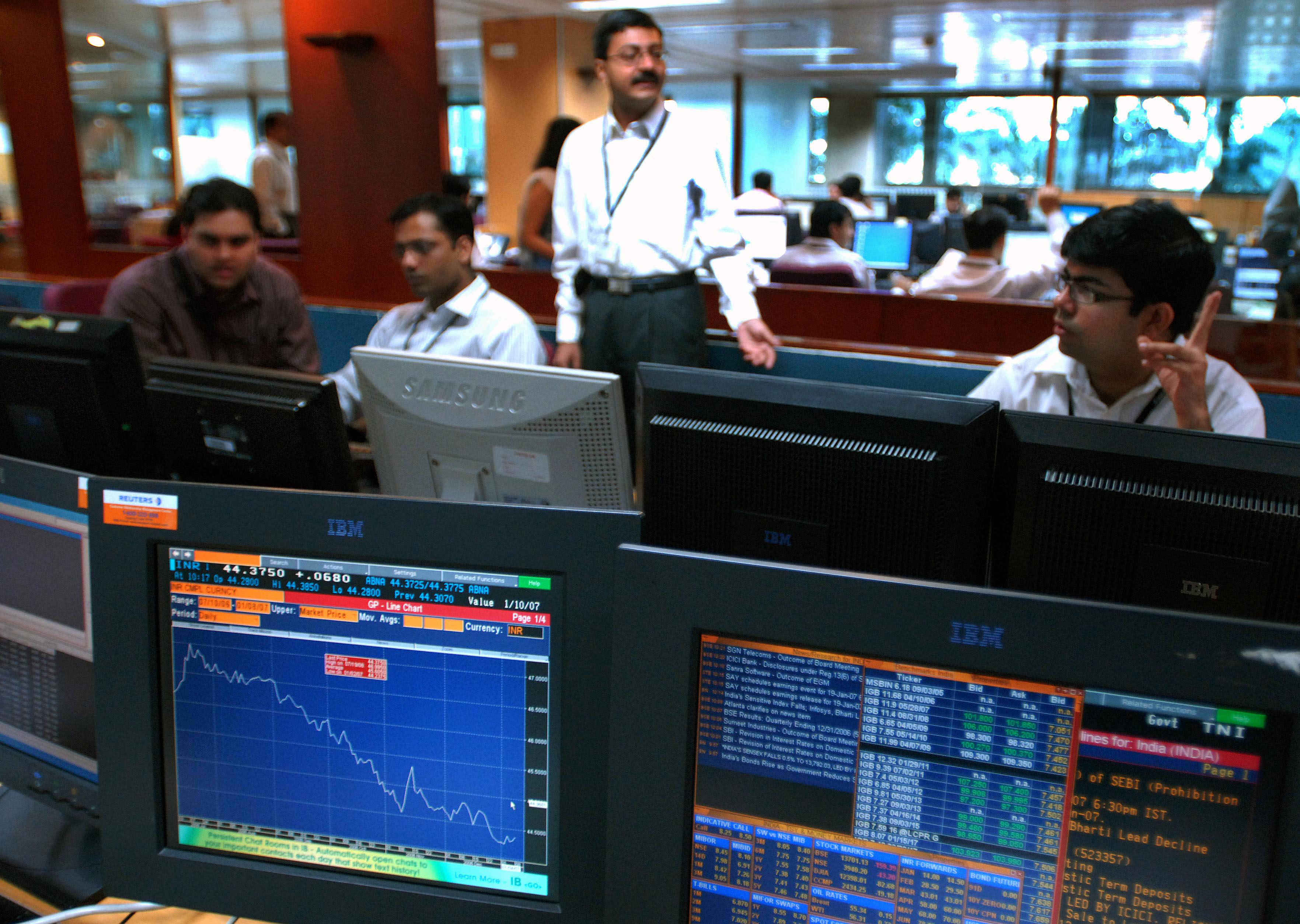
Indian banks, weighed down by bad loans and large provisioning requirements, may see some relief this quarter as a drop in bond yields comes to the rescue of otherwise strained balancesheets.
Government banks and private corporate lenders are expected to report weak asset quality trends in the second quarter of fiscal 2017 as the bad loan clean-up continues. Gross non-performing assets (NPAs), which hit Rs 6.3 lakh crore at the end of June, may rise further but at a slower pace, say analysts. However, banks will need to keep setting aside additional provisions as they try and strengthen their balancesheets by March 2017 – a deadline set by the Reserve Bank of India.
Bank earnings will likely decline 15 percent year-on-year as banks make high provisions for bad loans, said Kotak Institutional Equities in their earnings preview report dated October 5. “We see public banks reporting lower slippages quarter-on-quarter, but high provisions will continue. Axis Bank/ICICI Bank will likely see very weak results on slippages,”said the brokerage house.
Ambit Capital shared the view and said that the addition to gross NPAs will be low this quarter but credit costs will remain high.
After a 400 basis point increase in gross NPAs (to 8.6 percent) between Q1FY16 and Q1FY17, we expect gross NPA to rise by 10-20 basis points in Q2FY17. However the key drag on credit cost would be rising provisions/write-offs in the existing pool of NPAs.Ambit Capital Report
The aggregate net interest income of ten widely tracked private and government-owned banks is expected to grow 4.4 percent in Q2FY17, show estimates compiled from Bloomberg. However, the aggregate net profit of this set is expected to decline by 3.1 percent as compared to the corresponding quarter last year, dragged by a 79.5 percent rise in provisions.
The ten banks include HDFC Bank, ICICI Bank, Axis Bank, Kotak Mahindra Bank, Yes Bank, State Bank of India, Canara Bank, Bank of Baroda, Punjab National Bank and Bank of India.
 (002).png)
Treasury Gains To The Rescue
What will aid banks this quarter is the potential for large treasury gains emerging from a fall in bond yields. Government bond yields which started declining in mid-June continued to fall through the second quarter.
The benchmark 10-year bond yields dropped by 63 basis points in the July to September 2016 period. Since most banks are carrying excess government securities on their books, they could have chosen to book profits as bond prices rose. Bond prices and bond yields move inversely.
Bond gains and recovery/upgrades may be ‘wild card' in Q2.Rajeev Varma, Research Analyst, Bank of America Merrill Lynch

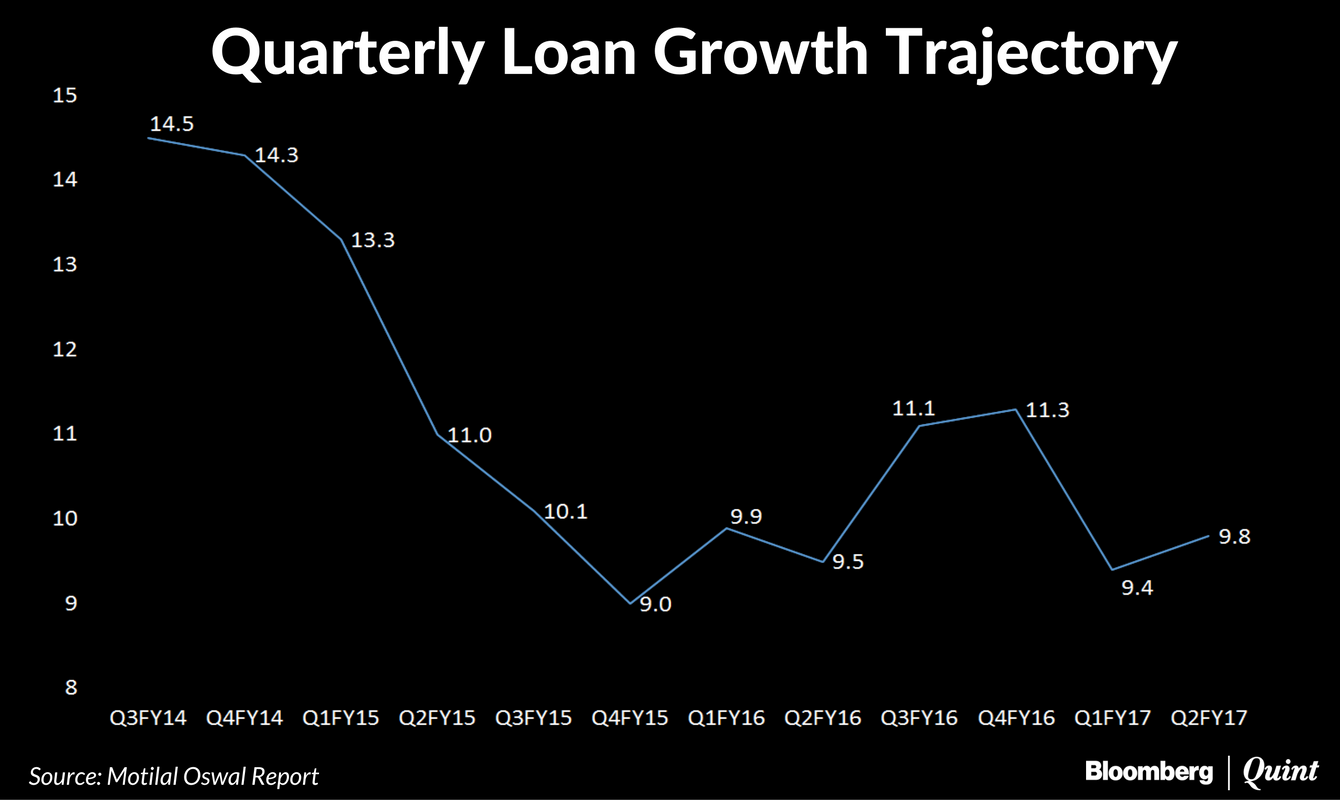
Operationally, the quarter may be a muted one with retail credit driving growth for most lenders. Banking system credit grew in single digits at 9.8 percent in the second quarter due to the absence of large investment demand for credit.
Smaller government lenders have seen a contraction in their loan book due to lack of adequate capital even as private lenders have managed to grow their portfolio by focusing on refinancing and on retail credit.
Most analysts expect lending margins to remain stable during the quarter.
What To Expect From The Large Banks?
Government-owned banks and private corporate lenders like ICICI Bank and Axis Bank may report another weak quarter while HDFC Bank may continue to outperform.
State Bank of India, which reported a 31 percent decline in net profit in the first quarter, had guided towards a slower build-up of bad loans during the rest of fiscal year 2017. Analysts will be watching to see if this guidance holds. In comments made during the quarter, Chairman Arundhati Bhattachaya had also said that treasury profits can help reduce the pressure on bank balancesheets.
Bank of Baroda is expected to see a three-fold jump in net profit over last year as a sharp fall in fresh slippages could lead to lower provisions. Bank of Baroda has also set aside excess provisions in previous quarters to strengthen its balancesheet, which may allow the bank to book higher profits this time around.
Investors will also watch three smaller government banks – Indian Overseas Bank, United Bank of India and UCO Bank – for any further rise in bad loans. IOB has the highest gross NPA ratio in the industry at over 20 percent. UCO Bank and United Bank have bad loan ratios of 17 percent and 15 percent respectively.
.png)
Qualitatively, analysts point to the following factors to watch for individual banks:
HDFC Bank: Performance of retail loan portfolio and trends in digital banking.
ICICI Bank: Movement of watch-list accounts, impact of stake sale in various ventures and trends on restructured loans.
Axis Bank: Quantum of slippages from the stressed asset watch list which was pegged at Rs 20,295 crores as on 30 June, 2016.
State Bank of India: Asset quality performance, update on stake sales in non-core assets and merger of associate banks. SBI subsidiaries are expected to see a rise in NPAs as classification is brought on par with parent's standards.
Punjab National Bank: Outlook on asset quality as net stressed loans remain among the highest in the industry, capital raising plans and sale of non-core assets.
Bank of Baroda: Any further build-up of stress, particularly in the international book.
Bank of India: Addition to gross NPAs along with recoveries and loans rescheduled under the 5:25 scheme.
Here's a quick look at the NPA trends of these banks over the last four quarters.
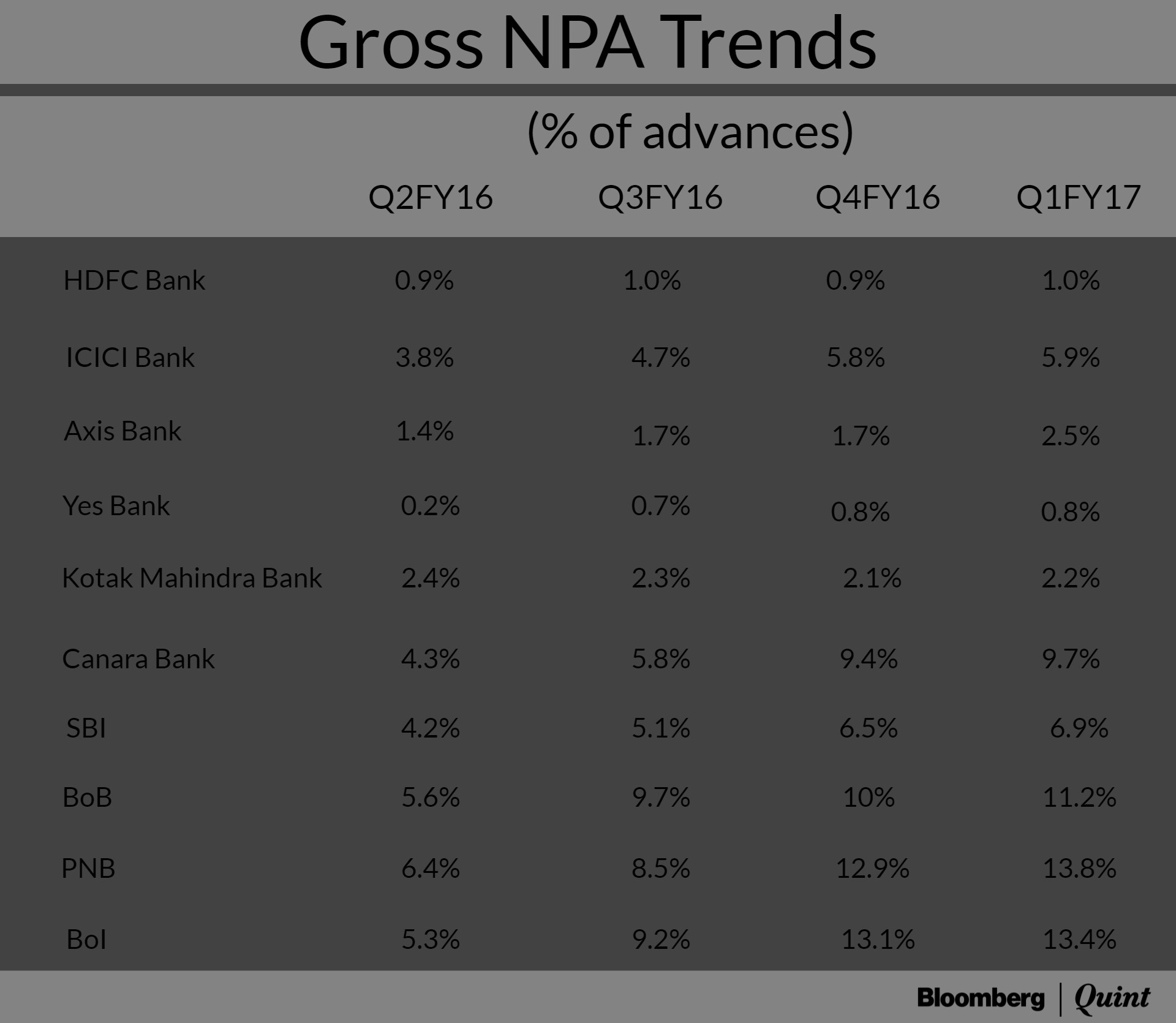
These expectations have been compiled from reports of HSBC, Morgan Stanley, Kotak , Ambit and Motilal Oswal.

-
High US Salaries, No Green Card Certainty: The Financial Calculation Facing Indian H-1B Families

The suspension of PERM processing at eight technology employers does not cancel existing H-1B visas. What it does is force a question many Indian families have been avoiding: is the US salary worth tying your career and family plans to one employer?
-
Unhedged Position: Can India See An Indonesia-Style Time Correction?
The Nifty is trading below levels it first clocked in 2024. Is there, then, as I have suggested in the headline, potential that the current time correction drags on painfully for the next three-five, even ten years?
-
Navigating Friction And Energy Realities: An Analysis Of Marco Rubio's October Visit To India
Occurring at a critical juncture marked by stalled trade negotiations and escalating geopolitical pressures over global energy supplies, the visit offers a profound window into modern US-India relations.
-
India Exports Capital. Why Not Export Trusteeship?
The big question, then, is whether India can build an institution that global borrowers, investors, banks, and lawyers can trust, even without an Indian connection.
-
France's Economy & Politics Are In Crisis | The Reason Why
Let's look at how the French economy and politics evolved under Nicolas Sarkozy, Franois Hollande and Emmanuel Macron.
-
You May Inherit The Business. You Must Earn Its Credibility.
Succession tests the founder's ability to share authority as much as it tests the next generation's readiness to assume it.
-
Signing Deals Is One Thing; Making Them Work Is Another | The Week In Whys
Sometimes, things don't turn out as planned. Indian companies have lost some bids to rivals, some projects won't produce until 2030.
-
FOMC Wall, PERM Suspension, Hospital Stocks | Talking Points This Week
A PERM suspension would directly affect green-card sponsorship rather than H-1B visas, so the near-term earnings impact could remain relatively limited. The key question is whether this marks a new phase in US scrutiny of Indian IT.
-
Everything, Everywhere, All At Once: Dalal Street's Week To Forget | Joining The Dots
Visa curbs, a Starlink spat and cancer drug caps: what connects this week's shocks for Indian markets
-
India Is Going Abroad For Critical Minerals. But It May Take Years To Pay Off | The Reason Why
Although India's steps are in the right direction, they remain modest compared with India's growing dependence.









