Bitcoin Outshines Gold, Tech Stocks In April Amid Tariff Turmoil
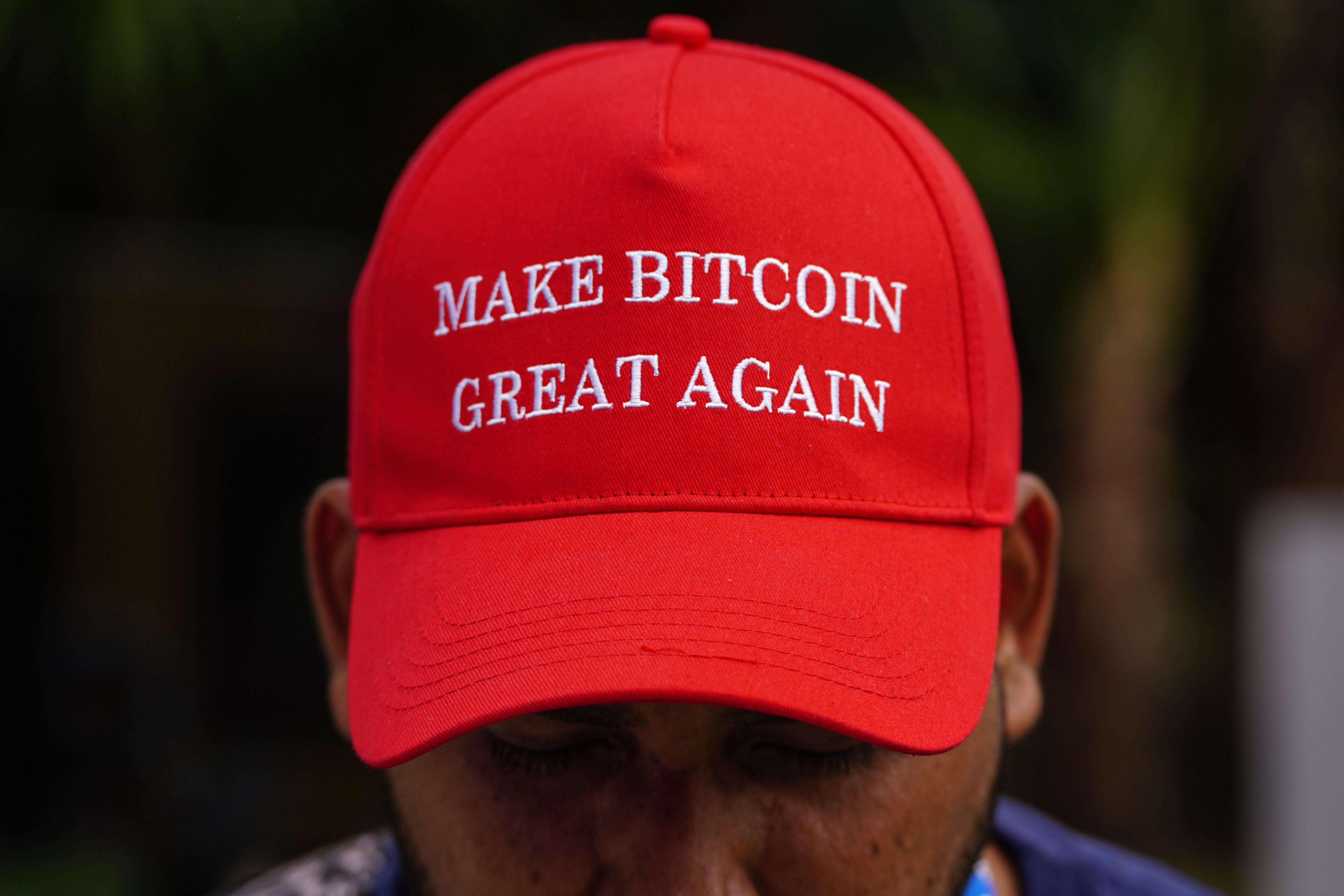
Bitcoin has surged past gold and tech stocks alike in April, rekindling the debate over whether the largest cryptocurrency serves as a refuge from market turmoil such as the strife triggered by sweeping US tariffs.
President Donald Trump's announcement of reciprocal tariffs on April 2 — what he referred to as “Liberation Day” — sent shockwaves across global markets. The Nasdaq Composite is down 0.2% since the day before, while the Bloomberg Dollar Index slipped around 4%. Gold, a go-to refuge in periods of uncertainty, rallied to a record high of $3,500 an ounce before paring some gains, to return 6.1%.
Bitcoin, however, posted a roughly 12% increase since April 1, with advocates saying it acted as an alternative hedge amid growing concerns over US fiscal policy and institutional stability.

The initial reaction to the tariffs saw Bitcoin move lower alongside risk assets, mirroring sharp declines in US equities. But the cryptocurrency soon diverged, rallying sharply as long-dated Treasury yields climbed and investors sought protection from escalating policy risks. Rising concerns about the independence of the Federal Reserve and the credibility of US economic policy has led investors seek refuge in the Swiss Franc, Euro, Gold and and finally trickling down to Bitcoin.
David Lawant, head of research at FalconX, cautioned against reading too much into Bitcoin's recent divergence from risk assets, noting it's based on just a few trading sessions. “Decoupling” implies a breakdown in correlation, but Bitcoin's 30-day correlation with major equity indices is still around 0.6 — far from low, he said.
What stands out more, Lawant added, is Bitcoin's unusually low beta during recent market stress, suggesting investors are beginning to view it as a more mature, long-term asset.
In April, investors have poured about $2.9 billion into US-listed Bitcoin spot exchange-traded funds, marking a sharp reversal from March and February, when the funds saw net outflows of $811 million and $3.6 billion, respectively.

Geoff Kendrick, global head of digital assets research at Standard Chartered, said in a recent note that he expects a “strategic asset reallocation away from US assets” to fuel Bitcoin's next rally. He views Bitcoin as a hedge against risks to the financial system, noting it may be “more effective” than gold due to its “decentralized nature.”
According to Kendrick, Bitcoin's defensive properties are becoming increasingly relevant as investors confront a range of risks, from private-sector shocks like the collapse of Silicon Valley Bank in 2023 to government-sector threats such as political interference in the Fed.

-
Talking Points This Week: Tech Nerves, FII Buying, And A Faraway Banking Shock

The global markets are not shining this Diwali. The exception in the large markets is, India.
-
Midterm Rally Lasted A Day. The Hard Reality Of A Divided US May Last Two Years | Opinion
Between a contested AI boom, a debt ceiling that arrives in 2027 and a president with every incentive to act alone, the next two years may prove more volatile than the first day's rally suggests.
-
Blue Wave Will Derail the AI Trade but Won't Dismantle the AI Era | Unhedged Position
The Democrats' sweep of the US Congress will see politics collide with economic forces both over the long and short term.
-
It's Time To Take The GST Council's Bet On Trust Global
Payment records can prove India's services exports, and clear, proportionate rules can bring foreign digital sellers into the tax net.
-
Opinion | India at 38: From Innovation Overperformer to Innovation Powerhouse
India now has 453 VC-backed deep science startups, 18 of them late-stage, after 117 percent growth since 2020. Laurus Labs, at USD 9.3 billion, is the most valuable deep science company in any middle-income economy outside China.
-
Navigating Energy Crossroads: S Jaishankar's Call For Diversified Supply Chains At G20 Ministerial Meeting
As geopolitical fault lines continue to test maritime trade routes and commodity flows, Jaishankar's message remains pertinent: true economic resilience requires open markets, protected transit lines, and a genuine commitment to multilateral cooperation rather than coercion.
-
Indians Are Travelling, But Not Every Journey Is A Holiday | The Week In Whys
Pilgrims, patients and working women are the real travellers, and the system hasn't quite caught up with them.
-
Getting To Work Costs Women More | The Reason Why
It is not just about women paying more than men. It is about women paying much more in cities than in villages.
-
AI Bias In Investing Cannot Be Eliminated, But It Can Be Governed
Framing is a particularly important example as identical financial information presented in terms of gains rather than losses can lead an LLM to reach a different assessment.









