Bitcoin Heading For Worst Month Since Crypto Collapse Of 2022
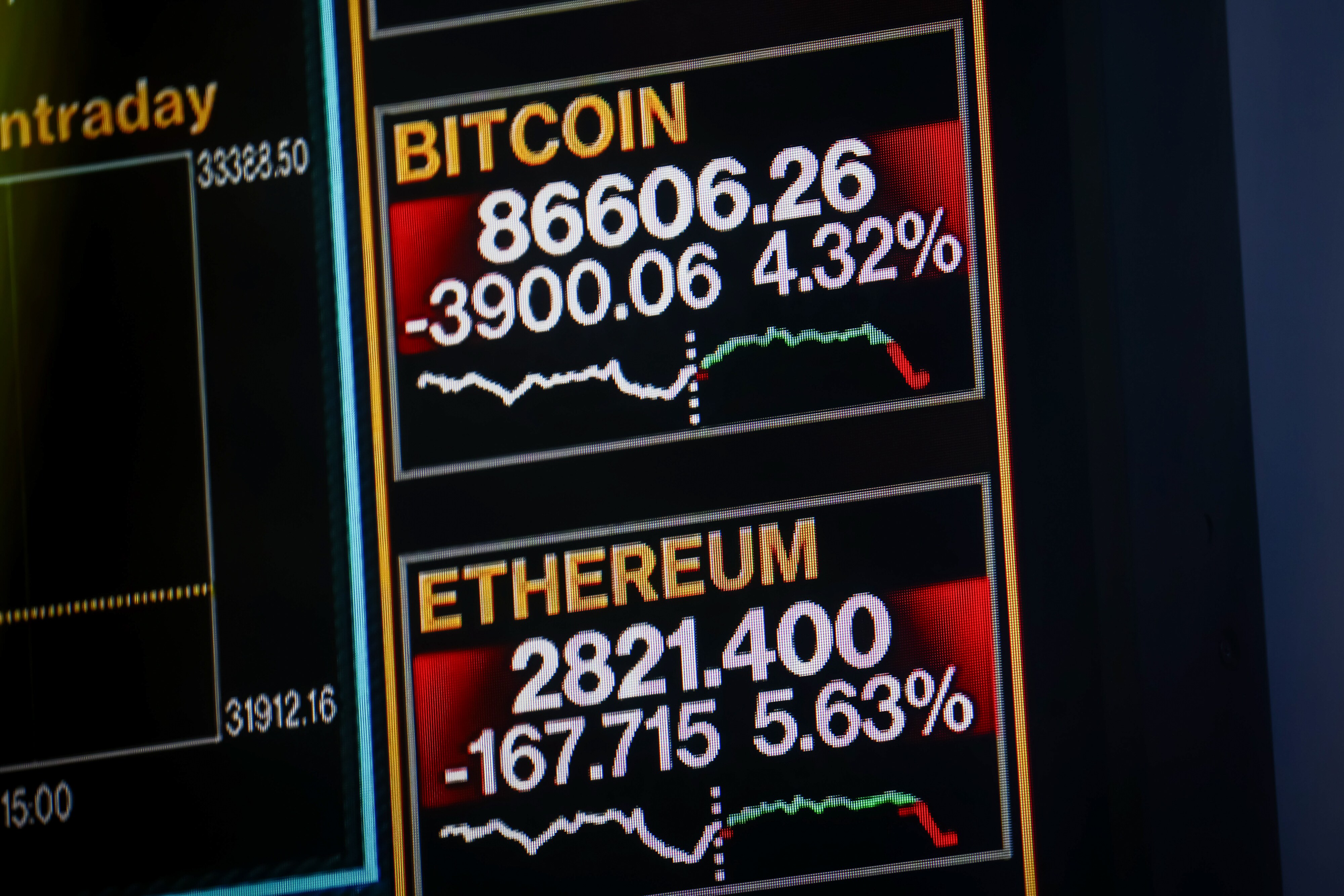
Bitcoin is on track for its worst monthly performance since a string of corporate collapses rocked the wider crypto sector in 2022.
The largest cryptocurrency slid as much as 7.6% to $80,553 on Friday. Runner-up Ether fell as much as 8.9% to below $2,700 and a host of smaller tokens nursed similar declines. The total market value of virtual coins dropped below $3 trillion for the first time since April, data from CoinGecko show.
Bitcoin has now shed about a quarter of its value in November, the most for a single month since June 2022, according to data compiled by Bloomberg. The implosion of Do Kwon's TerraUSD stablecoin project in May of that year sparked a daisy chain of corporate failures that culminated in the downfall of Sam Bankman-Fried's FTX exchange.
Despite a pro-crypto White House under US President Donald Trump and surging institutional adoption, Bitcoin has plummeted over 30% since rocketing to a record in early October. The rout follows a crippling bout of liquidations on Oct. 10 that wiped out $19 billion in leveraged token bets, and in turn erased roughly $1.5 trillion from the combined market value of all cryptocurrencies.

The selling pressure has intensified in the past 24 hours, with a further $2 billion in leveraged positions liquidated, according to data from CoinGlass.
The broader market backdrop has done little to help. US stocks, which had rallied on renewed enthusiasm for artificial intelligence after upbeat earnings from Nvidia Corp., surrendered gains late Thursday amid concerns over stretched valuations and doubts about a Federal Reserve rate cut in December.
“Sentiment across the board is incredibly poor. There appears to be a forced seller in the market and it is unclear how deep this goes,” said Pratik Kala, portfolio manager at Australia-based hedge fund Apollo Crypto.
A crypto wallet labeled “Owen Gunden” that's held Bitcoin since 2011 started selling a total $1.3 billion worth of the token in late October, and divested its last Bitcoin on Thursday, according to an X post from blockchain researcher Arkham Intelligence.
A gauge of crypto investor sentiment that measures factors such as volatility, momentum and demand also hits its lowest level since the 2022 meltdown. The index, compiled by Coinglass, is currently indicating “extreme fear” among traders. It stood at 94 just after Trump won the presidential election just over a year ago.

Institutions appear reluctant to buy into the weakness. A group of 12 US-listed Bitcoin exchange-traded funds saw $903 million in net outflows on Thursday, their second-largest single-day redemption since debuting in January 2024. Open interest in perpetual futures has fallen 35% from its October peak of $94 billion.
Tony Sycamore, analyst at IG Australia, said in a note that the market “may also be seeking to test Strategy's pain threshold” — a reference to the original Bitcoin hoarder run by Michael Saylor. Strategy Inc.'s mNAV — ratio of enterprise value to Bitcoin holdings — has collapsed to just over 1.2.
In a note this week, analysts at JPMorgan Chase & Co. warned that Strategy could lose its place in benchmarks like the MSCI USA and Nasdaq 100. A decision is expected by Jan. 15.
Copycats that attempted to replicate Saylor's crypto hoarding strategy this year are also under pressure, with companies such as Sequans Communications, ETHZilla and FG Nexus selling some of their holdings to fund share buybacks aimed at supporting their declining stock prices.

Bitcoin logged its 11th consecutive lower low on Friday, the longest such stretch since 2010, according to data analyzed by Bloomberg.


-
High US Salaries, No Green Card Certainty: The Financial Calculation Facing Indian H-1B Families

The suspension of PERM processing at eight technology employers does not cancel existing H-1B visas. What it does is force a question many Indian families have been avoiding: is the US salary worth tying your career and family plans to one employer?
-
Swiggy vs Eternal: Food Delivery's Two Rivals Are No Longer In The Same Race
Eternal is building a private AI assistant, dark.ai. Swiggy is still working out how to make Instamart pay, with an operating loss of Rs 895 crore in the July-September quarter while Blinkit stayed profitable.
-
Where You Live Shapes How You Get To Work | The Reason Why
Two-wheelers are the most popular way to get to work in India, accounting for nearly 43% of workplace commutes.
-
Unhedged Position: Can India See An Indonesia-Style Time Correction?
The Nifty is trading below levels it first clocked in 2024. Is there, then, as I have suggested in the headline, potential that the current time correction drags on painfully for the next three-five, even ten years?
-
Navigating Friction And Energy Realities: An Analysis Of Marco Rubio's October Visit To India
Occurring at a critical juncture marked by stalled trade negotiations and escalating geopolitical pressures over global energy supplies, the visit offers a profound window into modern US-India relations.
-
India Exports Capital. Why Not Export Trusteeship?
The big question, then, is whether India can build an institution that global borrowers, investors, banks, and lawyers can trust, even without an Indian connection.
-
France's Economy & Politics Are In Crisis | The Reason Why
Let's look at how the French economy and politics evolved under Nicolas Sarkozy, Franois Hollande and Emmanuel Macron.
-
You May Inherit The Business. You Must Earn Its Credibility.
Succession tests the founder's ability to share authority as much as it tests the next generation's readiness to assume it.
-
Signing Deals Is One Thing; Making Them Work Is Another | The Week In Whys
Sometimes, things don't turn out as planned. Indian companies have lost some bids to rivals, some projects won't produce until 2030.
-
FOMC Wall, PERM Suspension, Hospital Stocks | Talking Points This Week
A PERM suspension would directly affect green-card sponsorship rather than H-1B visas, so the near-term earnings impact could remain relatively limited. The key question is whether this marks a new phase in US scrutiny of Indian IT.









