Bitcoin Sags After its Longest Streak of Monthly Gains Since 2021

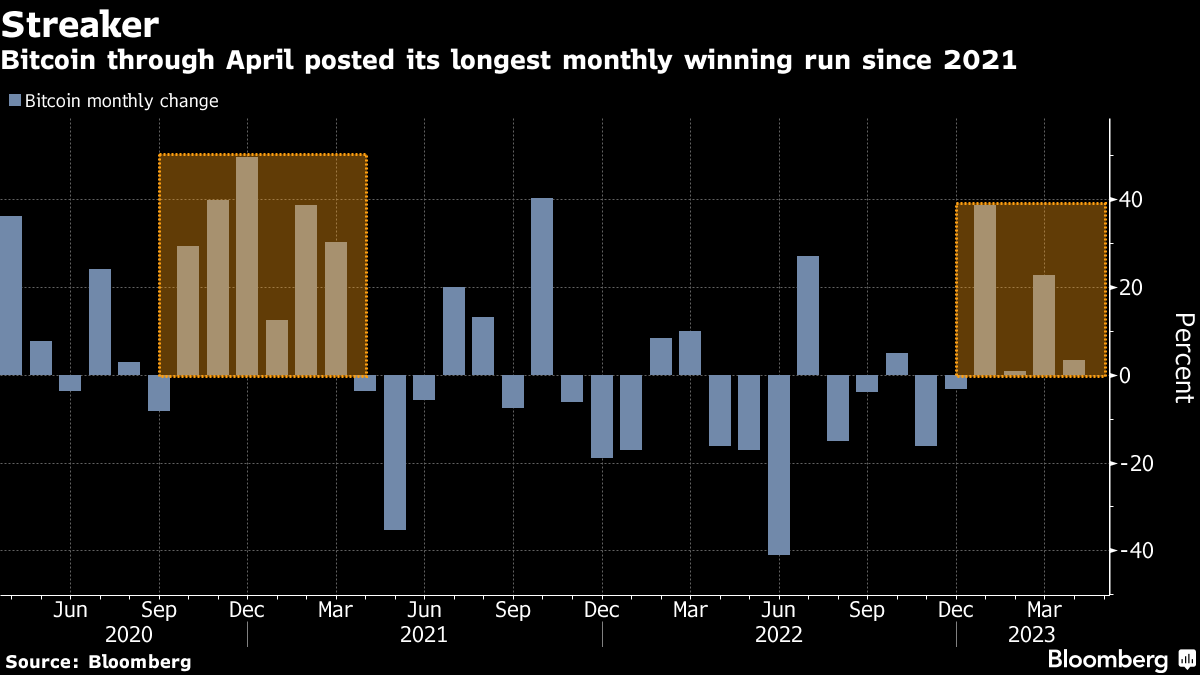
(Bloomberg) -- Bitcoin slipped back Monday after climbing for four consecutive months through April in the longest such winning run since 2021.
The token slid as much as 4.5% and was trading at $28,221 as of 2:16 p.m. in New York. Smaller coins such as Ether and Solana also retreated, as did an index of the top 100 digital assets.
Bitcoin's 72% rebound in 2023 from last year's crypto rout has stalled around the $30,000 level as traders await further catalysts. The rally has been fueled by bets on an eventual Federal Reserve pivot to looser monetary policy as well as arguments that the US banking crisis eroded confidence in fiat currency.
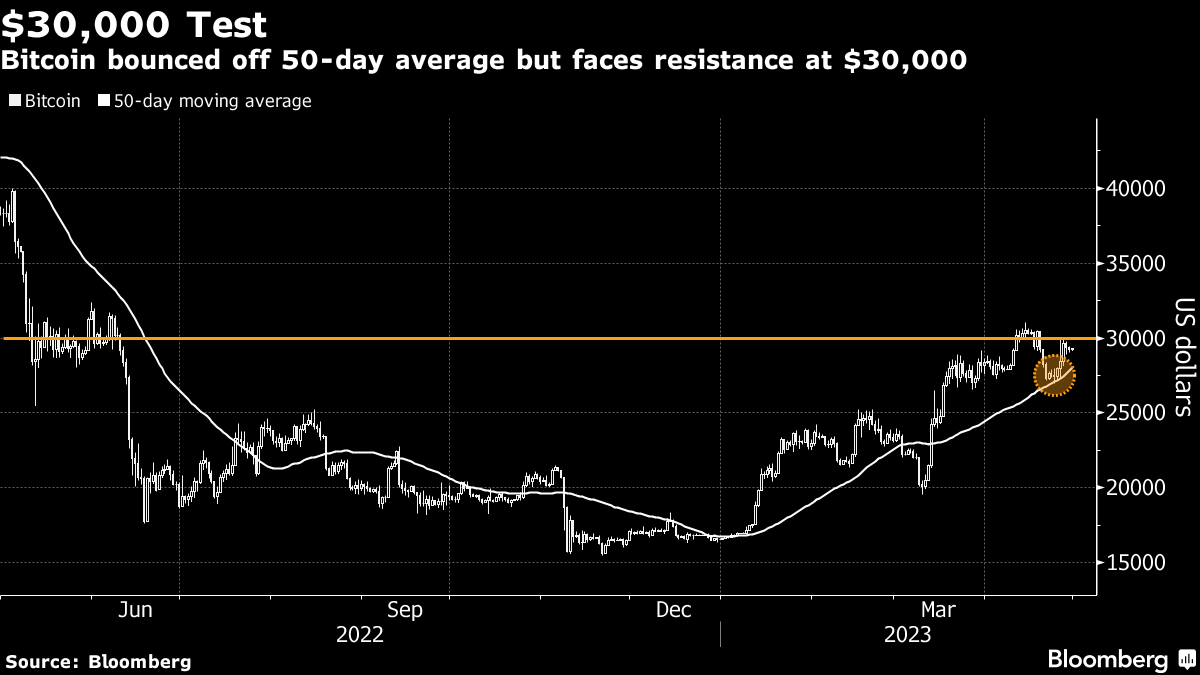
First Republic Bank is at the center of the latest leg of the banking woes in the US. JPMorgan Chase & Co. won the bidding to acquire the bank in an emergency government-led intervention after private rescue efforts failed to fill a hole on the troubled lender's balance sheet and customers yanked their deposits.
“The market is very jittery as it waits to see what happens to First Republic Bank,” said Adrian Przelozny, head of crypto exchange Independent Reserve. Monday's Bitcoin wobble may be “just volatility related to this, and some long positions got liquidated as the market dropped a bit, which then cascaded.”
Bitcoin's four-month stretch of gains through April ranks as the longest since a six-month advance to March 2021. In the past decade, four-month winning runs in Bitcoin foreshadowed an average surge of 260% over the subsequent year, data compiled by Bloomberg show.
Bitcoin and the wider crypto world remain exposed to a variety of risks, such as the US crackdown on the sector and the possibility of traders paring back expectations that monetary policy will become less restrictive later this year.
For now, the Fed is expected to boost interest rates by another quarter percentage point on Wednesday to damp inflation even as economic risks build.
More stories like this are available on bloomberg.com
©2023 Bloomberg L.P.

-
Ten Things I Learnt This Samvat

Patience can be a trap. Cheap stocks can stay cheap. Leverage can wipe you out. What did Samvat 2082 teach us? Niraj Shah writes on 10 lessons from the year gone by.
-
Talking Points This Week: Tech Nerves, FII Buying, And A Faraway Banking Shock
The global markets are not shining this Diwali. The exception in the large markets is, India.
-
Midterm Rally Lasted A Day. The Hard Reality Of A Divided US May Last Two Years | Opinion
Between a contested AI boom, a debt ceiling that arrives in 2027 and a president with every incentive to act alone, the next two years may prove more volatile than the first day's rally suggests.
-
Blue Wave Will Derail the AI Trade but Won't Dismantle the AI Era | Unhedged Position
The Democrats' sweep of the US Congress will see politics collide with economic forces both over the long and short term.
-
It's Time To Take The GST Council's Bet On Trust Global
Payment records can prove India's services exports, and clear, proportionate rules can bring foreign digital sellers into the tax net.
-
Opinion | India at 38: From Innovation Overperformer to Innovation Powerhouse
India now has 453 VC-backed deep science startups, 18 of them late-stage, after 117 percent growth since 2020. Laurus Labs, at USD 9.3 billion, is the most valuable deep science company in any middle-income economy outside China.
-
Navigating Energy Crossroads: S Jaishankar's Call For Diversified Supply Chains At G20 Ministerial Meeting
As geopolitical fault lines continue to test maritime trade routes and commodity flows, Jaishankar's message remains pertinent: true economic resilience requires open markets, protected transit lines, and a genuine commitment to multilateral cooperation rather than coercion.
-
Indians Are Travelling, But Not Every Journey Is A Holiday | The Week In Whys
Pilgrims, patients and working women are the real travellers, and the system hasn't quite caught up with them.
-
Getting To Work Costs Women More | The Reason Why
It is not just about women paying more than men. It is about women paying much more in cities than in villages.









