Bitcoin Boom Validates Wall Streeters Who Jumped Into Crypto
(Bloomberg) -- They went to Ivy League schools. Top Wall Street firms recruited them. They grinded for years and rose up the ranks. And then, before it all melted down, they took the plunge into crypto.
It was a big career risk, and one that not so long ago looked like a bust. FTX collapsed. Bitcoin plummeted below $16,000. Their families, friends and former colleagues seemed to arrive at the same conclusion: You made a big mistake.
Bitcoin's massive rally changed that. Donald Trump's victory in November sent crypto prices soaring, creating a satisfying rejoinder for those who left high-paying Wall Street jobs for crypto and lived to tell about it. Blockchain firms are hiring again, investors are funding new projects and the industry is bouncing back to life in a major way.
“The spotlight's back on,” said Vivek Raman, who is building a company called Etherealize that aims to connect Wall Street to the Ethereum ecosystem. “2024 changed it all.”
The 35-year-old Yale grad spent nearly a decade trading credit at some of Wall Street's most prestigious firms — Morgan Stanley, UBS, Deutsche Bank and Nomura — before taking a 75% pay cut to work in blockchain in the last bull cycle. After discovering Ethereum, he couldn't stop asking himself one question: “I don't know why we're not trading bonds on blockchains?”
Raman and others who left traditional finance, or “TradFi” as they call it, to take up crypto careers are what you might call “true believers.” They're not the swashbuckling speculators people normally conjure when thinking about crypto investors. And after surviving the most recent crypto winter they're excited about the current rally, even if it's tempered with a dose of realism.
Take Patrick Liou. The 32-year-old said his crypto winter was “a disaster.” He spent eight years as a trader at BlackRock before being lured away by the big price swings of crypto markets. His first day, Bitcoin crossed $50,000.
Then came 2022, when the bottom fell out. Going to work got tense. Liou's colleagues stopped coming to the office. Telling people he worked in crypto felt embarrassing at times.
“I would be lying to say there were times where I didn't have doubts, to maybe just go get a stable TradFi job again,” Liou said. “But I think it kind of takes that belief and a little bit of courage to really stick through it.”
Liou now works as a principal at Gemini, the crypto exchange. Recently, he got a text from a friend saying the crypto Liou convinced him to buy three years ago had tripled, and one of his mentors from his first job out of college called to congratulate him. On the day Bitcoin hit $100,000, he went to Pubkey, the crypto-themed bar in New York.
“I finally convinced my wife to go to the weird Bitcoin bar,” he said.
For many former Wall Street professionals, it's actually crypto's move away from the fringe that has them feeling more confident about their career choices. The launch of crypto ETFs earlier this year, which brought more institutional money into the industry, has made it even easier for Main Street investors to get exposure. New providers including BlackRock, Invesco and Fidelity Investments have added an indubitable Wall Street stamp on the space.
Still, crypto veterans say they are taking the current rally in stride. Those who have been in the industry long enough know the momentum won't last forever.
“Of course you're happy to see healthy portfolio returns, but no one is rushing out to get a Lambo,” said Zach Pandl, 43, previously a senior economist and macro strategist at Goldman Sachs who is now head of research at Grayscale Investments, the digital currency asset management company.
That doesn't mean crypto staffers are above celebrating what has been a very good year. That includes 43-year-old Michael Harvey, who started working at crypto-firm Galaxy in 2023 after nearly two decades in TradFi. Moving into crypto felt risky and experimental at the time. On his first day, a colleague gifted him a bottle of Johnnie Walker Blue Label. Harvey said the whiskey bottle has been sitting behind his computer monitor ever since, a sign of his restraint.
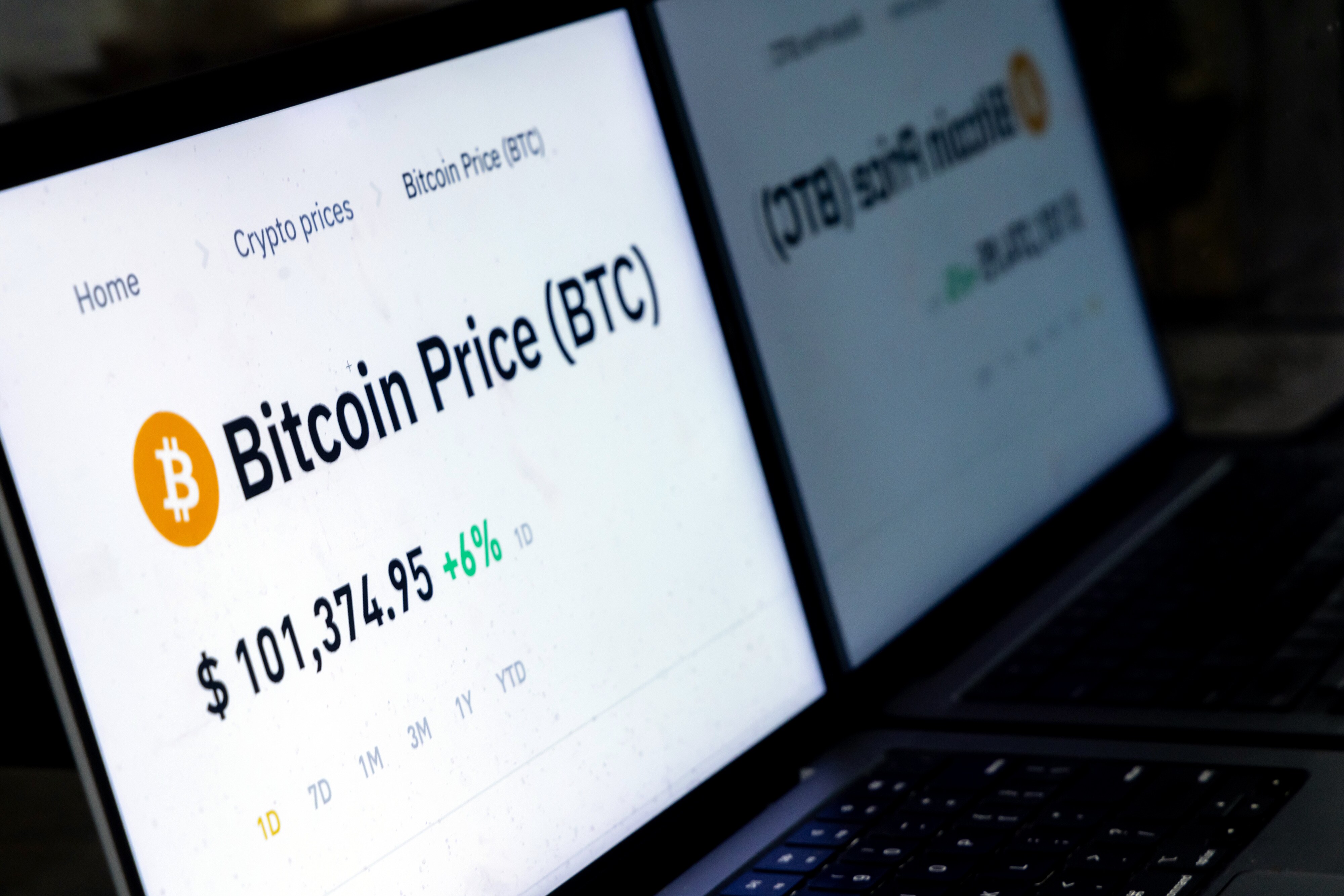
But the year is ending on a high. Bitcoin blew past $100,000 earlier in December, shattering previous records on hopes of a lighter regulatory touch by the incoming Trump administration as well as a broader risk-on appetite. The price has slumped since then, but is still up more than 500% from its 2022 low.
A celebratory drink beckons.
“I have a feeling we might break it open ahead of the holidays this year,” Harvey said.

-
Blue Wave Will Derail the AI Trade but Won't Dismantle the AI Era | Unhedged Position

The Democrats' sweep of the US Congress will see politics collide with economic forces both over the long and short term.
-
It's Time To Take The GST Council's Bet On Trust Global
Payment records can prove India's services exports, and clear, proportionate rules can bring foreign digital sellers into the tax net.
-
Opinion | India at 38: From Innovation Overperformer to Innovation Powerhouse
India now has 453 VC-backed deep science startups, 18 of them late-stage, after 117 percent growth since 2020. Laurus Labs, at USD 9.3 billion, is the most valuable deep science company in any middle-income economy outside China.
-
Navigating Energy Crossroads: S Jaishankar's Call For Diversified Supply Chains At G20 Ministerial Meeting
As geopolitical fault lines continue to test maritime trade routes and commodity flows, Jaishankar's message remains pertinent: true economic resilience requires open markets, protected transit lines, and a genuine commitment to multilateral cooperation rather than coercion.
-
Indians Are Travelling, But Not Every Journey Is A Holiday | The Week In Whys
Pilgrims, patients and working women are the real travellers, and the system hasn't quite caught up with them.
-
Getting To Work Costs Women More | The Reason Why
It is not just about women paying more than men. It is about women paying much more in cities than in villages.
-
AI Bias In Investing Cannot Be Eliminated, But It Can Be Governed
Framing is a particularly important example as identical financial information presented in terms of gains rather than losses can lead an LLM to reach a different assessment.
-
Joining The Dots | Dark Skies, Steady Diya: Why Hope Holds This Diwali
With war, a weak rupee and foreign outflows weighing on sentiment, policymakers at the NDTV World Summit and market veterans at NDTV Profit Ignite: Diwali Edition offered the same advice: stay invested and filter out the noise.
-
The Curious Case of Equitas Small Finance Bank And A CEO Who Quit For Stock
PN Vasudevan believes persistent investor concerns over a perceived conflict of interest had become a governance overhang on Equitas Small Finance Bank's stock, even as the lender improved profitability and asset quality.









