U.S. Stocks Slip as OPEC Outlook Supports Crude: Markets Wrap
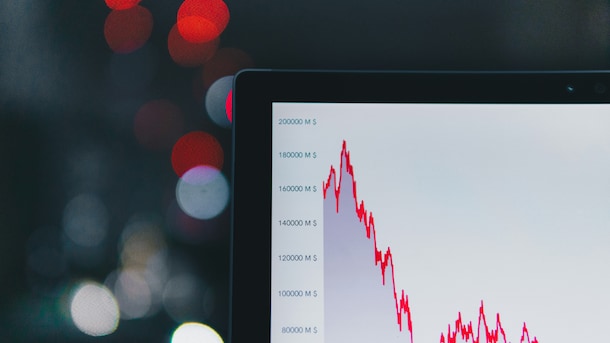
(Bloomberg) -- The S&P 500 slipped following stock declines in Europe and Asia amid concern over the escalating protectionist standoff between China and the U.S. Oil gained before a key OPEC meeting this week.
U.S. equity gauges came off their lows of the day as energy shares advanced along with software makers. The Stoxx Europe 600 Index posted its biggest two-day drop since March and Japan's Topix Index fell the most in almost three weeks. Crude climbed as producers were discussed a smaller-than-expected boost to production. Treasury yields were little changed after trading near the lowest level this month.
Global trade is firmly back at the top of the agenda, with investors fretting about the intensifying confrontation between the U.S. and China. The Asian nation swiftly responded after President Donald Trump slapped tariffs on $50 billion of imports late last week, putting an additional 25 percent levy on $34 billion of American agricultural and auto exports starting July 6.
“The relative policy calm was shattered late in the week as trade tensions escalated,” David Joy, the chief market strategist at Ameriprise Financial Inc., said in a note. “There is still time for negotiation. But the inexorable march toward a trade war with China took a significant step forward.”
Meanwhile in Europe, German Chancellor Angela Merkel and British Prime Minister Theresa May face tough weeks over migration and Brexit, respectively. Trump said in a tweet that the German people “are turning against their leadership as migration is rocking the already tenuous Berlin coalition.”
An index of emerging-market currencies fell for a fifth day, leaving it on track for the biggest quarterly decline since September 2015. Developing-nation equities extended a drop after their worst weekly performance in a month, with an MSCI index retreating for a fourth day.
Terminal users can read more in Bloomberg's Markets Live blog.
Here are some key events to watch for this week:
- European Central Bank President Mario Draghi speaks at ECB's Forum on Central Banking on Tuesday.
- U.S. housing starts probably rose in May, data out Tuesday is expected to show.
- Draghi, Reserve Bank of Australia Governor Philip Lowe, Bank of Japan Governor Haruhiko Kuroda, and Fed Chairman Jerome Powell join a panel on central bank policy in Sintra, Portugal, on Wednesday.
- Thailand, Philippines and Brazil central bank decisions due Wednesday.
- Bank of England rate decision on Thursday.
- Also on Thursday: U.S. jobless claims, New Zealand GDP, South Korea export data.
- The Organization of Petroleum Exporting Countries meets in Vienna on Friday.
And here are the main market moves:
Stocks
- The S&P 500 fell 0.2 percent at the close of trading in New York.
- The Stoxx Europe 600 Index decreased 0.8 percent.
- Japan's Nikkei 225 Stock Average fell 0.8 percent to the lowest in more than a week.
- The MSCI Emerging Market Index declined 0.7 percent to the lowest since December.
Currencies
- The Bloomberg Dollar Spot Index was little changed, near the highest in 11 months.
- The euro rose 0.1 percent to $1.1618.
- The British pound fell 0.3 percent to $1.324.
- The Japanese yen rose 0.1 percent to 110.57 per dollar.
Bonds
- The yield on 10-year Treasuries was little changed at 2.92 percent.
- Germany's 10-year yield decreased one basis point to 0.39 percent.
- Britain's 10-year yield was little changed at 1.32 percent.
Commodities
- Gold was little changed at $1,278.61 an ounce.
- WTI oil rose 1.1 percent to $65.79 a barrel.
--With assistance from Andreea Papuc, David Marino, Todd White, Robert Brand, Samuel Potter and Christopher Anstey.
To contact the reporters on this story: Sarah Ponczek in New York at sponczek2@bloomberg.net;Janine Wolf in New York at jwolf71@bloomberg.net
To contact the editors responsible for this story: Jeremy Herron at jherron8@bloomberg.net, Brendan Walsh
©2018 Bloomberg L.P.

-
Talking Points This Week: Tech Nerves, FII Buying, And A Faraway Banking Shock

The global markets are not shining this Diwali. The exception in the large markets is, India.
-
Midterm Rally Lasted A Day. The Hard Reality Of A Divided US May Last Two Years | Opinion
Between a contested AI boom, a debt ceiling that arrives in 2027 and a president with every incentive to act alone, the next two years may prove more volatile than the first day's rally suggests.
-
Blue Wave Will Derail the AI Trade but Won't Dismantle the AI Era | Unhedged Position
The Democrats' sweep of the US Congress will see politics collide with economic forces both over the long and short term.
-
It's Time To Take The GST Council's Bet On Trust Global
Payment records can prove India's services exports, and clear, proportionate rules can bring foreign digital sellers into the tax net.
-
Opinion | India at 38: From Innovation Overperformer to Innovation Powerhouse
India now has 453 VC-backed deep science startups, 18 of them late-stage, after 117 percent growth since 2020. Laurus Labs, at USD 9.3 billion, is the most valuable deep science company in any middle-income economy outside China.
-
Navigating Energy Crossroads: S Jaishankar's Call For Diversified Supply Chains At G20 Ministerial Meeting
As geopolitical fault lines continue to test maritime trade routes and commodity flows, Jaishankar's message remains pertinent: true economic resilience requires open markets, protected transit lines, and a genuine commitment to multilateral cooperation rather than coercion.
-
Indians Are Travelling, But Not Every Journey Is A Holiday | The Week In Whys
Pilgrims, patients and working women are the real travellers, and the system hasn't quite caught up with them.
-
Getting To Work Costs Women More | The Reason Why
It is not just about women paying more than men. It is about women paying much more in cities than in villages.
-
AI Bias In Investing Cannot Be Eliminated, But It Can Be Governed
Framing is a particularly important example as identical financial information presented in terms of gains rather than losses can lead an LLM to reach a different assessment.