Airtel Africa’s Ebitda Grows In A Seasonally Weak Quarter
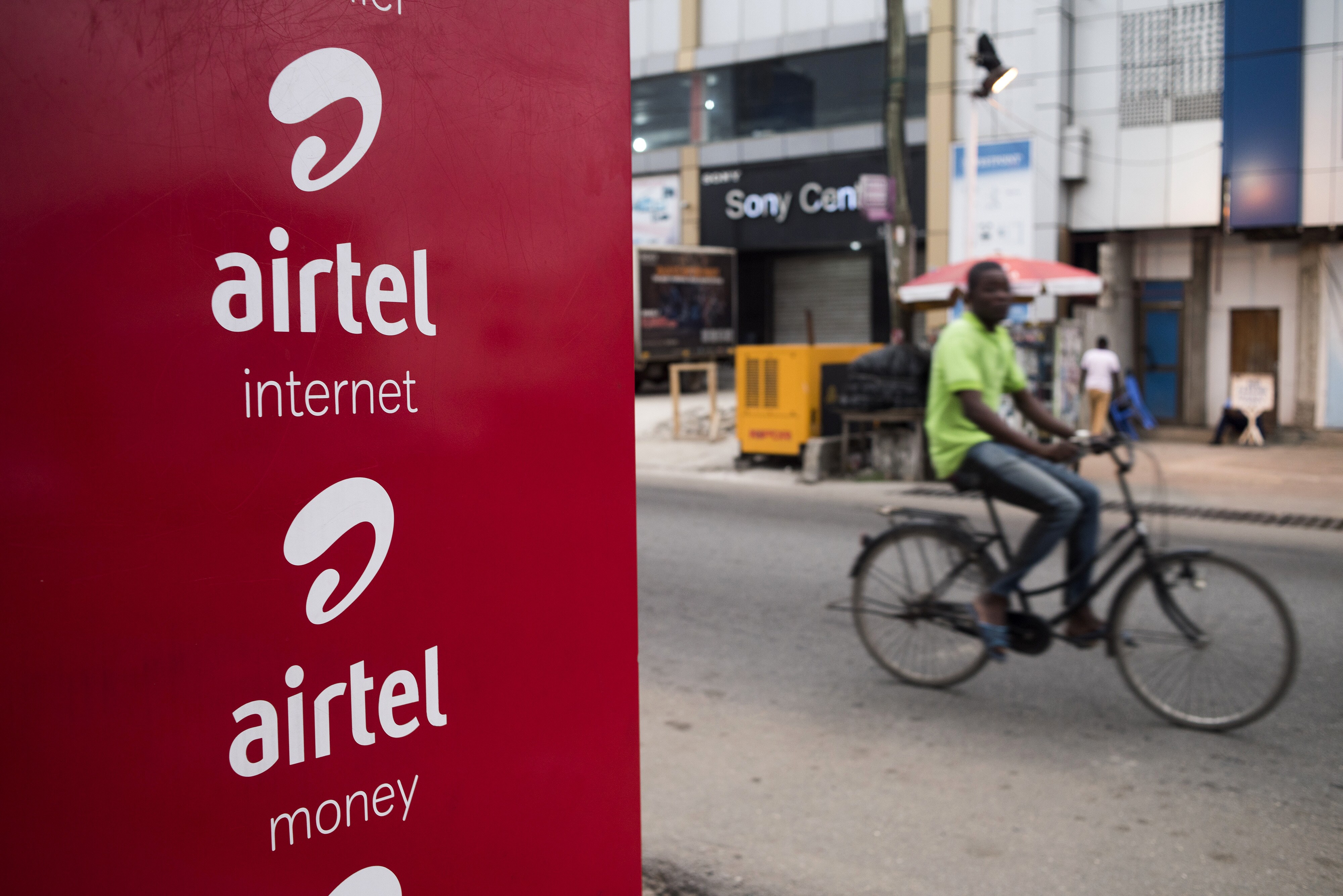
Bharti Airtel Ltd.'s profitable African unit witnessed a growth in its operating income in constant currency terms in the March quarter despite seasonal weakness.
The company's earnings before interest, tax, depreciation and amortisation grew 0.6 percent over the last quarter.
That could largely be attributed to the cost-saving initiatives of the company. Its total costs, excluding access charges, cost of goods and license fees, declined to $280 million from $286 million over the last quarter. That reflected on its margin, which expanded by 70 bps to 44 percent—its highest.
The fourth quarter is considered seasonally weak when spending gets curtailed, coinciding with the start of academic year in schools. Rains in some countries also leads to migration, resulting in lower usage.
On reported currency terms, the African unit's revenue and Ebitda was $781 million and $344 million, respectively, according to an exchange filing. Capital expenditure during the quarter was $305 million for African operations due to investment in data capacities and network modernisation.
Bharti Airtel continues to gain footing in Africa even as its India business is under pressure.
The company's average revenue per user declined by 3.4 percent to $2.7 while the churn ratio increased to 5.4 percent. However, this fall was largely offset by an increase in its customer base, which rose to 98.85 million from 97.92 million in the December quarter.
The African unit's revenue remained largely flat at $781 million on reported currency terms, while its Ebitda grew to $344 million from $339 million in the December quarter.
The African unit's net debt also declined by five percent to $4 billion due to a fund infusion by the Qatar Investment Authority. Recently, Bharti Airtel raised nearly $1.45 billion from seven global investors to pare debt in its African unit through a fresh issue of shares. The company is also looking to list its African unit on the London Stock Exchange during the 2019-20 fiscal.

-
Opinion | India at 38: From Innovation Overperformer to Innovation Powerhouse

India now has 453 VC-backed deep science startups, 18 of them late-stage, after 117 percent growth since 2020. Laurus Labs, at USD 9.3 billion, is the most valuable deep science company in any middle-income economy outside China.
-
Navigating Energy Crossroads: S Jaishankar's Call For Diversified Supply Chains At G20 Ministerial Meeting
As geopolitical fault lines continue to test maritime trade routes and commodity flows, Jaishankar's message remains pertinent: true economic resilience requires open markets, protected transit lines, and a genuine commitment to multilateral cooperation rather than coercion.
-
Indians Are Travelling, But Not Every Journey Is A Holiday | The Week In Whys
Pilgrims, patients and working women are the real travellers, and the system hasn't quite caught up with them.
-
Getting To Work Costs Women More | The Reason Why
It is not just about women paying more than men. It is about women paying much more in cities than in villages.
-
AI Bias In Investing Cannot Be Eliminated, But It Can Be Governed
Framing is a particularly important example as identical financial information presented in terms of gains rather than losses can lead an LLM to reach a different assessment.
-
Joining The Dots | Dark Skies, Steady Diya: Why Hope Holds This Diwali
With war, a weak rupee and foreign outflows weighing on sentiment, policymakers at the NDTV World Summit and market veterans at NDTV Profit Ignite: Diwali Edition offered the same advice: stay invested and filter out the noise.
-
The Curious Case of Equitas Small Finance Bank And A CEO Who Quit For Stock
PN Vasudevan believes persistent investor concerns over a perceived conflict of interest had become a governance overhang on Equitas Small Finance Bank's stock, even as the lender improved profitability and asset quality.
-
Talking Points This Week: AI Cash Burn, A Tiger Comeback And An India That Still Finds Its Own Path
India is not immune to higher oil or tighter global liquidity, yet its earnings base is broader, its domestic policy levers are still available.
-
Foreign Investors Own Half Of HDFC Bank and ICICI Bank. An LTCG Cut Could Matter Most Here
Foreign portfolio investors have US$115 billion parked in HDFC Bank, ICICI Bank. If the government cuts long-term capital gains tax, Jefferies says returning foreign money could land here first.










