Tesla Sued Over Claim Faulty Doors Led To Deaths In Fiery Crash
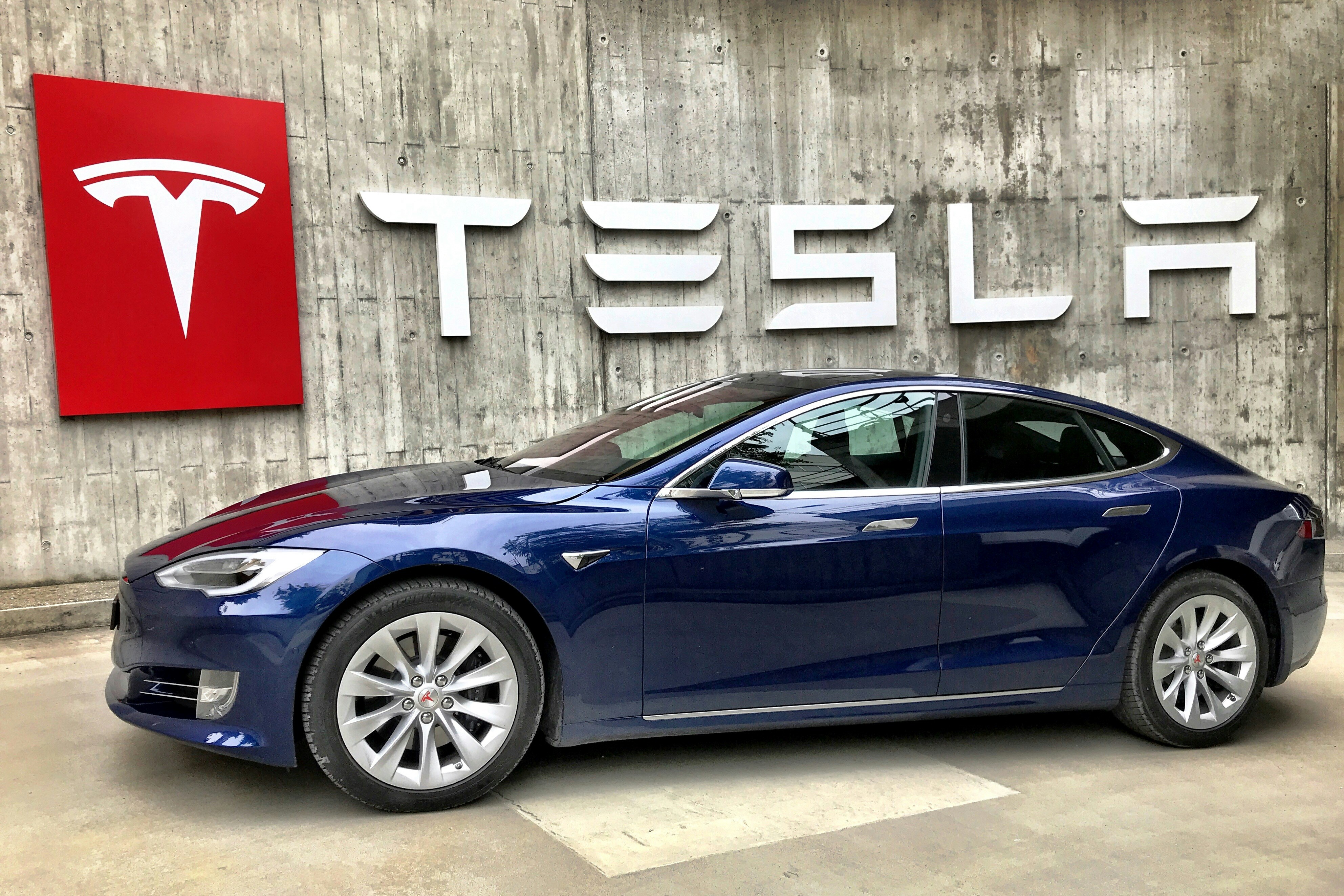
Tesla Inc. was sued over a crash in Wisconsin last November that killed all five occupants of a Model S who allegedly became trapped in a fast-moving inferno when the doors wouldn't open, adding to scrutiny over whether a design choice by the automaker is a fatal flaw.
The suit was filed on behalf of a couple who died when the four-door sedan hit a tree and caught on fire. Jeffrey Bauer, 54, and Michelle Bauer, 55, survived the initial impact, but were unable to escape because the doors locked them inside, according to the complaint brought by their children in state court.
A nearby homeowner who called 911 said she could hear people screaming from within the vehicle, according to the lawsuit. A report by the local sheriff's office said a cluster of bodies in the front seat suggested there may have been a struggle to escape.
“Tesla's design choices created a highly foreseeable risk: that occupants who survived a crash would remain trapped inside a burning vehicle,” lawyers for the children said in the complaint.
The lawsuit accuses Tesla of negligence, arguing that Elon Musk's electric vehicle maker was aware of the dangers of its door handle designs and the risk of post-collision fire hazards from the EV's lithium-ion battery pack but did nothing to address either issue.
Tesla didn't immediately return a request for comment. The suit was filed on Friday in state court in Wisconsin.
Tesla's door handles have drawn increased attention after a Bloomberg News investigation uncovered a series of incidents in which people were seriously injured or died after they were unable to open doors following a loss of power, particularly after crashes. The Wisconsin crash was one of several such incidents reviewed as part of the investigation. The company is being sued over the deaths of three college students who allegedly were trapped inside a burning Tesla that crashed last November in a San Francisco suburb.
The National Highway Traffic Safety Administration, the US auto safety regulator, disclosed in September that it's investigating whether some Tesla doors are defective, citing incidents in which exterior handles stopped working and trapped children and other occupants inside. Franz von Holzhausen, Tesla's design chief, told Bloomberg that the company is working on a redesign of its door handles to make them more intuitive for occupants “in a panic situation.”
In the Wisconsin crash, the Dane County Sheriff's Office determined that road conditions, excess speed, and impaired driving were factors that contributed to the cause of the crash.
Lawyers for the Bauer family members argue that vehicle manufacturers have a responsibility to provide adequate “crashworthiness protection,” ensuring that their vehicles provide reasonable safeguards against injury both during and after a collision.
“Regardless of the cause of a crash, the manufacturer's obligation includes designing vehicles that permit timely escape and rescue in the event of fire,” they said in the lawsuit, arguing that Tesla “disregarded these principles, instead manufacturing vehicles prone to fires that ignite and spread rapidly upon impact — and from which escape depends on electronic systems that Tesla knew were liable to fail in precisely the conditions when escape is most critical: collision and fire.”
Tesla vehicles have two batteries: one for low-voltage power to windows, doors, the touchscreen and other functions, and the high-voltage pack that propels the car. If the low-voltage battery dies or is disabled — which can happen after a crash — the doors may not unlock and must be opened manually from the inside. While there are mechanical releases inside Teslas, many owners and passengers are unfamiliar with where they're located.

-
Navigating Friction And Energy Realities: An Analysis Of Marco Rubio's October Visit To India

Occurring at a critical juncture marked by stalled trade negotiations and escalating geopolitical pressures over global energy supplies, the visit offers a profound window into modern US-India relations.
-
India Exports Capital. Why Not Export Trusteeship?
The big question, then, is whether India can build an institution that global borrowers, investors, banks, and lawyers can trust, even without an Indian connection.
-
France's Economy & Politics Are In Crisis | The Reason Why
Let's look at how the French economy and politics evolved under Nicolas Sarkozy, Franois Hollande and Emmanuel Macron.
-
You May Inherit The Business. You Must Earn Its Credibility.
Succession tests the founder's ability to share authority as much as it tests the next generation's readiness to assume it.
-
Signing Deals Is One Thing; Making Them Work Is Another | The Week In Whys
Sometimes, things don't turn out as planned. Indian companies have lost some bids to rivals, some projects won't produce until 2030.
-
FOMC Wall, PERM Suspension, Hospital Stocks | Talking Points This Week
A PERM suspension would directly affect green-card sponsorship rather than H-1B visas, so the near-term earnings impact could remain relatively limited. The key question is whether this marks a new phase in US scrutiny of Indian IT.
-
Everything, Everywhere, All At Once: Dalal Street's Week To Forget | Joining The Dots
Visa curbs, a Starlink spat and cancer drug caps: what connects this week's shocks for Indian markets
-
India Is Going Abroad For Critical Minerals. But It May Take Years To Pay Off | The Reason Why
Although India's steps are in the right direction, they remain modest compared with India's growing dependence.
-
When Everyone Has AI, What Gives You An Edge?
India's young workforce is entering an uncertain world of work where powerful AI tools are becoming widely accessible. The advantage will belong to those who combine deep expertise with digital fluency, and the distinctly human capabilities that technology cannot manufacture.
-
Wrong Labels, High Pesticide Residues Holding Back Agri Exports | The Reason Why
India needs stronger domestic food-safety and labelling standards, with best practices becoming part of everyday business for farmers, traders and food companies.










