Ola Electric Says Negative Cash Flow Doesn’t Change ‘Going Concern’ Status
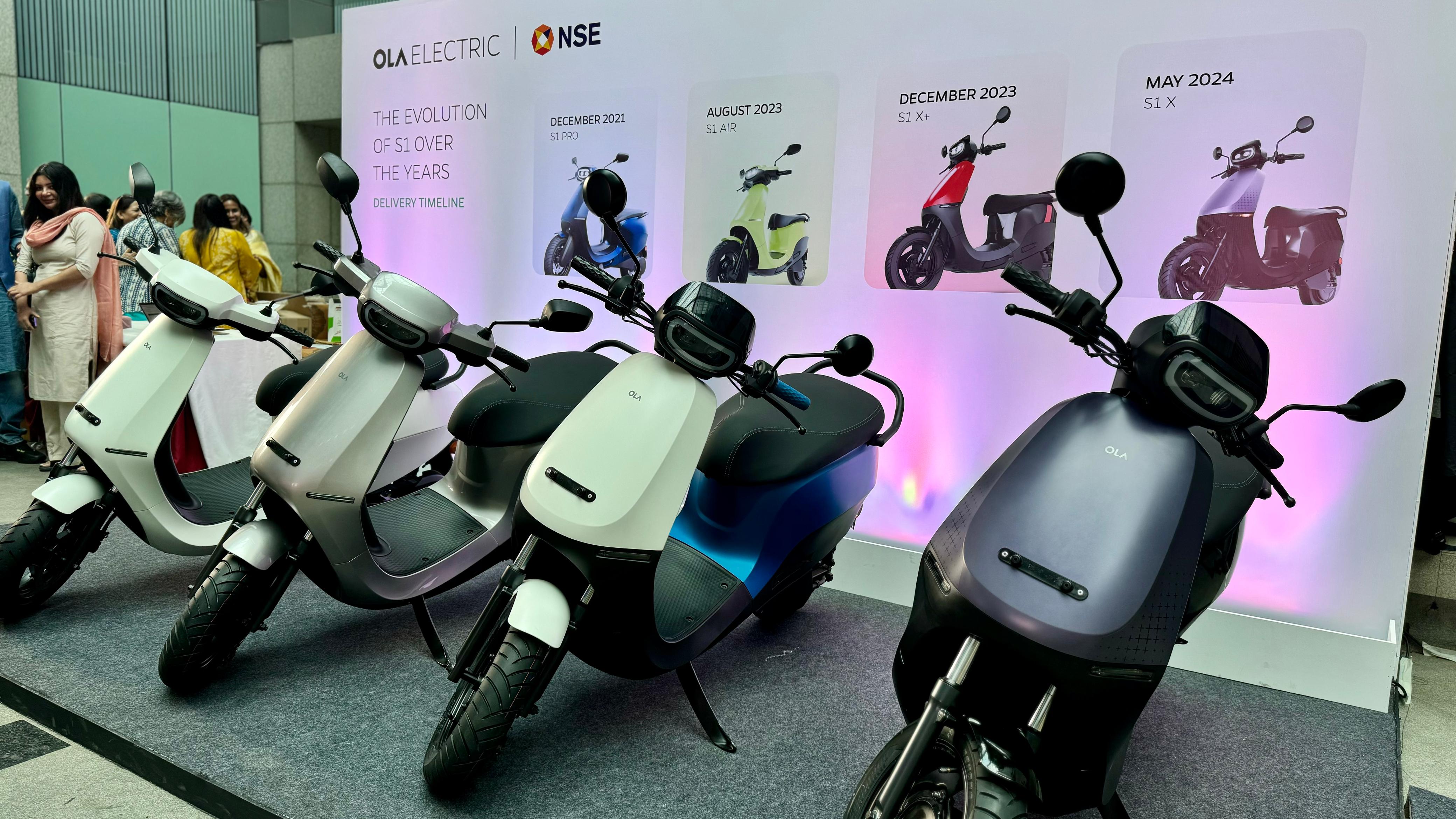
Ola Electric Mobility Ltd. is confident of continuing as a “going concern” despite negative cash flow, as it has money in the bank.
On a consolidated basis, the Bengaluru-based electric two-wheeler maker had a negative cash flow from operations of Rs 2,391 crore, primarily due to continued operating loss and lower-than-expected sales growth, according to the notes accompanying the company's fourth-quarter earnings statement.
“The management has carried out an assessment of its going concern assumption and believes that it will be able to continue to operate as a going concern for the foreseeable future and meet all its liabilities as they fall due for payment,” the notes prepared by auditors BSR & Co. LLP stated.
The confidence stems from the assumption that one of its material subsidiaries will deliver operating cash flow in the future on the back of new products, operational efficiencies and increase in gross margins. A lot also depends on its ability to raise debt within available credit limits, and available cash and bank balances.
It's worth mentioning here that Ola Electric's board of directors had on 22 May approved a proposal to raise up to Rs 1,700 crore as debt. The fundraising has to be within borrowing limits approved by shareholders.
The move came within a year of the company's IPO, when it raised Rs 5,275 crore. More than half of this—or Rs 2,823 crore—was unutilised as on 31 March 2025. Of this amount, Rs 2,775 crore are temporarily invested in fixed deposits and Rs 48 crore in the group's monitoring accounts.
To be sure, Ola Electric has remained a loss-making enterprise since its listing in August 2024. Any and all attempts—new products, expanded sales network and cost-efficiency measures—have failed to stem losses. In fact, they have only grown.
Consolidated net loss of the Bengaluru-based EV maker widened to Rs 870 crore in the three months ended 31 March 2025, from Rs 416 crore in the year-ago period, even as revenue tanked 61.7% to Rs 611 crore, according to an exchange filing on Thursday.
That Ebitda loss has doubled year-on-year to Rs 695 crore flies in the face of Ola Electric's claims to turn operationally profitable in Q1 FY26.
For the full year, net loss widened to Rs 2,276 crore as against Rs 1,584 crore in FY24. Revenue fell 9.9% year-on-year to Rs 4,514 crore.
“FY25 saw slower than expected growth, loss in our market share and execution challenges as we attempted to aggressively scale up our sales and service operations,” Ola Electric said in a statement accompanying the earnings. “As we enter FY26, we see urban demand returning on the back of tapering inflation and declining interest rates, while we continue to focus our efforts in making the EV revolution more broad based.”

-
Talking Points This Week: Tech Nerves, FII Buying, And A Faraway Banking Shock

The global markets are not shining this Diwali. The exception in the large markets is, India.
-
Midterm Rally Lasted A Day. The Hard Reality Of A Divided US May Last Two Years | Opinion
Between a contested AI boom, a debt ceiling that arrives in 2027 and a president with every incentive to act alone, the next two years may prove more volatile than the first day's rally suggests.
-
Blue Wave Will Derail the AI Trade but Won't Dismantle the AI Era | Unhedged Position
The Democrats' sweep of the US Congress will see politics collide with economic forces both over the long and short term.
-
It's Time To Take The GST Council's Bet On Trust Global
Payment records can prove India's services exports, and clear, proportionate rules can bring foreign digital sellers into the tax net.
-
Opinion | India at 38: From Innovation Overperformer to Innovation Powerhouse
India now has 453 VC-backed deep science startups, 18 of them late-stage, after 117 percent growth since 2020. Laurus Labs, at USD 9.3 billion, is the most valuable deep science company in any middle-income economy outside China.
-
Navigating Energy Crossroads: S Jaishankar's Call For Diversified Supply Chains At G20 Ministerial Meeting
As geopolitical fault lines continue to test maritime trade routes and commodity flows, Jaishankar's message remains pertinent: true economic resilience requires open markets, protected transit lines, and a genuine commitment to multilateral cooperation rather than coercion.
-
Indians Are Travelling, But Not Every Journey Is A Holiday | The Week In Whys
Pilgrims, patients and working women are the real travellers, and the system hasn't quite caught up with them.
-
Getting To Work Costs Women More | The Reason Why
It is not just about women paying more than men. It is about women paying much more in cities than in villages.
-
AI Bias In Investing Cannot Be Eliminated, But It Can Be Governed
Framing is a particularly important example as identical financial information presented in terms of gains rather than losses can lead an LLM to reach a different assessment.









