Football Vs Cricket World Cup: 9-0
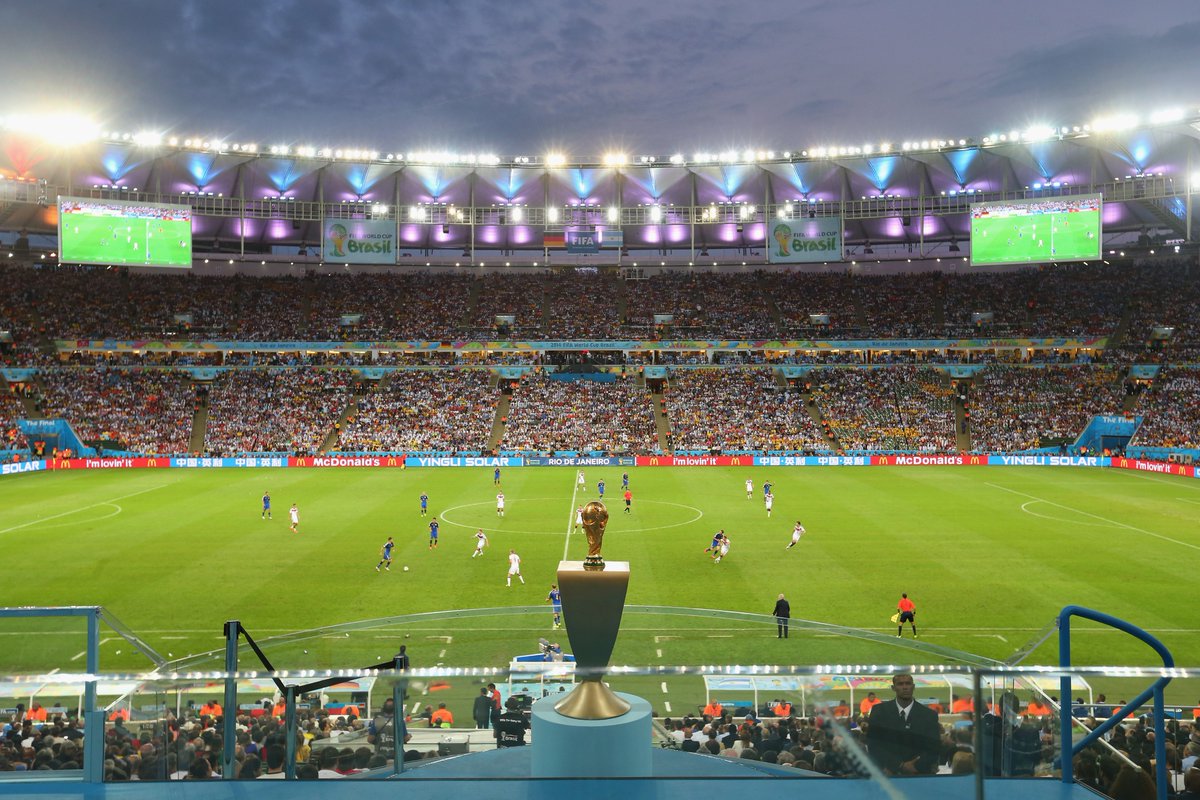
India's football team captain Sunil Chhetri recently took to Twitter pleading fans to support his team in a four-nation tournament held in Mumbai. Virat Kohli, the captain of national cricket team, doesn't have to issue such appeals as he mostly plays in front of a full house.
But football is gaining a following in India, more so after the launch of the professional Indian Super League. Over the next month, cricket will take a backseat as India joins the world in watching the FIFA World Cup.
The gentleman's game – as cricket is often called – has barely made a mark outside the Commonwealth nations. Football, on the other hand, is popular across continents. Not only does football have a much larger global following, more money is at stake as well.
BloombergQuint looks at viewership, participation and more in football and cricket world cups.
Participation
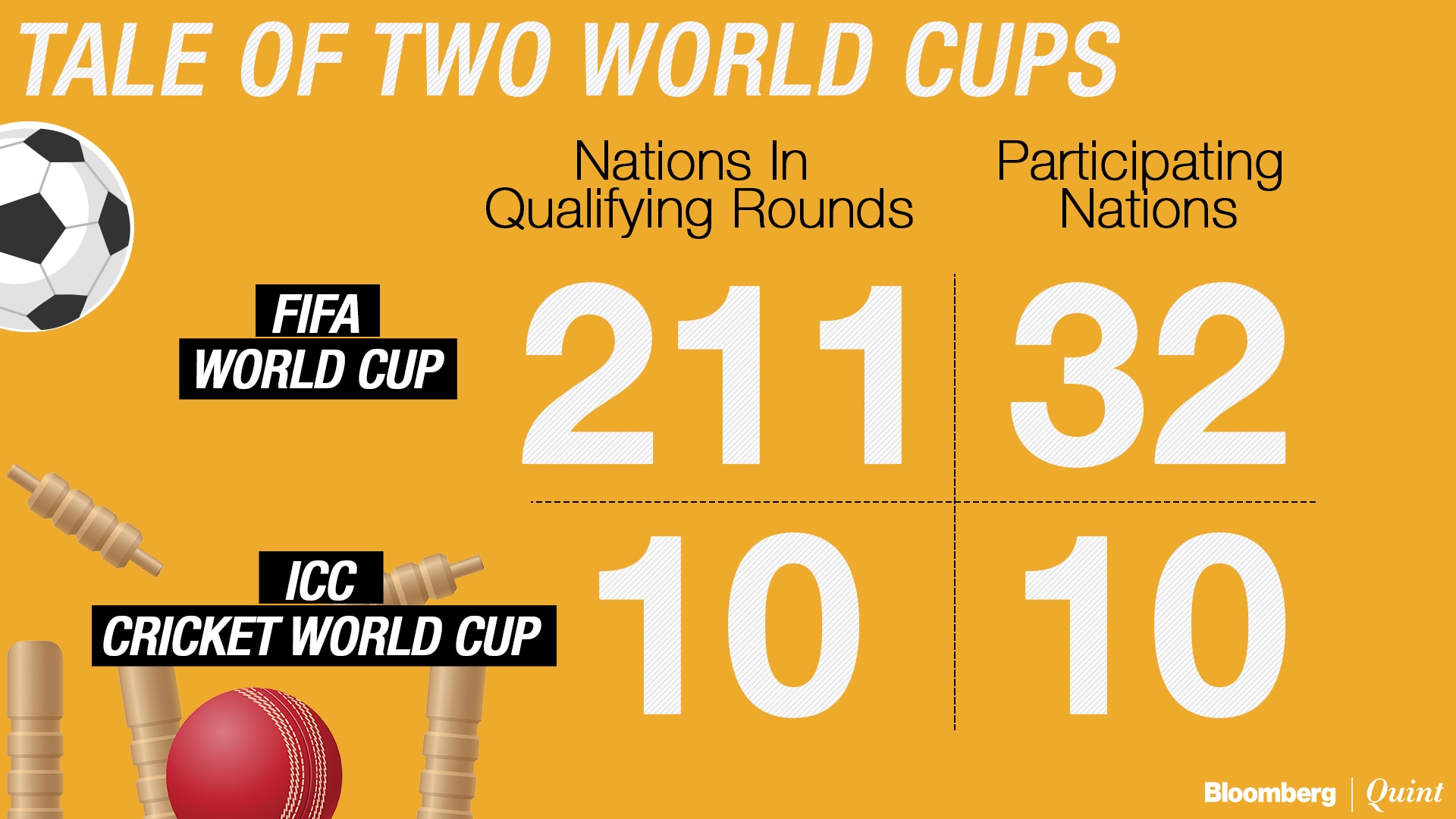
The number of nations that participate in the football world cup are three times those that are part of the cricket world cup.
The gap becomes even more stark when it comes to the qualifying rounds. In the latest qualification round for the upcoming FIFA World Cup, a record 211 countries participated. While the cricket world cup's qualification tournament had 10 associate teams, something that the International Cricket Council has been criticised for in the past.
Television Audiences
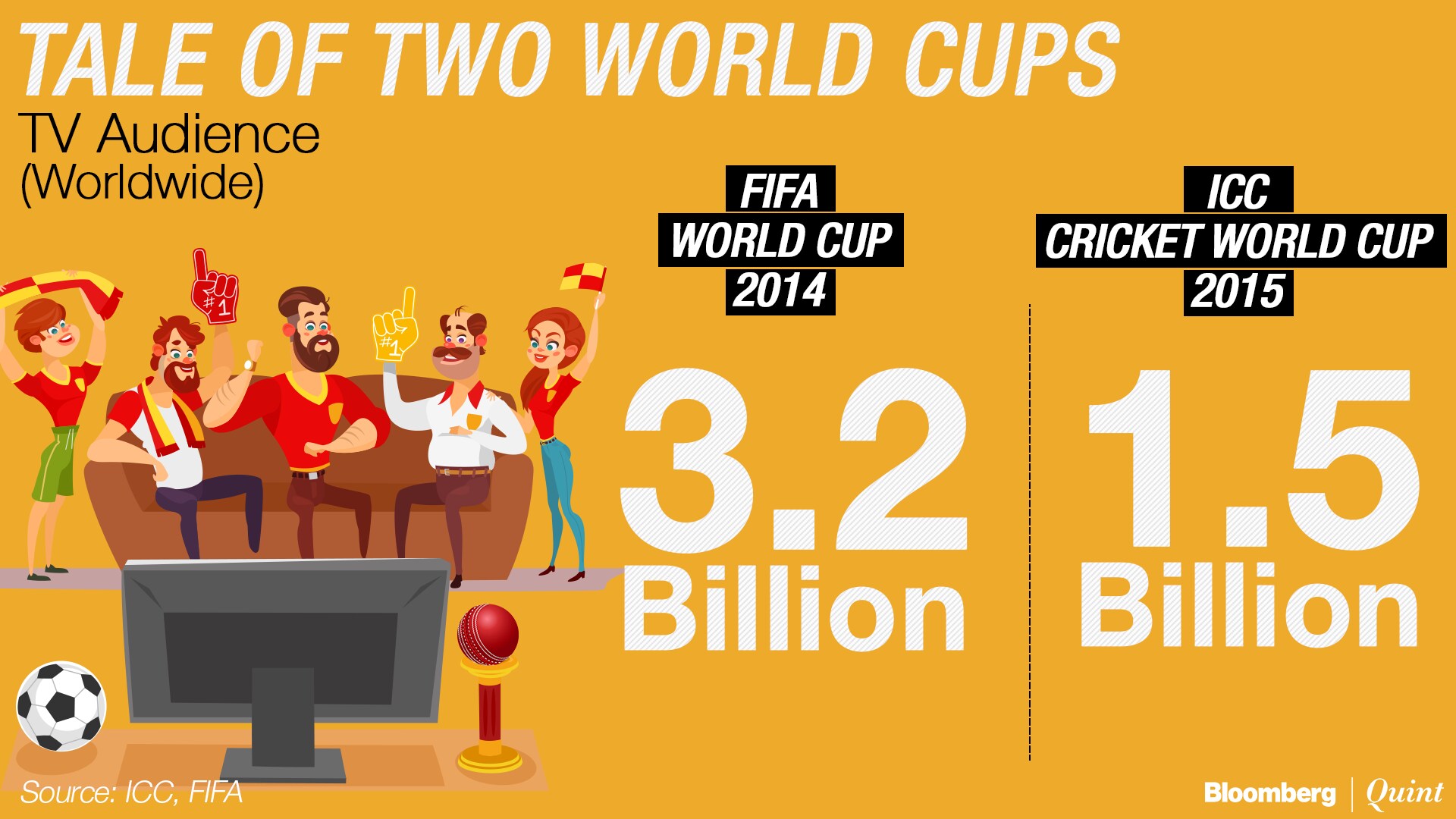
The last FIFA World Cup's viewership was twice that of the previous edition of the cricket World Cup. The football World Cup is televised across the world with nearly 200 broadcasters in almost every country that participated in the qualifying round. In contrast, the ICC Cricket World Cup has 44 licensed broadcasters.
Geographical Spread
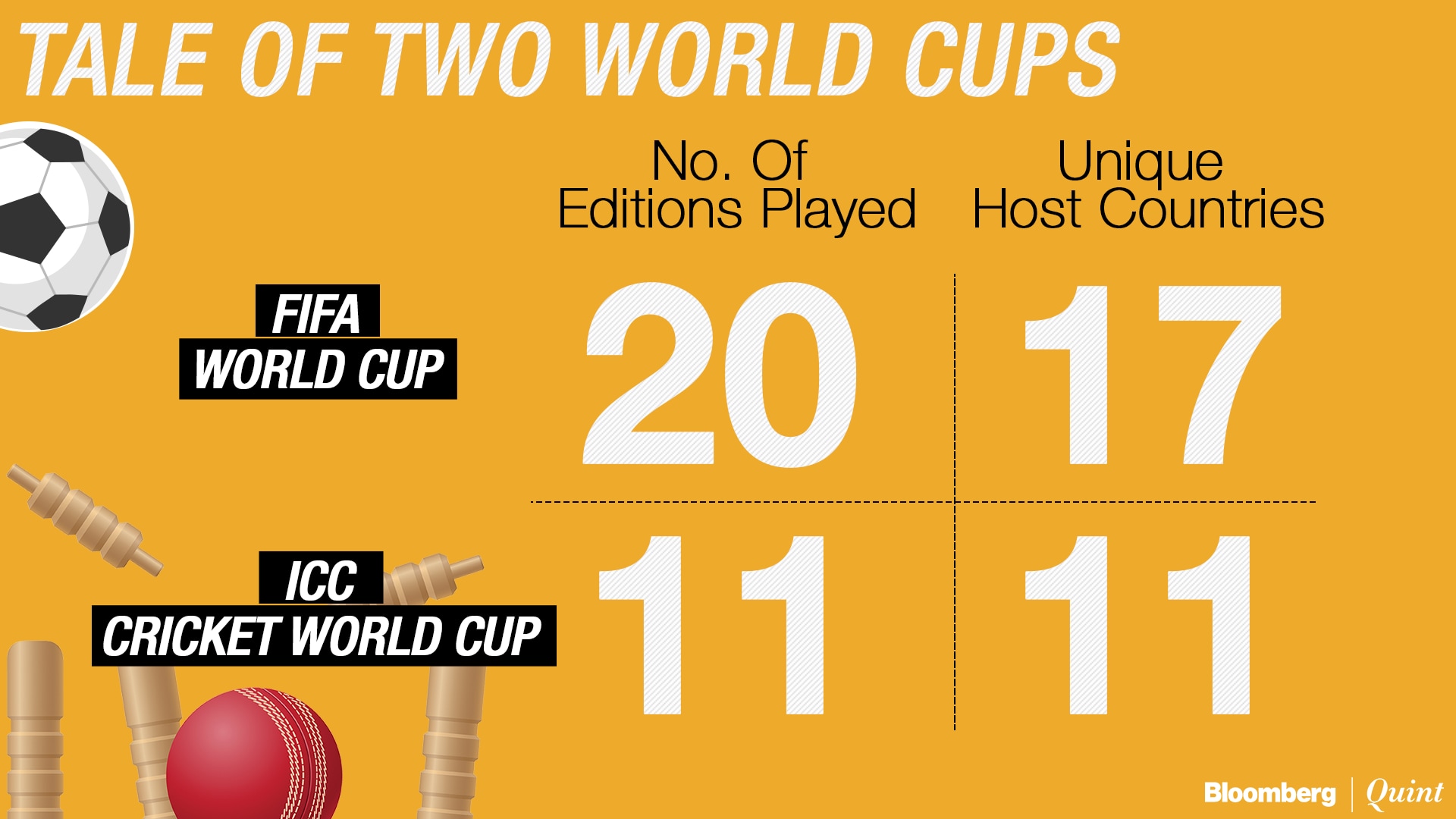
The football world cup's existence dates back to 1930, over 40 years before the first cricket world cup was played. The 20 editions of the FIFA World Cup since then have been played in 17 nations, with a host being repeated only three times. The 11 cricket world cups since 1975 have been played across 10 nations.
Revenue
Event-based revenue accounts for a huge chunk of ICC and FIFA earnings.
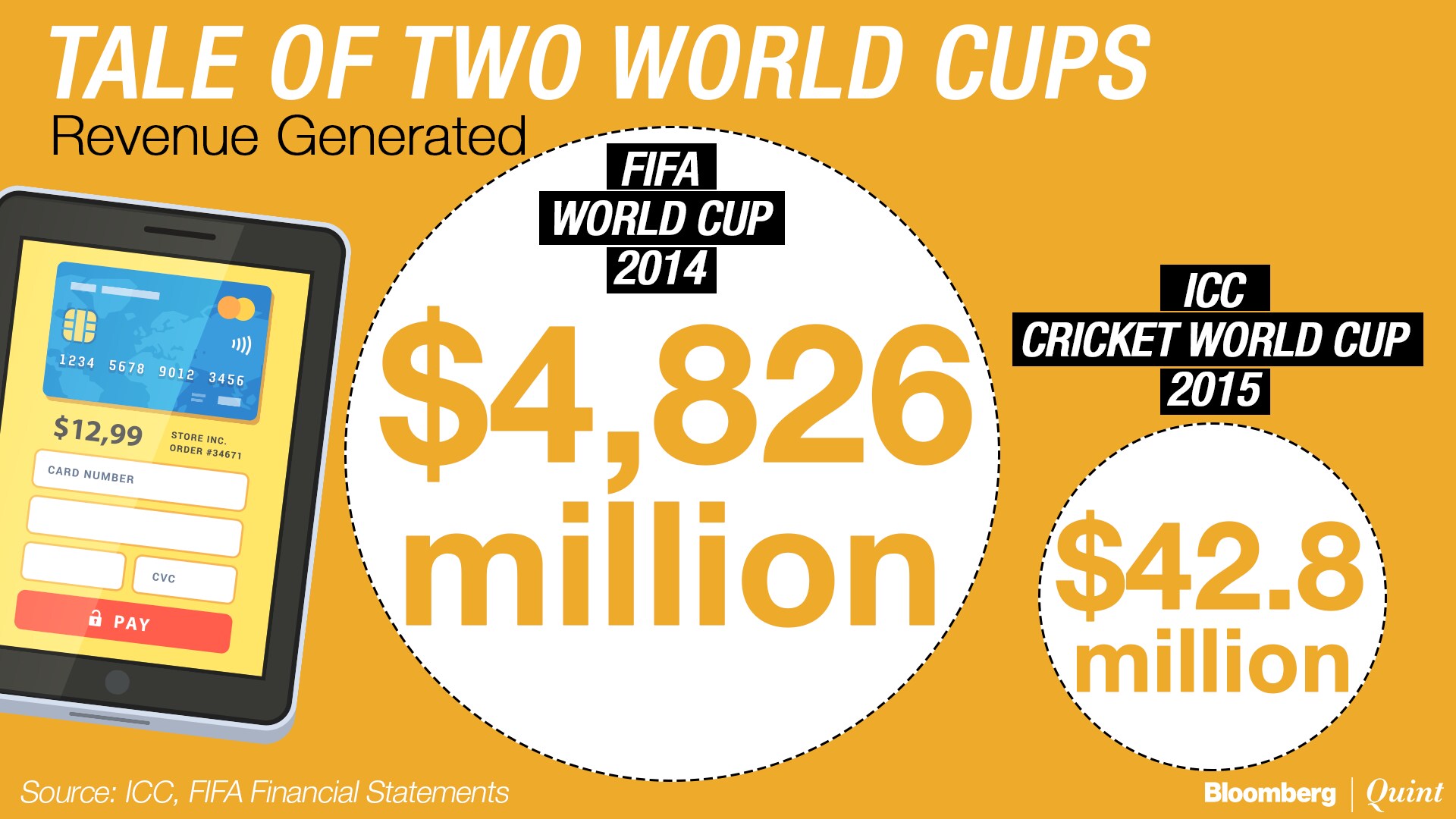
But what FIFA makes from the football world cup is more than 100 times of what ICC makes from the cricket world cup, according to their financial statements. This revenue includes marketing, broadcasting, ticketing, hospitality and licensing rights.
Expenses
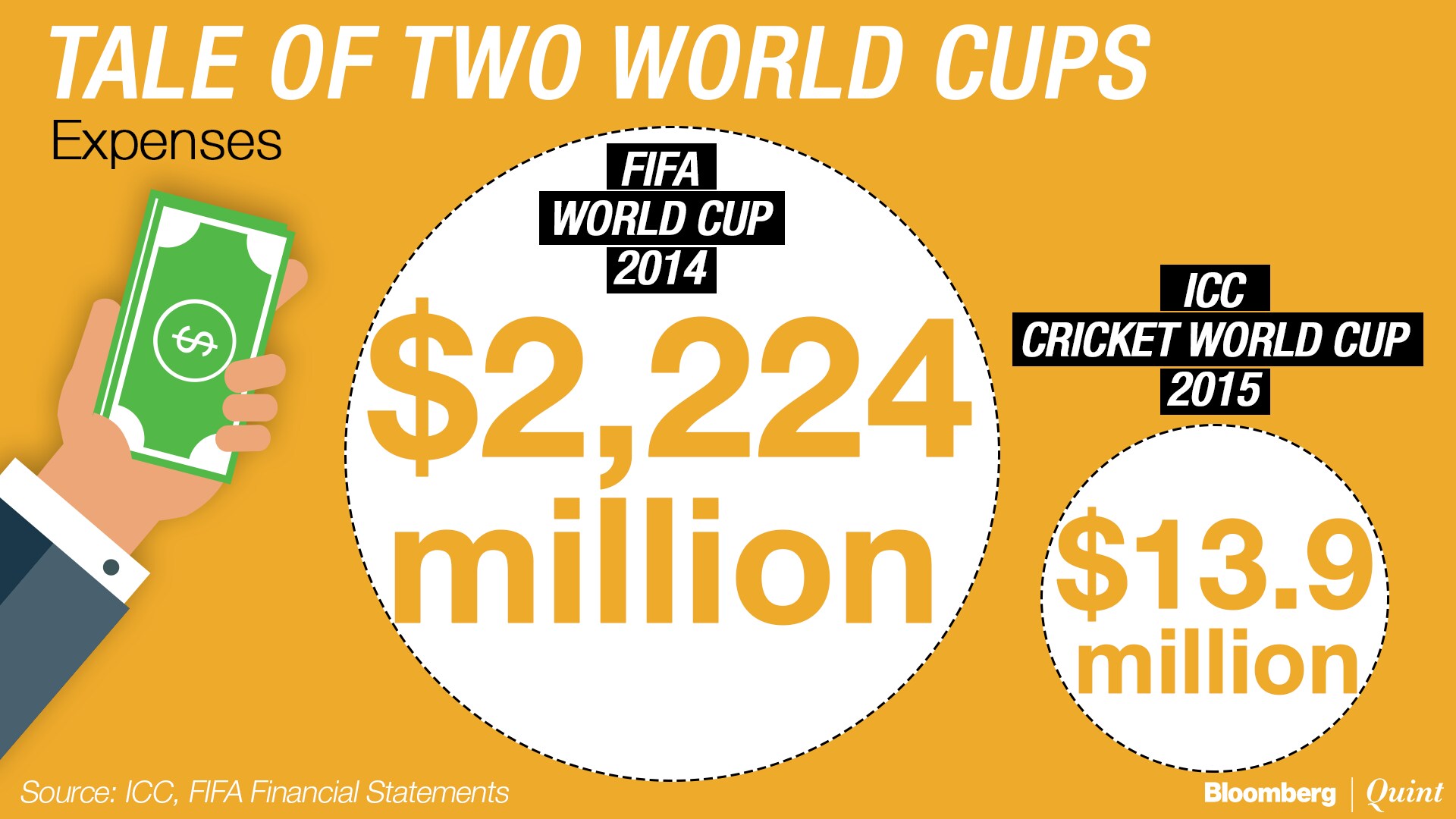
FIFA also spends more towards organising the world cup.
Moolah
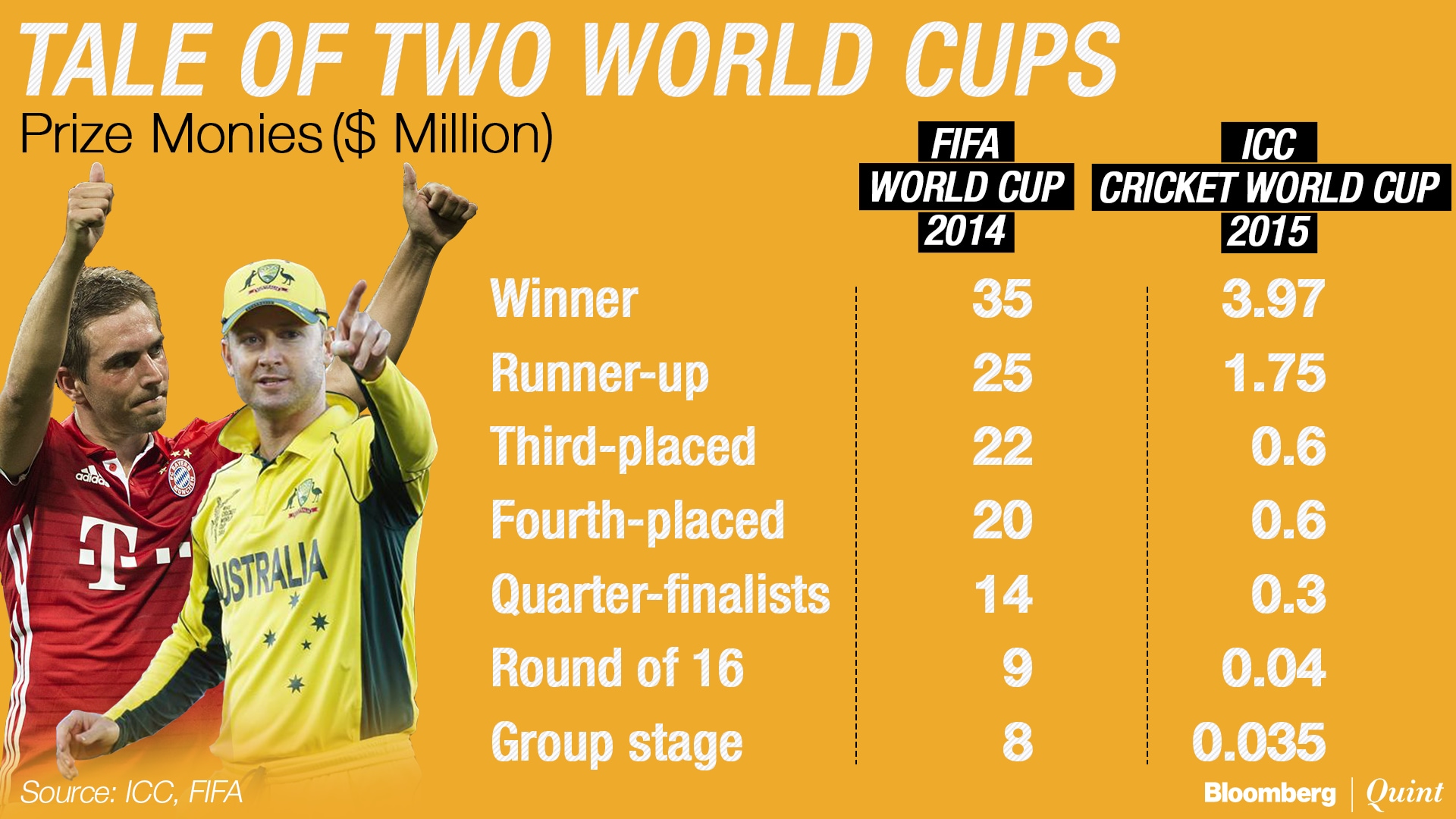
FIFA World Cup winners, losers and even participants earn significantly more than nations in the ICC Cricket World Cup.
When Germany won the football world cup in 2014, their prize money was more than the three times the prize money offered by the ICC Cricket World Cup 2015, financial statements show. Australia, which won the cricket world cup in 2015, earned half of what Cameroon got after getting knocked out in the football world cup group stages without winning a match.
Ticket Prices
If you're going to watch a football world cup match, be prepared to dig deep into your pockets.
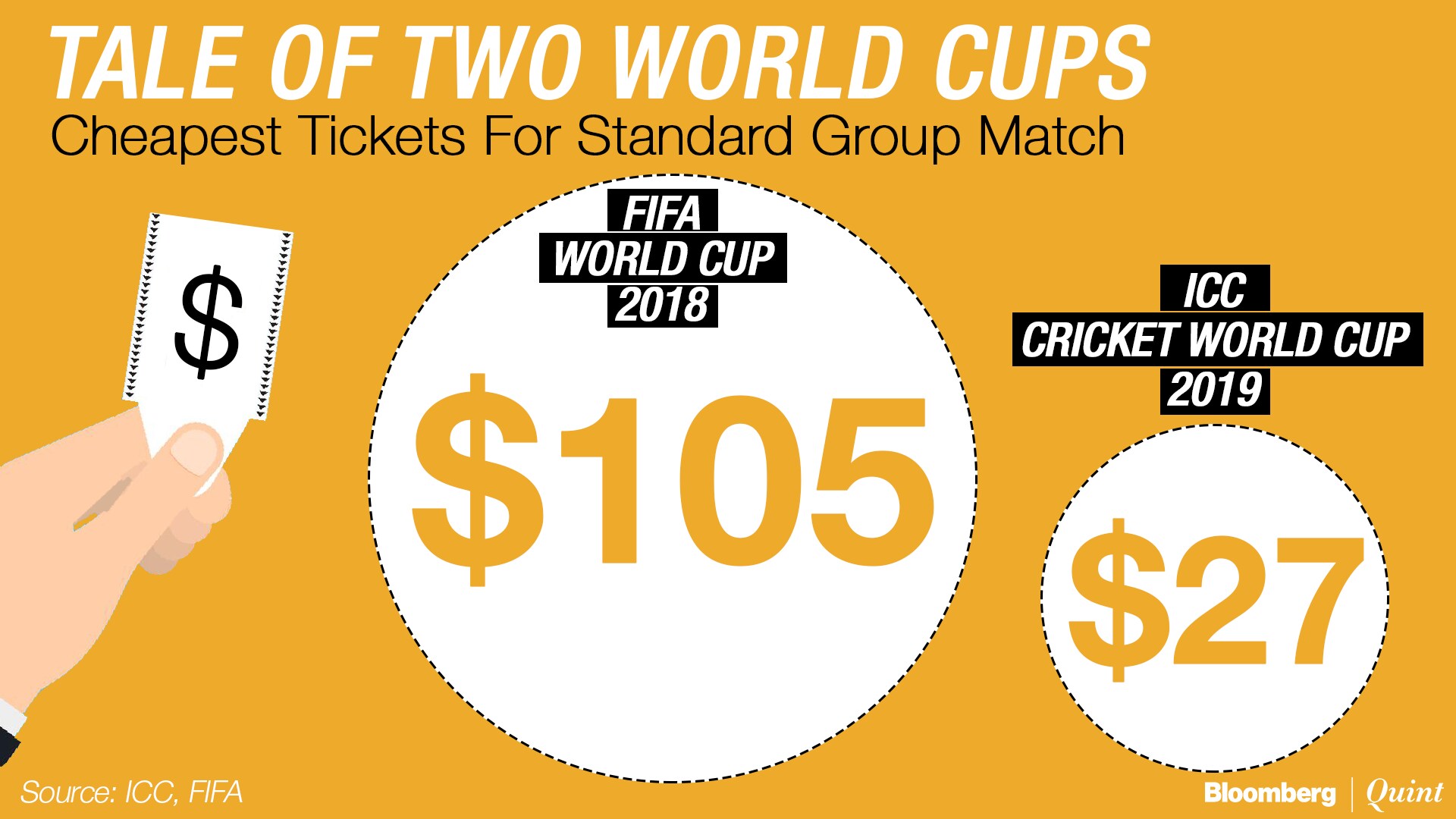
For the upcoming FIFA World Cup, the cheapest ticket for a standard group match is nearly five times costlier than the cheapest ticket at the cricket world cup.
Stadium Turnout
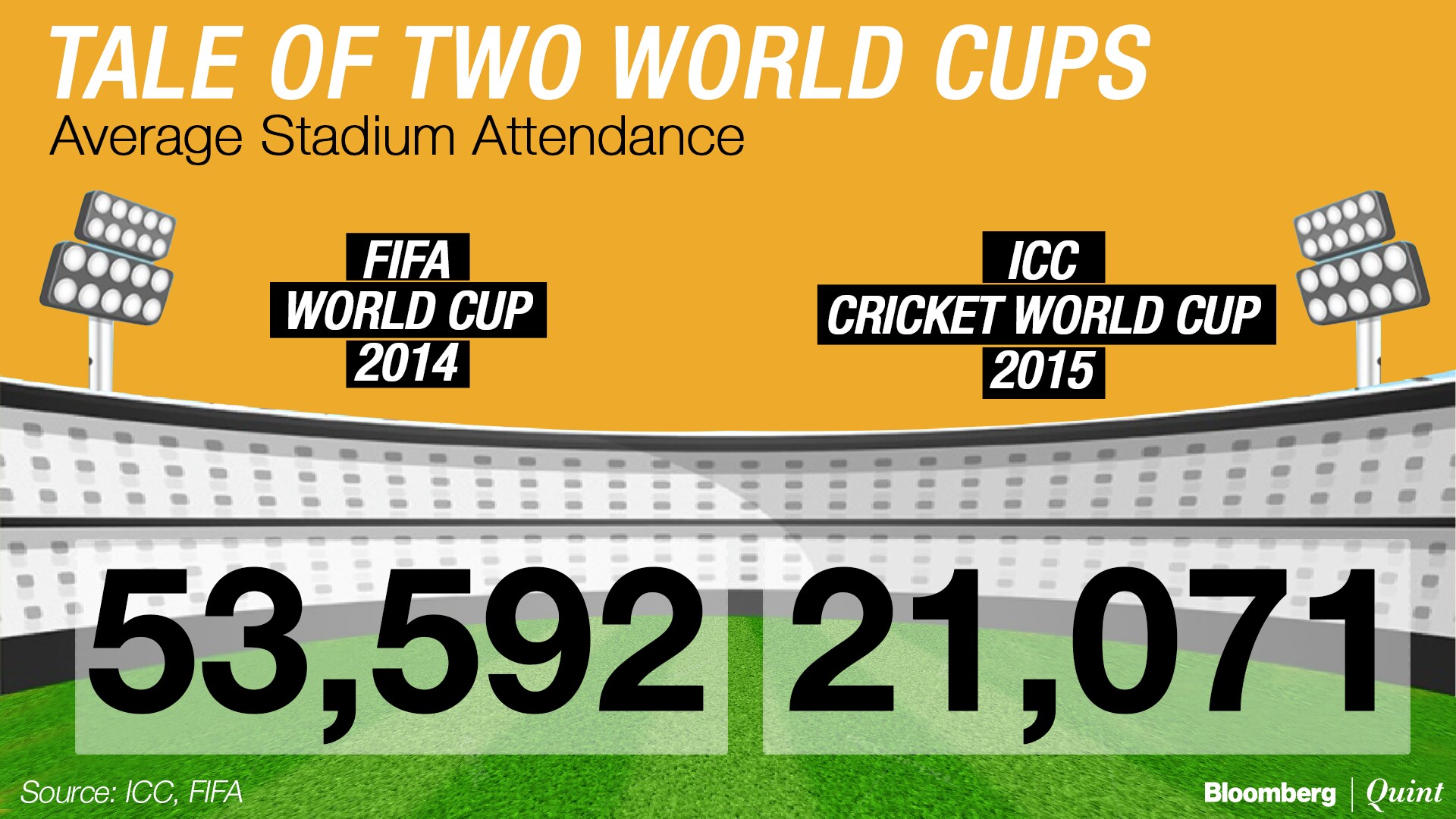
Despite costlier tickets the FIFA World Cup commands a higher average stadium turnout than the ICC Cricket World Cup. In the most recent editions, the average attendance at the stadium in the football world cup was over twice of that in the cricket world cup.
Tourism Boost
Events like world cups are a boon for the host country's tourism industry.
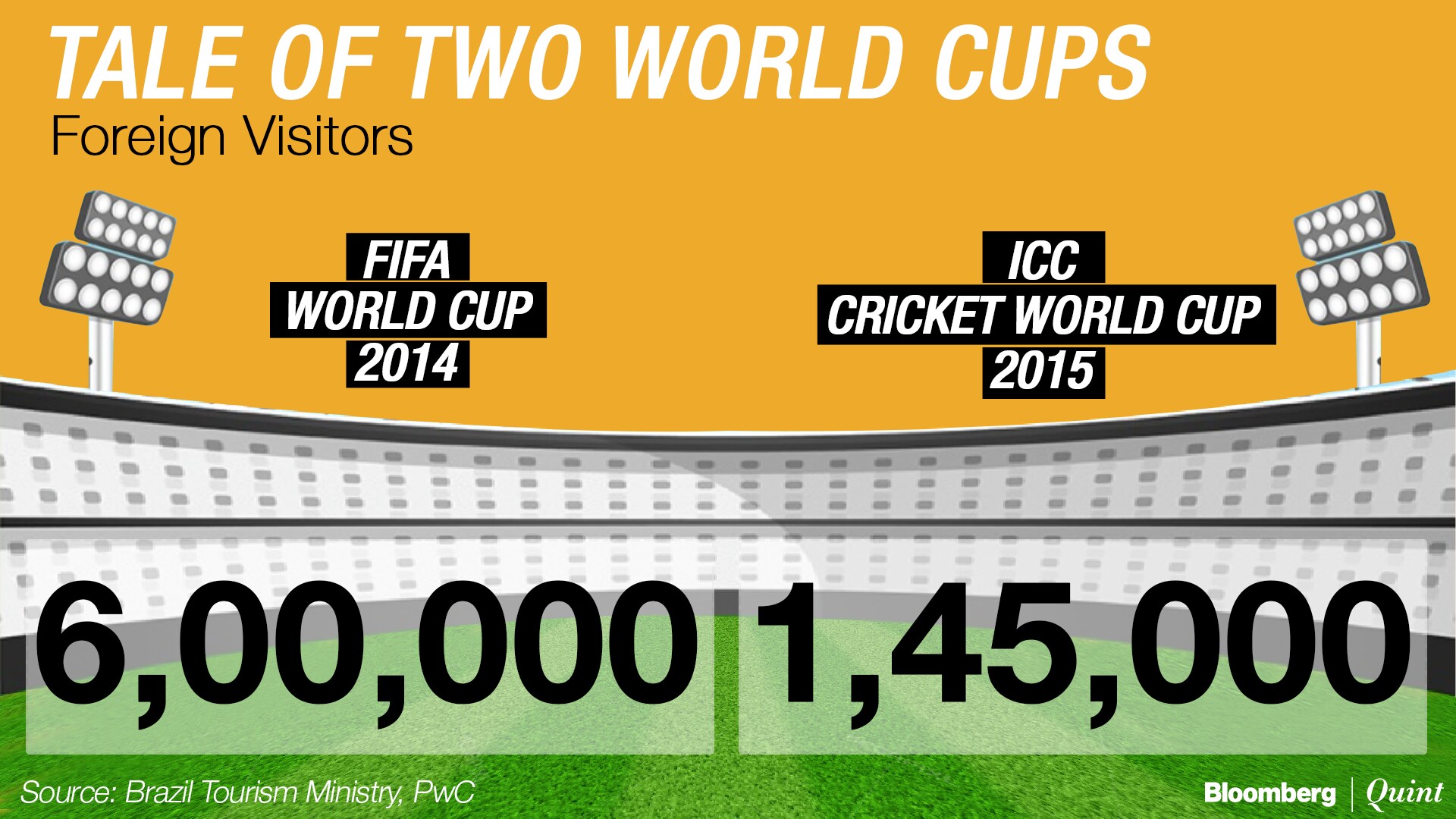
Brazil received the highest number of tourists in a year in 2014, when it hosted the FIFA World Cup, according to its tourism ministry. This was mainly due to more than 600,000 foreign visitors coming to the land of Samba to cheer their nations. That was beaten when the country hosted Olympics two years later.

-
High US Salaries, No Green Card Certainty: The Financial Calculation Facing Indian H-1B Families

The suspension of PERM processing at eight technology employers does not cancel existing H-1B visas. What it does is force a question many Indian families have been avoiding: is the US salary worth tying your career and family plans to one employer?
-
Unhedged Position: Can India See An Indonesia-Style Time Correction?
The Nifty is trading below levels it first clocked in 2024. Is there, then, as I have suggested in the headline, potential that the current time correction drags on painfully for the next three-five, even ten years?
-
Navigating Friction And Energy Realities: An Analysis Of Marco Rubio's October Visit To India
Occurring at a critical juncture marked by stalled trade negotiations and escalating geopolitical pressures over global energy supplies, the visit offers a profound window into modern US-India relations.
-
India Exports Capital. Why Not Export Trusteeship?
The big question, then, is whether India can build an institution that global borrowers, investors, banks, and lawyers can trust, even without an Indian connection.
-
France's Economy & Politics Are In Crisis | The Reason Why
Let's look at how the French economy and politics evolved under Nicolas Sarkozy, Franois Hollande and Emmanuel Macron.
-
You May Inherit The Business. You Must Earn Its Credibility.
Succession tests the founder's ability to share authority as much as it tests the next generation's readiness to assume it.
-
Signing Deals Is One Thing; Making Them Work Is Another | The Week In Whys
Sometimes, things don't turn out as planned. Indian companies have lost some bids to rivals, some projects won't produce until 2030.
-
FOMC Wall, PERM Suspension, Hospital Stocks | Talking Points This Week
A PERM suspension would directly affect green-card sponsorship rather than H-1B visas, so the near-term earnings impact could remain relatively limited. The key question is whether this marks a new phase in US scrutiny of Indian IT.
-
Everything, Everywhere, All At Once: Dalal Street's Week To Forget | Joining The Dots
Visa curbs, a Starlink spat and cancer drug caps: what connects this week's shocks for Indian markets
-
India Is Going Abroad For Critical Minerals. But It May Take Years To Pay Off | The Reason Why
Although India's steps are in the right direction, they remain modest compared with India's growing dependence.









