Cultural Appropriation In Food
“I tell my students, ‘When you get these jobs that you have been so brilliantly trained for, just remember that your real job is that if you are free, you need to free somebody else. If you have some power, then your job is to empower somebody else. This is not just a grab-bag candy game.'” - Toni Morrison
Chefs worldwide are in a more privileged position than they were a couple of years ago. There are scores of Instagram followers, more awards and rankings than we can keep up with, television shows that catapult us to celebrity-hood, and friendly media propping us up.
As Basically editor Amiel Stanek puts it, we're living in the Golden Age of Food. When we're not eating, we're compelled to discuss what we should be eating. Some of us even travel halfway across the world in search of the best eats on exclusive culinary tours.
With the blurring of boundaries and borders, and the emergence of these globe-trotting diners, it's no surprise that chefs are pushing the proverbial envelope, cooking outside their comfort zone, taking on foods from other cultures. Should that be a problem? In an ideal world, no. Done right, and with the right intentions, this cross-pollination can be incredible.
Look at Chef Ivan Brehm, of Singapore's restaurant Nouri. He champions what he's come to define as “crossroads cooking”. For the uninitiated: he's Brazilian by origin, studied at the Culinary Institute of America, lived and cooked across Madrid, Piedmonte, London before settling in Singapore. Brehm has worked at some of the most-lauded kitchens in the world – Per Se, Mugaritz, The Fat Duck, Bacchanalia...I could go on.
At Nouri, he's able to tie threads from various cultures, bring different elements of dishes together in unusual yet somehow familiar ways.

He used to make a ‘blinidli' at Nouri, a cross between a Russian blini and Indian idli. It was a pancake (made with fermented batter), topped with cultured coconut milk, and a Chinese caviar. The kind of dish that belonged everywhere and nowhere. “Each dish on our menu at Nouri is an attempt to bring our diners closer to the vision we have of making the world less divided. We hope to help our diners see how their cultures are intrinsically connected and how they can be linked to each other through a shared experience,” Brehm told Tatler.

In the same vein, at my restaurant in Mumbai called Masque, we have a long-time favourite in our takoyaki-meets-choriz-pao. The Japanese takoyaki has a close cousin in the paniyaram, we stuff it with a Goan sausage, and top it with apple butter sauce.

We also had a dish that simultaneously borrowed from the North East and the South of India. A dish inspired by Meghalaya's ‘daineiiong', a khasi tribe staple which is made with black sesame seeds. Our take featured onions slow-cooked in mustard oil, coarsely ground black sesame, almond milk, gutti aloo (local to Uttarakhand), butternut squash and kohlrabi. The puri-like “banana bread” riffed on Mangalore buns, and was made with sweet, ripe bananas.

It's a glimpse of our approach to modern Indian food, where the local ingredients come first. Followed by the techniques, which could be regional or international, chosen with the sole purpose of doing justice to the flavours. And, finally, comes the vocabulary to define these dishes that seemingly sit on the bridges of cultures.
The intention is what sets it apart from restaurants that find themselves on the wrong side of the debate. These seek to celebrate cultures, shine a light on them, pay homage if you will. No one can raise doubts about ‘authenticity' and ‘appropriation' if we stop to ask ourselves some key questions along the way:
- Who is making the money, and where does the buck stop?
- Is the same dish that's labelled authentic at the trendy restaurant ignored when it comes from immigrant kitchens?
- Are stereotypes being reinforced or referenced?
- Is the food or community being exoticised?
- Is the community being patronised?
- Are long-standing power structures being exploited, or reversed?
- How is the food culture evolving as a result?
Consider the case of Chef Shaun Beagley (aka ‘Boring Thai Chef'), who not too long ago worked with London's critically-acclaimed Thai restaurant Som Saa. He was fired for making a series of racist posts and videos; he even faked an Asian accent in some. His supper club, called The Boring Thai, claimed to cook classic simple Thai dishes the traditional way. Yet, he was found mocking the very culture he was profiting from.
Earlier this year, I met Chef Palisa Anderson in Sydney, who shared a very interesting personal story that stood in stark contrast to The Boring Thai episode. She posted about Chef Martin Boetz, who has roots in Brisbane but his Thai food at Longrain Restaurant was “the hottest ticket in town”. So when Anderson is asked to weigh in on the cultural appropriation of Thai food, she recalls how his “culturally transmuted Thai cuisine” had carved its own niche, and earned her love and fervent support.

“I grew up in Sydney cooking/eating Thai/Chinese surrounded in Chat Thai restaurants by Thais of different regions, religions, socio-economic backgrounds who were culturally as different as the diverse dialects & social mores they carried with them- needless to say the ‘Thai' food they were accustomed to was wildly varied & foreign to each other... and yet, there was always a familiarity, a recognition of a delicious palate that united rather than divided,” she writes.
Anderson valued Boetz's “quest for quality ingredients and excellence” and Longrain was where she celebrated many of her milestones. This is significant, because she's the daughter of restaurateur Amy Chanta, who created the Thai food institution that is Chat Thai.
Just because you aren't raised in the culture of the food you cook, doesn't mean you're missing a license. You just go about with sensitivity and respect.

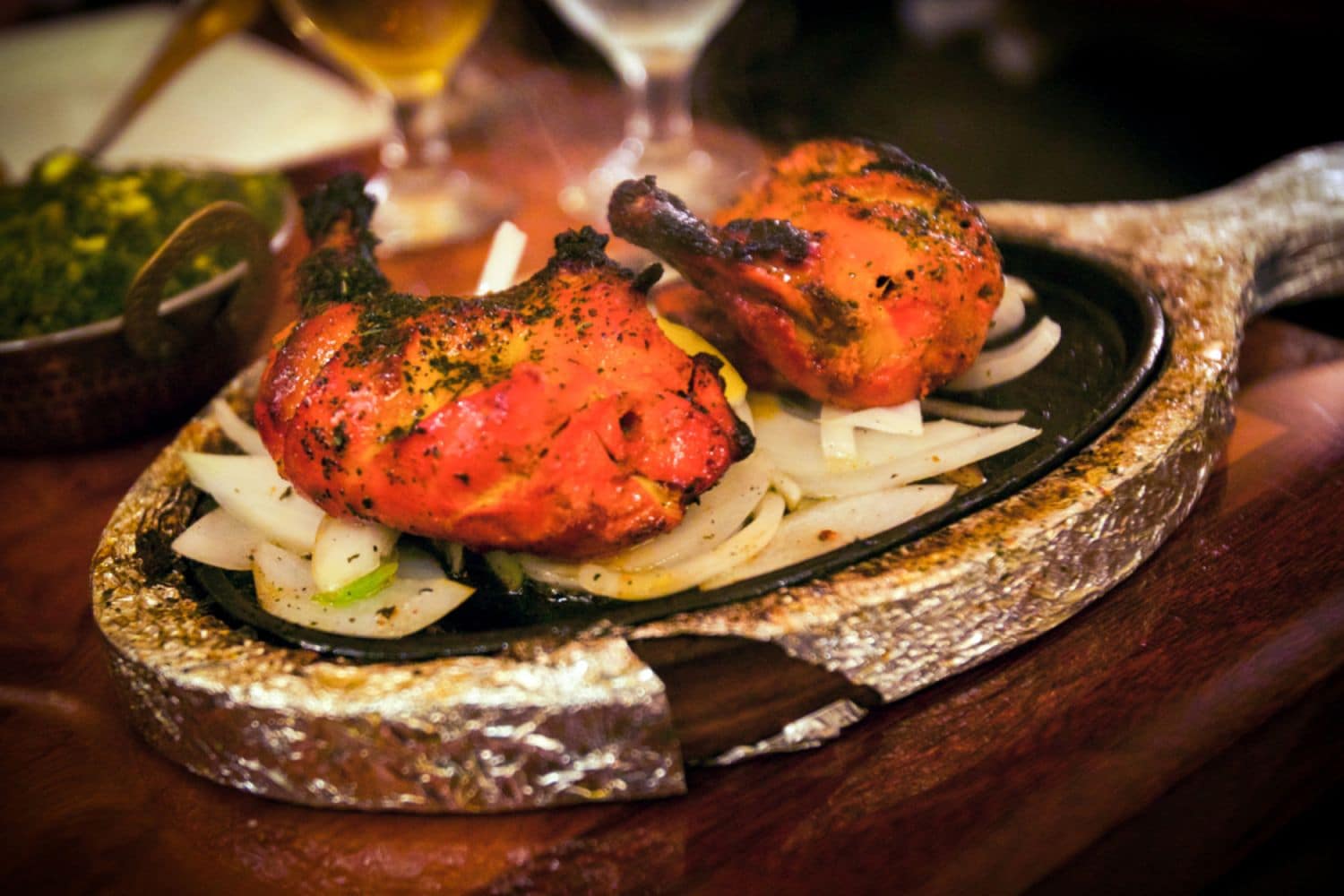
For the same reason, when Jamie Oliver takes on tikkas and curries on Food Tube, it's met with thousands of likes. On his YouTube channel, where he has over 4 million subscribers, Oliver's spicy Indian roast chicken sits comfortably next to his videos with Indian-origin hosts like Chetna Makan, Maunika Gowardhan or Mallika Basu, who whip up a fine chicken tikka or biryani or korma. Representation matters. Attribution matters. And his decision to share his platform with diverse voices is both commendable and commercially viable. (Before you point it out: Yes, the jerk rice fracas, was a whole separate matter.)

Gaa's Chef Garima Arora and I have a common food philosophy, in that we both dig into Indian food traditions but seek to reimagine them in the modern context. Her take on kheema pao is altogether new, as is her paan – a single betel leaf crisped in duck stock. Sure, Indian food is her starting point, but she'll easily take on a taco and make it her own. Like language and other markers of culture, food is constantly evolving; while tradition is important, innovation is critical. The more voices we have, the richer we collectively get.

Chef Prateek Sadhu is the executive chef and co-founder of Mumbai's @MasqueRestaurant.
The views expressed here are those of the author, and do not necessarily represent the views of BloombergQuint or its Editorial team.

-
High US Salaries, No Green Card Certainty: The Financial Calculation Facing Indian H-1B Families

The suspension of PERM processing at eight technology employers does not cancel existing H-1B visas. What it does is force a question many Indian families have been avoiding: is the US salary worth tying your career and family plans to one employer?
-
Unhedged Position: Can India See An Indonesia-Style Time Correction?
The Nifty is trading below levels it first clocked in 2024. Is there, then, as I have suggested in the headline, potential that the current time correction drags on painfully for the next three-five, even ten years?
-
Navigating Friction And Energy Realities: An Analysis Of Marco Rubio's October Visit To India
Occurring at a critical juncture marked by stalled trade negotiations and escalating geopolitical pressures over global energy supplies, the visit offers a profound window into modern US-India relations.
-
India Exports Capital. Why Not Export Trusteeship?
The big question, then, is whether India can build an institution that global borrowers, investors, banks, and lawyers can trust, even without an Indian connection.
-
France's Economy & Politics Are In Crisis | The Reason Why
Let's look at how the French economy and politics evolved under Nicolas Sarkozy, Franois Hollande and Emmanuel Macron.
-
You May Inherit The Business. You Must Earn Its Credibility.
Succession tests the founder's ability to share authority as much as it tests the next generation's readiness to assume it.
-
Signing Deals Is One Thing; Making Them Work Is Another | The Week In Whys
Sometimes, things don't turn out as planned. Indian companies have lost some bids to rivals, some projects won't produce until 2030.
-
FOMC Wall, PERM Suspension, Hospital Stocks | Talking Points This Week
A PERM suspension would directly affect green-card sponsorship rather than H-1B visas, so the near-term earnings impact could remain relatively limited. The key question is whether this marks a new phase in US scrutiny of Indian IT.
-
Everything, Everywhere, All At Once: Dalal Street's Week To Forget | Joining The Dots
Visa curbs, a Starlink spat and cancer drug caps: what connects this week's shocks for Indian markets
-
India Is Going Abroad For Critical Minerals. But It May Take Years To Pay Off | The Reason Why
Although India's steps are in the right direction, they remain modest compared with India's growing dependence.









