Book Excerpt: The Closure Of A Mine And A Union Leader’s Identity Crisis
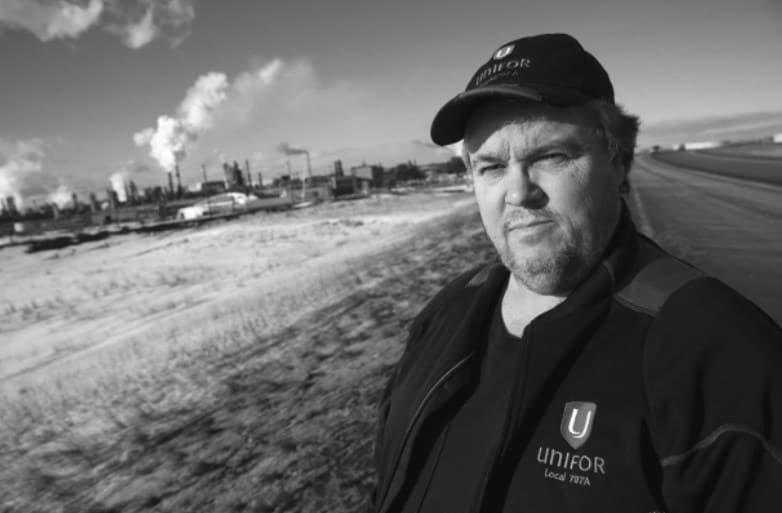
In the months following the closure of the Brunswick Mine, Ken Smith's confidence that he and his colleagues had done a “great job” in planning their own version of a just transition rapidly diminished. Although some of the mine's laid-off workers, such as Ken, found high-paying energy and mining jobs in cities and mining camps across Canada and beyond, many more were left behind, and unemployment rates in Bathurst soared. Lost without the security of the mine, scores of small businesses that had sold mechanical equipment, nuts, bolts, and truck parts to Xstrata went bankrupt and closed. “The mine was the focal point of that community,” Ken says.
“We were doing something new with the transition, but we still fell short. We failed to recognise that moving away was not an option for many of our brothers and sisters. We failed to understand how badly this would hurt our community.”Ken Smith, Union leader, Brunswick Mine
While many of the mining communities in northern Canada rely predominantly on an itinerant workforce, the Brunswick Mine had employed locally, mostly fishermen left unemployed following the decline of the New Brunswick fishing industry in the 1960s. The familial and emotional ties to Bathurst of these third- and fourth-generation residents made it impossible for some to leave. “For some of our miners—because they had elderly parents with no other caregivers, or family members with special needs, or just a familiarity with the place where they had lived their entire lives—leaving was not an option,” said Ken. “Now they are jobless, surviving on precarious work or employment insurance. Others are completely reliant on social assistance. These are people who worked for thirty or forty years in the mining industry, and this is now where they've found themselves.”

For those like Ken who found work in the Alberta oil sands, or in mines farther north, the strain of a long-distance commute—travelling back and forth for thousands of kilometres to work exhausting three- or four-week shifts—has wreaked havoc on their personal lives. Although wages are sometimes three or four times the rate of those back home, many marriages have crumbled under the strain of separation. Ken counts himself lucky that his wife of more than thirty years made a last-minute decision to move with him to Fort McMurray, a difficult decision for the couple, as they were forced to leave behind his wife's beloved sister with special needs. Had his wife not accompanied him, Ken is adamant that he would not have lasted more than a couple of months on the oil sands. “It was very tough for me to leave Bathurst. I am fifty-six years old, and it is the first time I have been away from home. Believe it or not, even us old guys get homesick.”

To cope with this newfound sense of displacement, Ken busied himself with union organising at Fort McMurray. During the day, he worked on the gargantuan dump trucks that lumbered throughout the oil sands facilities. The rest of the time, as president of the Unifor Local 707A, he worked to protect the interests of thirty-five hundred Suncor Energy oil sand workers. In December 2015, that position led to a chance invitation to attend the UN climate summit in Paris as a union delegate. Sitting in the audience, listening to a panel discussion about clean-energy job creation, Ken felt uncomfortable that he and other fossil fuel workers were being demonised as climate change deniers, that oil sand workers such as him were just as toxic as the greenhouse gases that were choking up the atmosphere. “I have never been a huge environmentalist or anything like that,” said Ken. “I'm just a guy who goes to work each day. But I also accept the science because people who have the expertise are saying that climate change is real. When I was a kid, the winters came earlier and the snow was deeper and stayed on the ground longer. There has been a gradual warming in my fifty years. I accept the facts.”

Sensing an opportunity during the question-and-answer period, Ken stood up and took the microphone. He introduced himself as a fossil fuel worker. Many workers' attitudes in his industry had shifted, Ken told the hushed room, they “get it” that climate change is real. The trick, Ken said, was ensuring that workers such as himself—and their families—would not be left behind in the transition to clean energy.
Ken's brave and honest speech led to a rousing standing ovation, something that still makes him smile. “I have a grade twelve education and am a little rough around the edges. I am always amazed when someone wants to hear my opinion.” News of a fossil fuel worker calling for the demise of his own industry caused international headlines, catapulting Ken into the role of unlikely climate change hero. But to Ken, his speech at Paris was simply common sense: As someone who already knows what happens when your industry shuts down, he feels that he has something real to contribute to the discussion about what happens next. He just wishes that more people in the upper echelons of government and climate change policy would listen. “I was that miner with thirty-three years' service when the mine closed down; I was that union president who had to look at my members. Members who were my union brothers and sisters, my friends, my teammates, school friends—they were much more than just co-workers and they wanted to keep their jobs much more than they wanted ‘transition.' Now I am again that union president in an industry that is the only game in town. In a remote community that is dependent on the oil sands for survival. Again, we are talking about transition, but this time the conversation goes a bit further to a just transition, and what that means. We need to look to our past and see what we did well and where we fell short. We have time to get this right, but we will only get one shot at it.”

For Ken—and Sharan Burrow—getting it right means governments partnering with workers from sectors that are about to lose jobs.
Ken knows that consultation matters from the conversations that he had with his co-workers at Fort McMurray, people like him who came to the oil sands from other failed industries. “They all came to Fort McMurray because they didn't want to end up on welfare,” Ken says. “They wanted to do better, they wanted their children to have opportunities, they wanted to provide. I know that these people will not resist change if they know that their families will be protected. That is how you make partners out of the workforce. Preparation is way better than resistance. We know that the tide is coming in. Let's prepare ourselves to move to the next job.”
Extracted with permission from Climate Justice A Man-Made Problem with a Feminist Solution, by Mary Robinson, Bloomsbury India.
The views expressed here are those of the author and do not necessarily represent the views of BloombergQuint or its editorial team.

-
A New Samvat Wishlist: Inclusive Prosperity And Human Development

India has strengthened its economic foundations through infrastructure, digital access and enterprise. Its next growth chapter must deepen productivity, create better livelihoods and widen participation in prosperity.
-
Love, Sex Aur Dhokha: The Audacious Plot To Spy On Jensen Huang
A Taipei dinner, a Singapore chip buyer and a suspected Chinese asset: inside the alleged spy operation that got close to NVIDIA's Jensen Huang.
-
Ten Things I Learnt This Samvat
Patience can be a trap. Cheap stocks can stay cheap. Leverage can wipe you out. What did Samvat 2082 teach us? Niraj Shah writes on 10 lessons from the year gone by.
-
Talking Points This Week: Tech Nerves, FII Buying, And A Faraway Banking Shock
The global markets are not shining this Diwali. The exception in the large markets is, India.
-
Midterm Rally Lasted A Day. The Hard Reality Of A Divided US May Last Two Years | Opinion
Between a contested AI boom, a debt ceiling that arrives in 2027 and a president with every incentive to act alone, the next two years may prove more volatile than the first day's rally suggests.
-
Blue Wave Will Derail the AI Trade but Won't Dismantle the AI Era | Unhedged Position
The Democrats' sweep of the US Congress will see politics collide with economic forces both over the long and short term.
-
It's Time To Take The GST Council's Bet On Trust Global
Payment records can prove India's services exports, and clear, proportionate rules can bring foreign digital sellers into the tax net.
-
Opinion | India at 38: From Innovation Overperformer to Innovation Powerhouse
India now has 453 VC-backed deep science startups, 18 of them late-stage, after 117 percent growth since 2020. Laurus Labs, at USD 9.3 billion, is the most valuable deep science company in any middle-income economy outside China.
-
Navigating Energy Crossroads: S Jaishankar's Call For Diversified Supply Chains At G20 Ministerial Meeting
As geopolitical fault lines continue to test maritime trade routes and commodity flows, Jaishankar's message remains pertinent: true economic resilience requires open markets, protected transit lines, and a genuine commitment to multilateral cooperation rather than coercion.









