Ola’s Indigenous Lithium-Ion Battery Ready, To Boost Market Share: CEO Bhavish Aggarwal
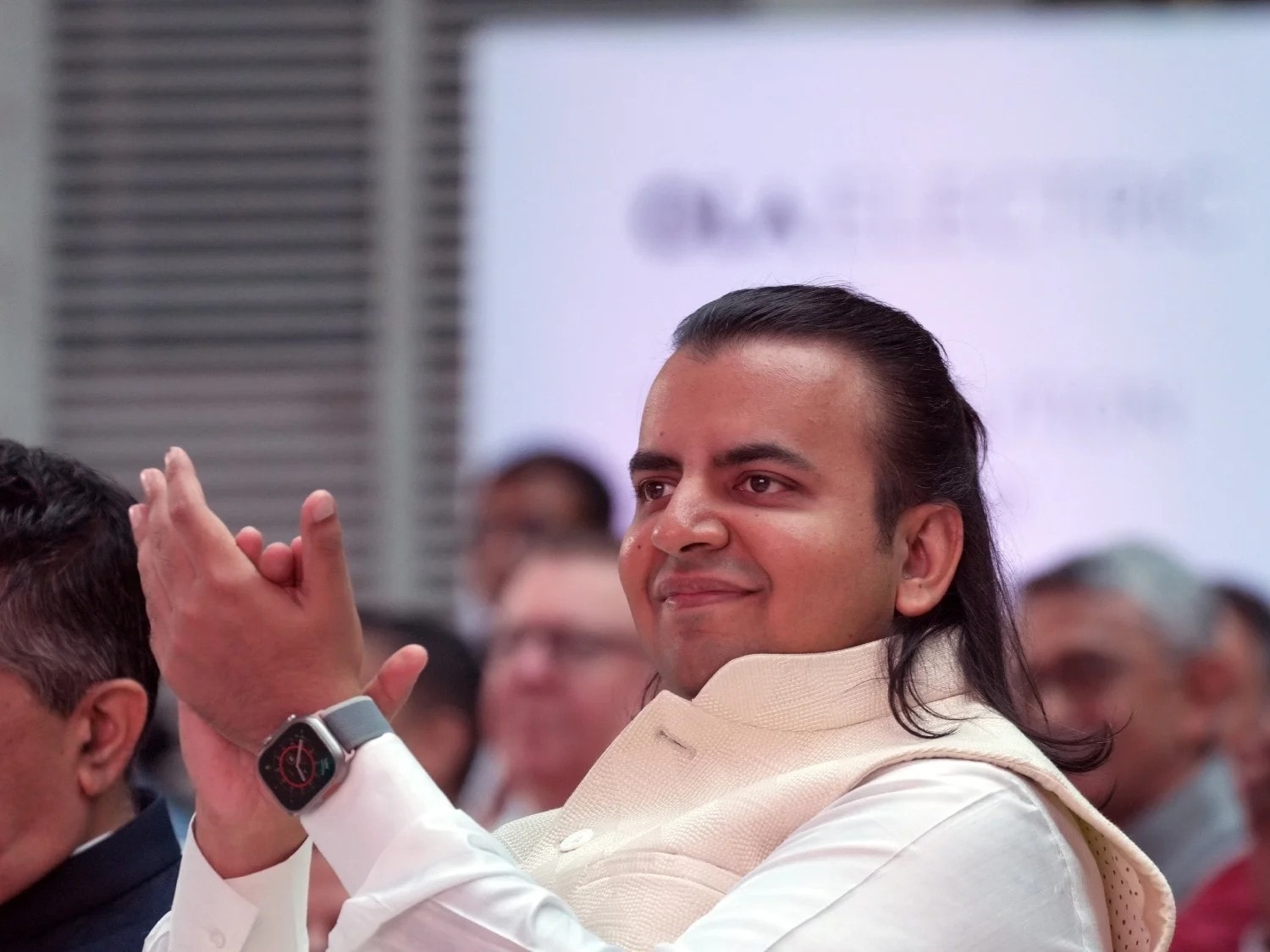
Ola Electric has begun integrating its in-house developed 4,680 Bharat Cell into its vehicles, with founder and Chief Executive Bhavish Aggarwal saying the move will strengthen the company's margins and market position. The company claims that this is India's first indigenously developed lithium-ion cell.
“The heart of a vehicle is the cell… the biggest cost driver, the biggest performance driver, everything, is the cell,” Aggarwal told NDTV Profit in am exclusive interview. “When our cell comes in, that gross margin will further go up. So then that cell coming in starts this quarter.”
The company formally announced the 4680 Bharat Cell at its annual ‘Sankalp' event under the theme ‘India Inside.' It described the battery as India's first indigenously developed lithium-ion cell, produced at Ola's Krishnagiri factory. Ola said the new technology would allow faster recharge, improved safety, and lower costs to produce.
The Bharat Cell “comes with over 15 years of battery life, 5X the capacity of the competition and provides 80% charging within 15 minutes,” Ola Electric Head of Research and Development Rajesh Mekkat said in a media statement, adding that rival offerings take 30 minutes to reach 50% charge.
The company plans to gradually deploy the Bharat Cell across its products. At the event, Aggarwal also unveiled the Ola Pro Sport scooter equipped with the new cell.
Vertical Integration Push
Ola is expanding its vertical integration strategy to reduce dependence on imports. “We're the only one in that scheme who has put up a factory and is producing commercial cells,” Aggarwal told NDTV Profit.
As part of its Gen 3 initiative, Ola also launched a ferrite motor technology designed to replace rare earth magnets in its products. “India needs to leapfrog to the next generation, as these rare earth magnets are coming from very few nations,” Aggarwal said. Vehicles equipped with the new motor are expected to roll out in the third quarter of the current financial year.
The ferrite motors would serve as “an alternative technology for rare earth magnets in the future,” Ola Electric's Head of Vehicle Engineering Samraj Dhinakar said.
The company also introduced AI-enabled MoveOS6 software, which will be available from January 2026. The system includes a voice assistant, collision alert, blind spot detection, and multi-language support. “The MoveOS6 software can tell how a customer can improve the battery life of an electric scooter or motorcycle,” Ola Electric's Head of Software Engineering Anirbhan Das said.
Ola capped the announcements with a prototype of its Diamond Head electric motorcycle. Aggarwal said the bike, targeted for launch in mid-2027 at a price under Rs 5 lakh, would include remote summon and achieve 0–100 kmph in two seconds. “We want to change the face of (electric) two-wheelers forever,” he said.

-
Unhedged Position: Can India See An Indonesia-Style Time Correction?

The Nifty is trading below levels it first clocked in 2024. Is there, then, as I have suggested in the headline, potential that the current time correction drags on painfully for the next three-five, even ten years?
-
Navigating Friction And Energy Realities: An Analysis Of Marco Rubio's October Visit To India
Occurring at a critical juncture marked by stalled trade negotiations and escalating geopolitical pressures over global energy supplies, the visit offers a profound window into modern US-India relations.
-
India Exports Capital. Why Not Export Trusteeship?
The big question, then, is whether India can build an institution that global borrowers, investors, banks, and lawyers can trust, even without an Indian connection.
-
France's Economy & Politics Are In Crisis | The Reason Why
Let's look at how the French economy and politics evolved under Nicolas Sarkozy, Franois Hollande and Emmanuel Macron.
-
You May Inherit The Business. You Must Earn Its Credibility.
Succession tests the founder's ability to share authority as much as it tests the next generation's readiness to assume it.
-
Signing Deals Is One Thing; Making Them Work Is Another | The Week In Whys
Sometimes, things don't turn out as planned. Indian companies have lost some bids to rivals, some projects won't produce until 2030.
-
FOMC Wall, PERM Suspension, Hospital Stocks | Talking Points This Week
A PERM suspension would directly affect green-card sponsorship rather than H-1B visas, so the near-term earnings impact could remain relatively limited. The key question is whether this marks a new phase in US scrutiny of Indian IT.
-
Everything, Everywhere, All At Once: Dalal Street's Week To Forget | Joining The Dots
Visa curbs, a Starlink spat and cancer drug caps: what connects this week's shocks for Indian markets
-
India Is Going Abroad For Critical Minerals. But It May Take Years To Pay Off | The Reason Why
Although India's steps are in the right direction, they remain modest compared with India's growing dependence.
-
When Everyone Has AI, What Gives You An Edge?
India's young workforce is entering an uncertain world of work where powerful AI tools are becoming widely accessible. The advantage will belong to those who combine deep expertise with digital fluency, and the distinctly human capabilities that technology cannot manufacture.









