Trump Asks U.S. Supreme Court To Overturn Colorado Ballot Ban
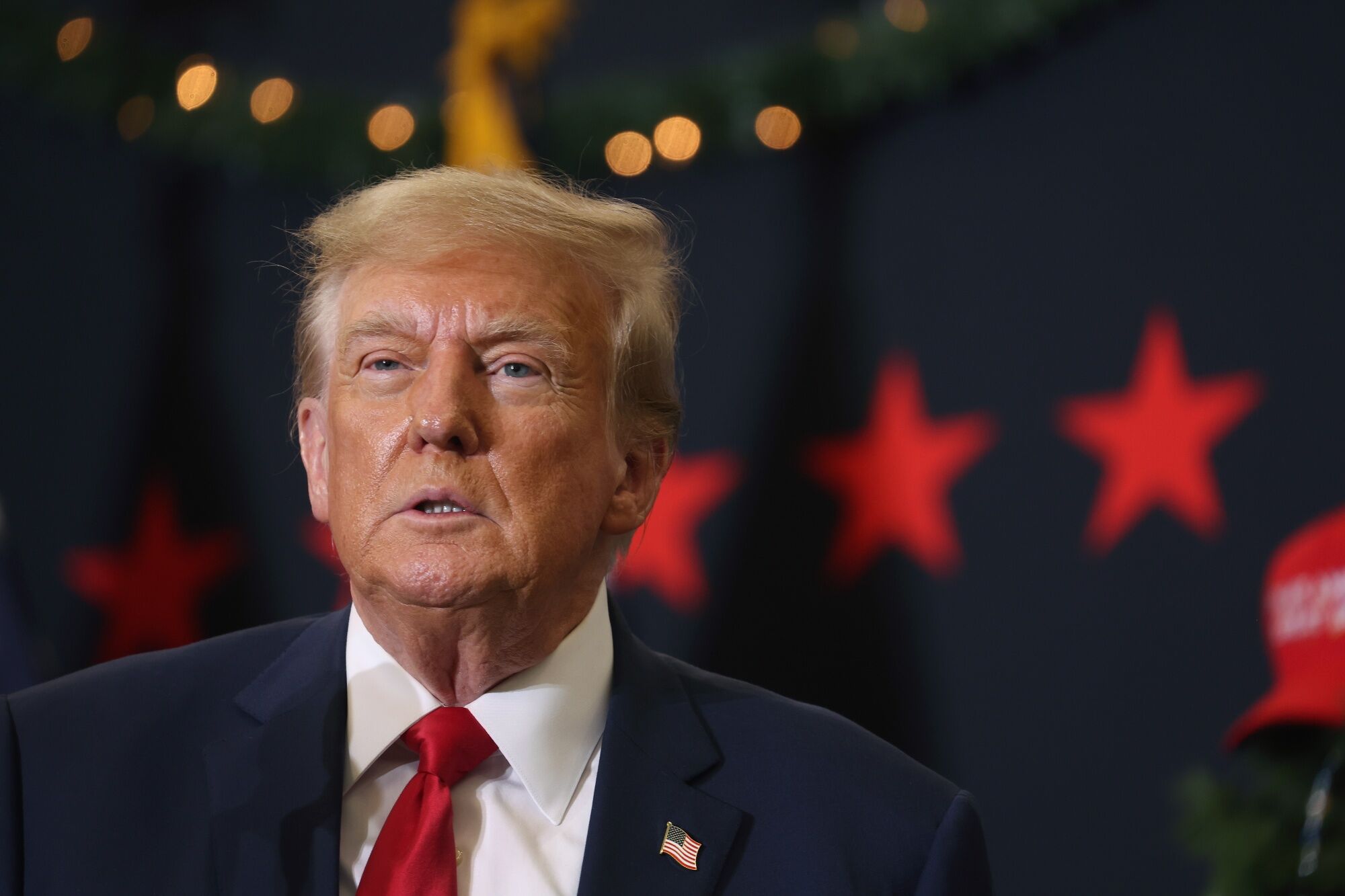
(Bloomberg) -- Donald Trump asked the US Supreme Court to overturn a ruling that would bar him from the presidential ballot in Colorado, setting up a historic showdown over whether his role in the Jan. 6, 2021 assault on the Capitol disqualifies him from office.
The former president urged the high court in an appeal filed Wednesday to declare that he did not take part in an insurrection by trying to overturn his 2020 election loss to Joe Biden, a push that culminated with a deadly riot at the US Capitol.
The Colorado Supreme Court on Dec. 19 declared Trump ineligible to reclaim the White House — the first time a court has ever invoked the US Constitution's insurrection clause to disqualify an ex-president.
Trump told the Supreme Court the issues were of the “utmost importance,” according to a copy of the filing viewed by Bloomberg. “The Colorado Supreme Court decision would unconstitutionally disenfranchise millions of voters in Colorado and likely be used as a template to disenfranchise tens of millions of voters nationwide,” he argued.
The appeal marks a pivotal moment in the unprecedented national drama over Trump's candidacy. A Supreme Court decision to grant review and back Trump could end efforts around the country to remove him from the ballot. A ruling against Trump could fuel that drive and raise new questions about the viability of his candidacy.
QuickTake: The 14th Amendment Challenge to Trump, Explained
Colorado is one of two states where Trump has been declared ineligible. Maine's top election official invoked similar reasoning on Thursday to block him from the primary ballot there. Other states, including California on Dec. 28, have said the ex-president can run.
Trump, the frontrunner for the Republican presidential nomination, has faced dozens of lawsuits across the country claiming he's ineligible for another term in the White House under Section 3 of the 14th Amendment. That provision, enacted shortly after the Civil War, says that a person who took an oath to support the Constitution and then “engaged in insurrection” is ineligible to hold office again.
Trump told the Supreme Court that the events of Jan. 6 “were not ‘insurrection.'”
“‘Insurrection' as understood at the time of the passage of the Fourteenth Amendment meant the taking up of arms and waging war upon the United States,” his lawyers argued in the filing.
The filing wasn't immediately available on the Supreme Court website.
Congressional Authority
The appeal said the Colorado Supreme Court made a series of errors in its interpretation of Section 3. Trump contended the president isn't an “officer of the United States” subject to the insurrection clause. And he said the entire issue is an issue that Congress, not the courts, should resolve.
“By considering the question of President Trump's eligibility and barring him from the ballot, the Colorado Supreme Court arrogated Congress' authority,” he argued.
Trump also argues the Colorado Supreme Court improperly relied on a report issued by the House select committee that investigated the Jan. 6 attack, which Trump's lawyers argued was inadmissible hearsay. Trump also argues the state court shouldn't have relied on expert testimony from a sociology professor who contended that Trump intentionally used coded language in public speeches to incite right-wing extremists, despite not conducting his own research or interviews on the matter.
Trump's filing follows a similar appeal filed Dec. 27 by the Colorado Republican Party. Trump on Wednesday pointed to the party's contention that the insurrection clause isn't “self-executing” – that is, that it can be enforced only after Congress sets up procedures for determining whether someone violated the provision.
Trump also faulted the Colorado courts, which held a five-day trial, for what he said was a “rushed” process.
The voters suing Trump and the Colorado secretary of state have both urged the court to take up the case.
In its 4-3 decision, the Colorado Supreme Court said Trump engaged in “overt, voluntary and direct participation” in an insurrection that culminated with the Capitol riot.
The majority pointed to Trump's unsupported claims over the course of weeks that the election was stolen, his fiery Jan. 6 speech to a crowd that included armed people and his demands, even after rioters were storming the Capitol, that Vice President Mike Pence refuse to certify the results.
“President Trump fully intended to — and did — aid or further the insurrectionists' common unlawful purpose of preventing the peaceful transfer of power in this country,” the Colorado court said. The seven-justice court is composed entirely of Democratic appointees.
Political Fight
Trump and his allies have argued the efforts to ban him from state ballots is driven by politics.
“Democrats are obsessively violating the American voters' constitutional right to vote for the candidate of their choice,” Trump spokesman Steven Cheung said in a statement. “This is an unAmerican, unconstitutional act of election interference which cannot stand.”
The Colorado ruling won't take effect until the nation's highest court resolves the matter one way or another. The state court directed Colorado's secretary of state to keep Trump's name on the presidential primary ballot in the meantime.
On Tuesday, Trump filed a lawsuit seeking to restore his name to Maine's presidential primary ballot after the secretary of state disqualified him under the 14th Amendment's insurrection clause.
In addition to the Colorado case, the Supreme Court may have to resolve aspects of the four pending criminal cases against Trump. The court on Dec. 22 declined to immediately consider whether he is immune from charges stemming from his effort to reverse his defeat at the polls.
(Updates with additional arguments from Trump's filing.)
More stories like this are available on bloomberg.com
©2024 Bloomberg L.P.

-
Love, Sex Aur Dhokha: The Audacious Plot To Spy On Jensen Huang

A Taipei dinner, a Singapore chip buyer and a suspected Chinese asset: inside the alleged spy operation that got close to NVIDIA's Jensen Huang.
-
Ten Things I Learnt This Samvat
Patience can be a trap. Cheap stocks can stay cheap. Leverage can wipe you out. What did Samvat 2082 teach us? Niraj Shah writes on 10 lessons from the year gone by.
-
Talking Points This Week: Tech Nerves, FII Buying, And A Faraway Banking Shock
The global markets are not shining this Diwali. The exception in the large markets is, India.
-
Midterm Rally Lasted A Day. The Hard Reality Of A Divided US May Last Two Years | Opinion
Between a contested AI boom, a debt ceiling that arrives in 2027 and a president with every incentive to act alone, the next two years may prove more volatile than the first day's rally suggests.
-
Blue Wave Will Derail the AI Trade but Won't Dismantle the AI Era | Unhedged Position
The Democrats' sweep of the US Congress will see politics collide with economic forces both over the long and short term.
-
It's Time To Take The GST Council's Bet On Trust Global
Payment records can prove India's services exports, and clear, proportionate rules can bring foreign digital sellers into the tax net.
-
Opinion | India at 38: From Innovation Overperformer to Innovation Powerhouse
India now has 453 VC-backed deep science startups, 18 of them late-stage, after 117 percent growth since 2020. Laurus Labs, at USD 9.3 billion, is the most valuable deep science company in any middle-income economy outside China.
-
Navigating Energy Crossroads: S Jaishankar's Call For Diversified Supply Chains At G20 Ministerial Meeting
As geopolitical fault lines continue to test maritime trade routes and commodity flows, Jaishankar's message remains pertinent: true economic resilience requires open markets, protected transit lines, and a genuine commitment to multilateral cooperation rather than coercion.
-
Indians Are Travelling, But Not Every Journey Is A Holiday | The Week In Whys
Pilgrims, patients and working women are the real travellers, and the system hasn't quite caught up with them.









