NCLT Rules On Kirloskar Family Feud: A Six-Year Battle Over Company Control And Fairness
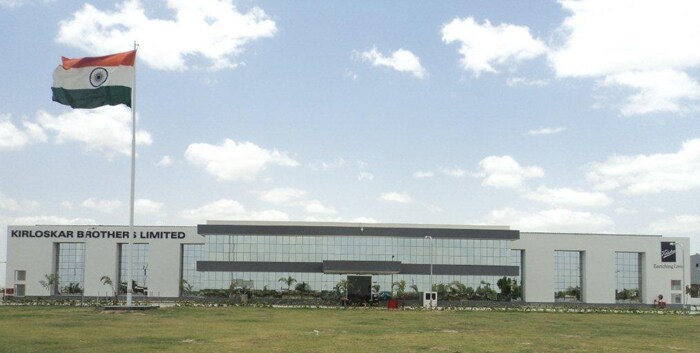
On Tuesday, the National Company Law Tribunal made a significant ruling in a dispute involving the Kirloskar family and their companies. The NCLT stated that the petitioners, Atul and Rahul Kirloskar, have successfully presented their case regarding issues related to fairness and management practices within companies.
Despite being filed in 2017, legal proceedings stretched for over six years.
Kirloskar Industries Ltd., led by brothers Atul and Rahul Kirloskar, holds a significant stake in Kirloskar Brothers Ltd., primarily owned by Sanjay Kirloskar. Kirloskar Industries owns 23.91% of Kirloskar Brothers. In addition, Atul Kirloskar has a 0.59% ownership stake, while Rahul Kirloskar holds a 0.51% stake in Kirloskar Brothers.
The conflict arose in 2017 when Atul and Rahul Kirloskar filed a petition with the NCLT, alleging instances of "oppression and mismanagement" by Sanjay Kirloskar. They sought Sanjay's removal from the company, citing actions that were detrimental to the interests of minority shareholders.
Further, Atul and Rahul Kirloskar submitted that the rejection of their pre-clearance applications for buying or selling shares of Kirloskar Brothers was based on a family settlement agreement.
They argued that the agreement aimed to distribute shares among family members for economic parity and didn't restrict buying or selling shares. They claimed that Sanjay Kirloskar misinterpreted the Deed of Family Settlement to retain exclusive control over the company.
The petitioners highlighted that the DFS was entered into in 2009 to distribute shareholding among family members, ensuring economic parity. The agreement involved Atul and Rahul Kirloskar, Sanjay Kirloskar, and other family members, with no representation on behalf of Kirloskar companies. It aimed to distribute ownership, management, and control among family branches without restricting share transactions.
The NCLT observed various disputes regarding the interpretation of the DFS, stating that these disputes were outside the present case's scope and were sub judice. Additionally, the tribunal noted that Kirloskar Brothers Ltd.'s affairs were influenced by Sanjay Kirloskar and his family, impacting the decisions of the company.
Considering the animosity between the parties, the NCLT suggested that for the company's smooth functioning, either the petitioners or the respondents' group should exit the company or the company should be divided.
In line with the DFS acknowledging Sanjay Kirloskar's control over the Kirloskar Brothers, the NCLT ruled that the shares to be sold by the petitioners must first be offered to Sanjay Kirloskar and his nominees. If they decline within 30 days, the petitioners are free to sell to others.

-
Midterm Rally Lasted A Day. The Hard Reality Of A Divided US May Last Two Years | Opinion

Between a contested AI boom, a debt ceiling that arrives in 2027 and a president with every incentive to act alone, the next two years may prove more volatile than the first day's rally suggests.
-
Blue Wave Will Derail the AI Trade but Won't Dismantle the AI Era | Unhedged Position
The Democrats' sweep of the US Congress will see politics collide with economic forces both over the long and short term.
-
It's Time To Take The GST Council's Bet On Trust Global
Payment records can prove India's services exports, and clear, proportionate rules can bring foreign digital sellers into the tax net.
-
Opinion | India at 38: From Innovation Overperformer to Innovation Powerhouse
India now has 453 VC-backed deep science startups, 18 of them late-stage, after 117 percent growth since 2020. Laurus Labs, at USD 9.3 billion, is the most valuable deep science company in any middle-income economy outside China.
-
Navigating Energy Crossroads: S Jaishankar's Call For Diversified Supply Chains At G20 Ministerial Meeting
As geopolitical fault lines continue to test maritime trade routes and commodity flows, Jaishankar's message remains pertinent: true economic resilience requires open markets, protected transit lines, and a genuine commitment to multilateral cooperation rather than coercion.
-
Indians Are Travelling, But Not Every Journey Is A Holiday | The Week In Whys
Pilgrims, patients and working women are the real travellers, and the system hasn't quite caught up with them.
-
Getting To Work Costs Women More | The Reason Why
It is not just about women paying more than men. It is about women paying much more in cities than in villages.
-
AI Bias In Investing Cannot Be Eliminated, But It Can Be Governed
Framing is a particularly important example as identical financial information presented in terms of gains rather than losses can lead an LLM to reach a different assessment.
-
Joining The Dots | Dark Skies, Steady Diya: Why Hope Holds This Diwali
With war, a weak rupee and foreign outflows weighing on sentiment, policymakers at the NDTV World Summit and market veterans at NDTV Profit Ignite: Diwali Edition offered the same advice: stay invested and filter out the noise.









