Cabinet Approves Abolition Of FIPB After 25 Years
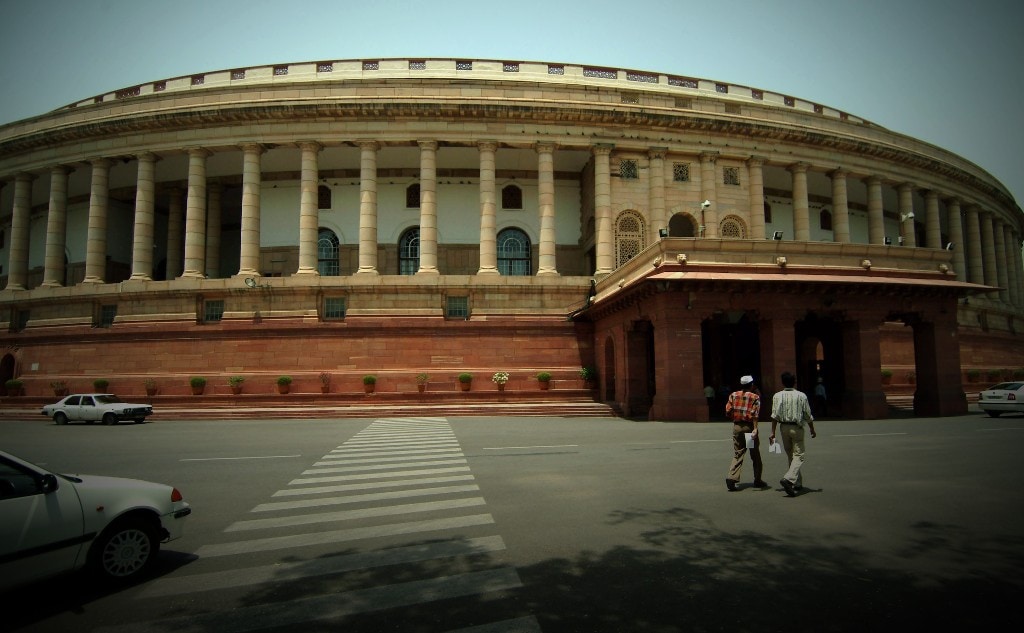
The Union Cabinet on Wednesday approved abolition of the foreign investment regulator or the Foreign Investment Promotion Board.
Going forward, only 11 sectors will need prior approval for foreign investment and decisions to that effect will be taken by the respective ministries in consultation with Department of Industrial Policy and Promotion, Finance Minister Arun Jaitley told reporters at a press briefing. In some cases references may be made to the home ministry for permission, he added.
Over the last few years, 91-95 percent of FDI has been coming via the automatic route, reducing the need for FIPB, the finance minister said. Scrapping the 25-year old body will help ease of doing business, Jaitley added.


The FIPB, responsible for approving foreign investment proposals, was initially constituted under the the Prime Minister's Office in the wake of the economic liberalisation of the early 1990s.
In the Union Budget 2017-18, Finance Minister Arun Jaitley had proposed abolishing the inter-ministerial body, which comes under the Department of Economic Affairs.
The Foreign Investment Promotion Board has successfully implemented e-filing and online processing of FDI applications. We have now reached a stage where FIPB can be phased out. We have therefore decided to abolish the FIPB in 2017-18. A roadmap for the same will be announced in the next few months.Arun Jaitley, Finance Minister in Budget 2017-18 Speech
Also Read: Budget 2017: FIPB Abolished, Foreign Investors To Get Single-Window Clearance
New Defence Policy Cleared
The government cleared the policy for strategic partnerships in defence which will encourage local manufacturing in defence.
The ministry of defence had recently cleared a new policy that looks to boost private participation in the sector.
The Defence Acquisition Policy has four strategic segments – single engine fighter aircraft, helicopters, submarines and armoured fight vehicles/main battle tanks. Each segment will have one strategic partner and one original equipment maker (OEM).
Also Read
First Contract Under New Defence Policy Unlikely Before 2019
Defence Acquisition Policy: Indian And Foreign Firms That May Vie For Contracts
Fair Price For Sugarcane
The Cabinet also fixed the fair and remunerative price payable by sugar companies for 2017-18. Companies will have to pay Rs 255 per quintal for a basic recovery rate of 9.5 percent. Thereafter, for every 0.1 percent increase in the recovery rate, the FRP will be increased by Rs 2.68 per quintal.
The FRP is the minimum price that sugarcane farmers are legally guaranteed. However, state governments are free to fix their own state advised price (SAP) and millers can offer any price above the FRP.


-
Why Amazon And Flipkart Are Struggling To Beat Meesho In India's Smaller Cities

With 274 million users and lowest-cost logistics, Meesho is defending its value commerce crown against giants like Amazon and Flipkart.
-
High US Salaries, No Green Card Certainty: The Financial Calculation Facing Indian H-1B Families
The suspension of PERM processing at eight technology employers does not cancel existing H-1B visas. What it does is force a question many Indian families have been avoiding: is the US salary worth tying your career and family plans to one employer?
-
Swiggy vs Eternal: Food Delivery's Two Rivals Are No Longer In The Same Race
Eternal is building a private AI assistant, dark.ai. Swiggy is still working out how to make Instamart pay, with an operating loss of Rs 895 crore in the July-September quarter while Blinkit stayed profitable.
-
Where You Live Shapes How You Get To Work | The Reason Why
Two-wheelers are the most popular way to get to work in India, accounting for nearly 43% of workplace commutes.
-
Unhedged Position: Can India See An Indonesia-Style Time Correction?
The Nifty is trading below levels it first clocked in 2024. Is there, then, as I have suggested in the headline, potential that the current time correction drags on painfully for the next three-five, even ten years?
-
Navigating Friction And Energy Realities: An Analysis Of Marco Rubio's October Visit To India
Occurring at a critical juncture marked by stalled trade negotiations and escalating geopolitical pressures over global energy supplies, the visit offers a profound window into modern US-India relations.
-
India Exports Capital. Why Not Export Trusteeship?
The big question, then, is whether India can build an institution that global borrowers, investors, banks, and lawyers can trust, even without an Indian connection.
-
France's Economy & Politics Are In Crisis | The Reason Why
Let's look at how the French economy and politics evolved under Nicolas Sarkozy, Franois Hollande and Emmanuel Macron.
-
You May Inherit The Business. You Must Earn Its Credibility.
Succession tests the founder's ability to share authority as much as it tests the next generation's readiness to assume it.
-
Signing Deals Is One Thing; Making Them Work Is Another | The Week In Whys
Sometimes, things don't turn out as planned. Indian companies have lost some bids to rivals, some projects won't produce until 2030.










