Budget 2025: Government Mulls Proposal To Relax AGR Dues Payout
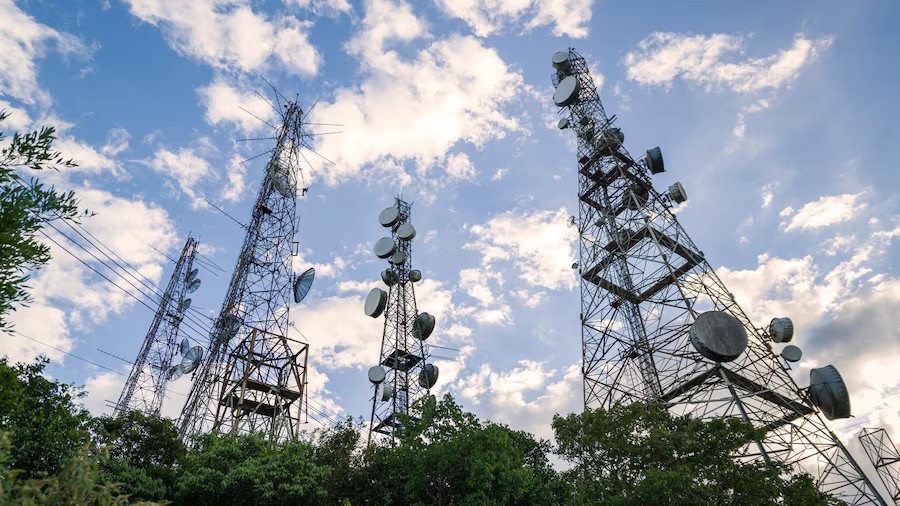
The government is considering a proposal to relax the quantum of adjusted gross revenue, or AGR, dues owed to the exchequer by telecom companies, people with knowledge of the matter told NDTV Profit.
This proposal, if implemented, will come as a huge relief to the telecom companies, and especially to the debt-laden Vodafone Idea.
"The move is being discussed at the highest level and will have to go through multiple rounds before a concrete decision is taken," the people quoted above said.
For Vodafone Idea Ltd., this could mean a potential relief of Rs 52,000 crore, reducing about 75% of its outstanding AGR liability and roughly 25% of its total debt, equivalent to potential upside of Rs 7 per share for Vodafone Idea's equity, said brokerage Citi Research.
For Bharti Airtel, the relief is estimated to be around Rs 38,000 crore, translating into an estimated 4% potential upside for its equity, Citi said.
This potential relief comes on the heels of the union cabinet's decision to eliminate the requirement of providing bank guarantees for past spectrum purchases. Last year, the government decided to eliminate the requirement to provide large bank guarantees, or BGs, for previous spectrum purchases, subject to certain conditions. This waiver was extended for spectrum purchases made in 2012, 2014, 2015, 2016 and 2021.
The Story So Far
Adjusted gross revenue, or AGR, is the basis for a revenue sharing mechanism between the government and the telecom operators.
Under this mechanism, the operators have to pay a certain licensing fee and spectrum usage fee to the Department of Telecommunications. The DoT calculates the fee as a percentage of the AGR. However, the definition of what constitutes AGR has been a pain point since 2005.
The telecom operators argued before various judicial forums that the definition should only include their core revenue, while the department argued that the definition should include all revenue, including revenue from non-telecom services.
In October 2019, the Supreme Court ruled that non-core revenue must be included while calculating the AGR, ending a 14-year-long legal battle between mobile operators and the government on the definition of AGR.
The 2019 judgement dealt a crippling blow to the bruised industry that stared at dues and penalties worth thousands of crores. It had increased the liabilities of Bharti Airtel and Vodafone Idea to more than Rs 90,000 crore.
In the aftermath of the AGR judgement, the government initially owned a 33% stake in Vodafone Idea, which now stands reduced at 23%. The shares were allocated to the government in lieu of the conversion of interest dues arising from the deferment of adjusted gross revenue and spectrum auction payments.
Last year, the top court rejected telecom operators' plea seeking a re-computation of their adjusted gross revenues. The apex court's rejection of the curative plea meant that the final legal recourse that was available to the telcos was exhausted. This prompted them to ask the government for a relief on this issue.

-
We May Need Another Tukaram Mundhe To Fight Air Pollution | The Reason Why

Developers may install basic measures such as sprinklers and green nets, resume work, and continue violating rules when this equipment stops working.
-
Extracting Value From Battery Scrap Could Be Challenging For India | The Reason Why
A discarded lithium-ion battery still contains valuable materials such as lithium, nickel and cobalt. These can be recovered and reused. When such batteries are crushed and shredded, they produce a dark powder called black mass.
-
One El Nino, India Can Handle. Two Could Break The Granary
India's grain stocks can absorb one bad year, but a second El Nino could drain the buffer in two to three years, economists say.
-
India's Troika Of Good Luck | Joining The Dots
As Jensen Huang's exit drags Nvidia down, a cooling AI trade and resilient earnings have revived investor interest in India. A likely RBI rate hike looms.
-
Talking Points This Week: Leadership Shock At Nvidia, Earnings Strength, And The Fog Over Hormuz
The Anthropic IPO pricing and first trading day, Nvidia's upcoming earnings, and any fresh signals from Iran will set the tone for the following week.
-
Signature Play: The Classic Cocktail Is Dead. Or Is It?
Classic cocktails are disappearing from India's cocktail menus. But they're still being ordered, taught to bartenders and borrowed from. So, who's really having the last drink?
-
A New Samvat Wishlist: Inclusive Prosperity And Human Development
India has strengthened its economic foundations through infrastructure, digital access and enterprise. Its next growth chapter must deepen productivity, create better livelihoods and widen participation in prosperity.
-
Love, Sex Aur Dhokha: The Audacious Plot To Spy On Jensen Huang
A Taipei dinner, a Singapore chip buyer and a suspected Chinese asset: inside the alleged spy operation that got close to NVIDIA's Jensen Huang.
-
Ten Things I Learnt This Samvat
Patience can be a trap. Cheap stocks can stay cheap. Leverage can wipe you out. What did Samvat 2082 teach us? Niraj Shah writes on 10 lessons from the year gone by.
-
Talking Points This Week: Tech Nerves, FII Buying, And A Faraway Banking Shock
The global markets are not shining this Diwali. The exception in the large markets is, India.









