Xi Vows to Strengthen Economic Recovery After ‘Tough’ Year
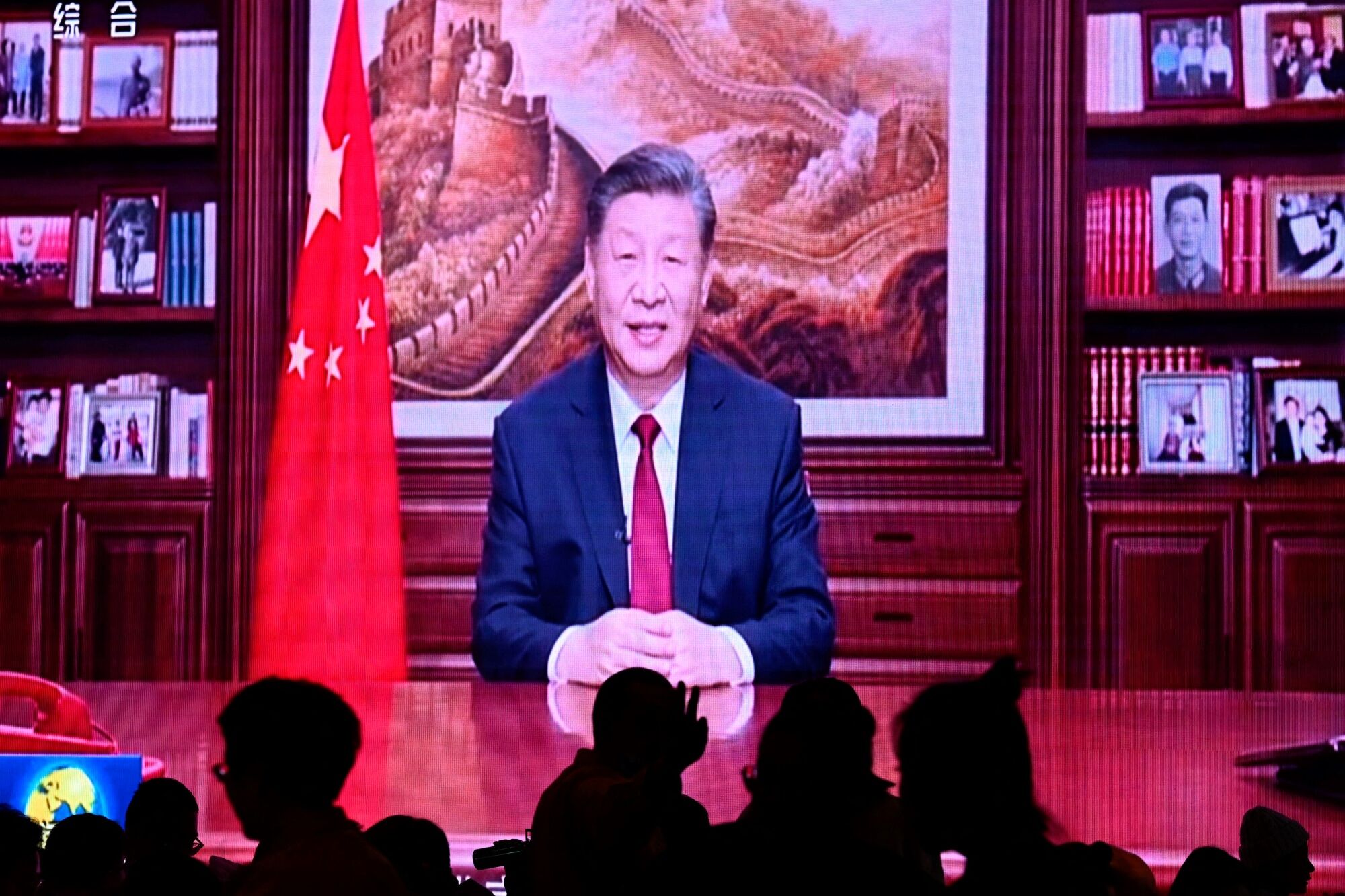
(Bloomberg) -- Chinese President Xi Jinping pledged to strengthen economic momentum and job creation, acknowledging some companies and citizens had endured a difficult 2023 in a rare admission of domestic headwinds facing the country.
While China's most-powerful leader since Mao Zedong used his annual new year address to trumpet his nation's achievements, he also conceded some “enterprises had a tough time” and “people had difficulty finding jobs and meeting basic needs.”
“We will consolidate and strengthen the momentum of economic recovery, and work to achieve steady and long-term economic development,” Xi said in the televised message Sunday, beamed to his nation's 1.4 billion people. China's much-anticipated post-pandemic economic boom failed to materialize in 2023.
The government's goal is “delivering a better life for the people,” he added, pledging better education and career opportunities for the young, and healthcare for the elderly. China's youth unemployment hit a record high over the summer, before the government stopped publishing figures.
Improving people's well-being has been a key component of the social contract the Communist Party has relied on for decades for its ruling. A new year awash with economic challenges will test that pact: China is entering a pivotal period as policymakers try to boost growth, stabilize a crisis in the property market and prevent the world's second-largest economy from sleepwalking into deflation.
Beijing is expected to target a growth goal of around 5% again in 2024, avoiding the self-fulfilling negative cycle a lower number could create. Sustaining that level of growth will be harder due to a higher comparison base.
Bolstering confidence in China will be crucial this year. Concerns over Beijing's opaque policymaking spooked investors in 2023, while higher interest rates overseas spurred capital outflows. A recent crackdown on the gaming industry sparked a $80 billion meltdown, stoking fresh concerns over policy swings, as foreign investors recorded their smallest-ever annual purchases of Chinese stocks.
Signs of weakness in the economy are persisting, with factory activity shrinking in December to the lowest level in six months, likely adding pressure for policymakers to act urgently to inject impetus to the economy.
Despite that, Xi on Sunday touted Chinese “manufacturing prowess” and rattled off a list of homegrown projects including the domestically-built C919 passenger jet, a made-in-China cruise ship, the nation's space programs, maned submersibles, and electric cars.
Xi also his used his speech to reiterate the ruling Communist Party's position that China will “surely be reunified” — an allusion to Taiwan, the self-ruled island Beijing considers its own and has vowed to claim, by force if necessary.
His comments come just weeks before Taiwan's voters go the polls to pick their next president, as a looming US election also brings fresh geopolitical risks. Turmoil is still rumbling through the upper echelons of China's military leadership, with more senior figures purged from top bodies last week.
That raises questions over how ready China's military would be for any invasion of Taiwan, with the rocket force that manages the nation's missiles under the spotlight. Beijing also abruptly removed its foreign minister last year, without explanation, adding to the instability.
Taiwan's hotly-contested election on Jan. 13 will decide how the island of more than 23 million people will respond to Beijing's moves. The incumbent Democratic Progressive Party seeks to strengthen Taipei's ties with Washington, while the opposition Kuomintang — an increasingly close second in the most recent polls — is Beijing's preferred negotiating partner on the island.
“All Chinese on both sides of the Taiwan Strait should be bound by a common sense of purpose and share in the glory of the rejuvenation of the Chinese nation,” Xi said.
(Updates throughout.)
More stories like this are available on bloomberg.com
©2024 Bloomberg L.P.

-
Love, Sex Aur Dhokha: The Audacious Plot To Spy On Jensen Huang

A Taipei dinner, a Singapore chip buyer and a suspected Chinese asset: inside the alleged spy operation that got close to NVIDIA's Jensen Huang.
-
Ten Things I Learnt This Samvat
Patience can be a trap. Cheap stocks can stay cheap. Leverage can wipe you out. What did Samvat 2082 teach us? Niraj Shah writes on 10 lessons from the year gone by.
-
Talking Points This Week: Tech Nerves, FII Buying, And A Faraway Banking Shock
The global markets are not shining this Diwali. The exception in the large markets is, India.
-
Midterm Rally Lasted A Day. The Hard Reality Of A Divided US May Last Two Years | Opinion
Between a contested AI boom, a debt ceiling that arrives in 2027 and a president with every incentive to act alone, the next two years may prove more volatile than the first day's rally suggests.
-
Blue Wave Will Derail the AI Trade but Won't Dismantle the AI Era | Unhedged Position
The Democrats' sweep of the US Congress will see politics collide with economic forces both over the long and short term.
-
It's Time To Take The GST Council's Bet On Trust Global
Payment records can prove India's services exports, and clear, proportionate rules can bring foreign digital sellers into the tax net.
-
Opinion | India at 38: From Innovation Overperformer to Innovation Powerhouse
India now has 453 VC-backed deep science startups, 18 of them late-stage, after 117 percent growth since 2020. Laurus Labs, at USD 9.3 billion, is the most valuable deep science company in any middle-income economy outside China.
-
Navigating Energy Crossroads: S Jaishankar's Call For Diversified Supply Chains At G20 Ministerial Meeting
As geopolitical fault lines continue to test maritime trade routes and commodity flows, Jaishankar's message remains pertinent: true economic resilience requires open markets, protected transit lines, and a genuine commitment to multilateral cooperation rather than coercion.
-
Indians Are Travelling, But Not Every Journey Is A Holiday | The Week In Whys
Pilgrims, patients and working women are the real travellers, and the system hasn't quite caught up with them.









